Physics
Universität Siegen · Siegen, Europe
Duration
24 mo
Tuition
No tuition fee
sourcedIntake
Winter semester
English
—
Winter semester intake. Most universities admit on a rolling basis — we confirm the exact application deadline for your profile, free.
Course details verified 10 Sep 2026 — intakes, entry requirements and course facts · official source
Fee sourced Taken from the university's published fees page, not re-checked since — confirm it before you budget. See the university fees page.
About this programme
The University of Siegen offers a Master’s programme in Physics with a duration of four semesters. Students can tailor their curriculum to our three focus areas: particle physics, solid state physics, and quantum optics and quantum information. General Information: The MSc in Physics is a research-oriented study programme. During the first year, students attend elective lectures, lab courses, and seminars. In the second year, students carry out a project in one of the research groups, leading to the Master's thesis. The programme language is English. Admission is possible each year in spring and autumn. Research: At the Department of Physics, about 300 students and 20 professors work together, resulting in an outstanding student-to-staff ratio. Our research groups work on: Experimental particle & astroparticle physics Theoretical particle physics Experimental quantum optics with trapped ions Experimental quantum & nano-optics Theoretical quantum optics & quantum information theory Experimental solid state physics Experimental x-ray methods We are part of numerous international collaborations, giving young students the chance to work directly on challenging problems in cutting-edge research, such as: Exploring the fundamental nature of matter and new phenomena in strong and weak interactions, as part of the cluster of excellence "color meets flavor" Challenging the Standard Model of particle physics through precision calculations for experiments at the energy and intensity frontier, as part of the CRC "particle physics phenomenology after the Higgs discovery" Exploring and developing novel concepts and methods for quantum information processing with trapped ions, in cooperation with the local quantum industry pioneers at eleQtron GmbH and research partners worldwide Probing the limits of quantum theory with matter waves and macroscopic quantum effects, together with leading experimental groups in Europe Detector development for the world’s largest particle accelerator at CERN, the world’s largest cosmic rays experiment in Argentina, and for medical imaging Understanding the nature of entanglement, its role in quantum networks, and practical applications, as part of European quantum information science initiatives Development of quantum sensors and single-photon sources based on colour centres and optical nanostructures Preparing and characterising novel, ultra-thin 2D materials as the ultimate limit of device miniaturisation Facilitating the development of new materials with cutting-edge x-ray methods at large-scale x-ray facilities in Germany, Europe and the world Structure and content: In the first year, students can choose elective lectures and courses according to their specialisation. We offer courses focused around the following topics: Experimental solid state physics Quantum information theory and foundations of quantum mechanics Theoretical quantum optics and quantum thermodynamics Experimental quantum optics and nano-optics Theoretical particle physics Experimental particle and astroparticle physics Machine learning and computational methods in physics The second year is devoted to the MSc thesis, which is prepared in one of the research groups. The aim of the thesis is to deliver a contribution to current research in theoretical or experimental physics. The outstanding student-to-staff ratio at the department implies direct supervision of each student, and results from MSc theses are regularly published in international scientific journals. An MSc degree is a precondition for entering a doctoral programme in Germany. The PhD research is then performed in one of the research groups and prospective PhD students have to find a professor who is willing to supervise their work. Typically, PhD theses last three to four years and PhD students receive financial support. Curriculum: The image displays an example curriculum specialising in quantum information theory, which starts in the winter term (WT). Core modules are mark
Intakes & deadlines
Winter semester
Dates confirmed for your profile · Open
Summer semester
Dates confirmed for your profile · Open
Entry requirements
-
English
E.G. TOEFL iBT (before 2026): 88 Reading: 18 Listening: 17 Speaking: 20 Writing: 17 PTE Academic: 61 IELTS Academic: 6
-
Prerequisites
Applicants are required to hold a BSc in physics or be in the process of completing a BSc in physics. The following application documents have to be submitted electronically: Cover letter (500 words) Curriculum vitae Certificates and transcripts of university education Proof of proficiency in English
-
Documents
SOP, LOR & Resume — generate them free in 2 minutes.
Fees & scholarships
No tuition fee tuition (sourced). We confirm the exact costs and the scholarships you qualify for at Universität Siegen — free, for your profile.
Other programmes at Universität Siegen
Chemistry
No tuition fee Tuition · sourced 2 years Duration View details SI Universität SiegenComputer Science
No tuition fee Tuition · sourced 2 years Duration View details SI Universität SiegenEconomic Policy (MSc)
No tuition fee Tuition · sourced 2 years Duration View details SI Universität SiegenElectrical Engineering (Electronics Design / Communication Engineering / Automation)
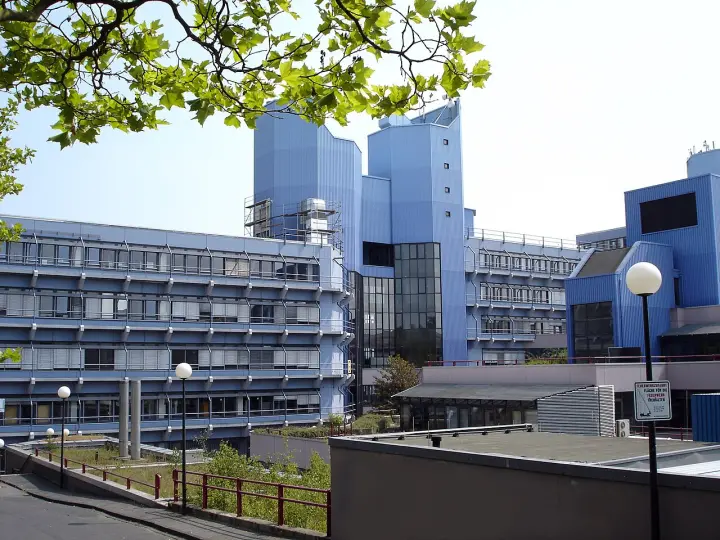
No tuition fee Tuition · sourced 2 years Duration View detailsCampus photos on this page: Bob Ionescu (Attribution) — via Wikimedia Commons.
Physics — FAQs
5 questions
Tuition is No tuition fee. Taken from the university's published fees page, not re-checked since — confirm it before you budget. We confirm the current fee and the scholarships you qualify for — free.
The main intake is Winter semester. Most universities admit on a rolling basis — we confirm the exact deadline for your profile, free.
Applicants are required to hold a BSc in physics or be in the process of completing a BSc in physics. The following application documents have to be submitted electronically: Cover letter (500 words) Curriculum vitae Certificates and transcripts of university education Proof of proficiency in English English: E.G. TOEFL iBT (before 2026): 88 Reading: 18 Listening: 17 Speaking: 20 Writing: 17 PTE Academic: 61 IELTS Academic: 6.
The programme runs about 24 months full-time.
Yes — shortlisting, SOP, LOR, Resume, application, scholarships and visa guidance are all free. We're paid by partner universities, not by you.
Apply to Physics — free help
A counsellor calls you back during office hours — 9am to 8pm IST, Mon to Sat. We are open now.