
Electrical Engineering (Electronics Design / Communication Engineering / Automation)
Universität Siegen · Siegen, Europe
Duration
24 mo
Tuition
No tuition fee
sourcedIntake
Winter semester
English
—
Winter semester intake. Most universities admit on a rolling basis — we confirm the exact application deadline for your profile, free.
Course details verified 10 Sep 2026 — intakes, entry requirements and course facts · official source
Fee sourced Taken from the university's published fees page, not re-checked since — confirm it before you budget. See the university fees page.
About this programme
Siegen’s Master's in Electrical Engineering programme trains students with specific expertise in key areas of microelectronics design, communication systems and automation technology. In addition to in-depth knowledge, students also acquire soft skills including presentation, team work, management and leadership skills. They benefit from the close collaboration between electrical and computer engineering with a tight link to research projects conducted in both disciplines at our university. We conduct research in diverse areas including AI/machine learning, digital imaging, healthcare, automotive, industrial control, avionics and home automation, where Master's students get ample opportunities to participate. Electronics Design and Technology This specialisation trains students in the design of micro and nano electronics devices and circuits. VLSI integrated circuits and photonic systems have revolutionised our lives with low cost, yet powerful computing and sensing devices, in form of hand-held computers, mobiles as well as high-end AI systems. This course trains engineers in design, build and test of electronic components required for these developments. They gain diverse experience ranging from cleanrooms fabricating nanoscale electronic devices and designing Analogue and Digital IC in state-of-the-art software. Sensory systems, including digital camera technology and machine learning/AI systems, are key themes of research at Siegen, which is reflected in our teaching portfolio as well. Communication Engineering Communication is vital to our interconnected world and our lives have come dependent on secure, sustained and rapid communication. This specialisation trains students in theoretical and practical skills for analysis and design of a diverse range of communication systems as well as components required to build them. Of particular interest are communication systems applied to sensorics, optical and digital communication. The telecommunication and mobile market have been growing at a rapid pace and our courses prepare our students in all aspects of electronic communication systems in place as well as those being researched for future. Automation Engineering This specialisation focuses on control, energy conversion systems and measurement engineering. It addresses the automation of design and operation processes for intelligent dynamical systems and combines theoretical foundations with application-oriented problem solving. As an interdisciplinary offering, it also offers strong links to computer and mechanical engineering, enabling students to broaden their profile through courses in areas such as machine learning and mechatronic. Graduates pursue diverse careers including academic research, automotive, manufacturing, and power engineering, both in regional and in international firms. Our Master's programme contains core modules covering a broad spectrum of theoretical, practical, and technical topics in the specialisations, together with team work. Specialised elective modules are then offered to cover advanced scientific knowledge. This programme is structured as follows: Seven core modules (6 CP each) One fundamental module (9 CP) on Electromagnetic Field Theory Five elective modules (6 CP each) Research modules: project work (9 CP), Master's thesis (30 CP) For Electronics Design and Technology, the compulsory modules offered cover fundamental courses in microsystems design, including: Semiconductor Electronics Analogue and Digital Integrated Circuits Embedded Systems Optoelectronics Students are also offered a number of elective courses by various chairs of the university, including: Nanotechnology Memristors and AI Chips Advanced Analogue Circuits Radio Frequency IC Design Embedded Control Microelectronic Sensors Microsystems Fabrication and Test Photonic Devices Similarly, Communication Engineering core modules cover: Signals and Systems Lightwave and Optoelectronics Data Communications High Frequency Engineer
Intakes & deadlines
Winter semester
Dates confirmed for your profile · Open
Entry requirements
-
English
E.G. TOEFL iBT (before 2026): 87 Reading: 21 Listening: 21 Speaking: 21 Writing: 21 IELTS Academic: 6
-
Prerequisites
We expect our applicants to have a good Bachelor’s degree equivalent to University of Siegen's Bachelor's degree in Electrical Engineering. This could be a degree in Electronics Engineering, Electrical Engineering, Communication/Telecommunication Engineering, Computer Science/Engineering, Instrumentation/Control Engineering, Engineering Physics or Mechatronics covering at least six semesters. The equivalent Bachelor's degree must have taught skills in the following areas to the specified minimum credit points: mathematical foundations (20 CP), scientific basics (15 CP), basics of electrical engineering and measurement technology (20 CP), theoretical electrical engineering (field theory, signal and system theory – 10 CP) project work (including Bachelor's thesis – 10 CP). For admission to “Communications Technology", students should have studied a minimum of 20 CP in their Bachelor's covering theory and practice in the fields of "Communications Engineering", "Optical Communications Engineering", "High Frequency Technology", "Electromagnetic Field Theory" and "Signal and Systems Theory". Similarly, for "Electronics Design and Technology", they should have studied 20 CP worth of "Semiconductor and Circuit Technology", "Semiconductor Physics", "Power Electronics" and "High Frequency Technology" or equivalent courses. Similarly, for "Automation Technology", they should have studied 20 CP worth of "Control Technology", "Automation Technology" and "Power Electronics and Drive Technology" or equivalent courses.
-
Documents
SOP, LOR & Resume — generate them free in 2 minutes.
Fees & scholarships
No tuition fee tuition (sourced). We confirm the exact costs and the scholarships you qualify for at Universität Siegen — free, for your profile.
Other programmes at Universität Siegen
Chemistry
No tuition fee Tuition · sourced 2 years Duration View details SI Universität SiegenComputer Science
No tuition fee Tuition · sourced 2 years Duration View details SI Universität SiegenEconomic Policy (MSc)
No tuition fee Tuition · sourced 2 years Duration View details SI Universität SiegenEuropean Master's in Embedded Intelligence Nanosystems Engineering (EMINENT)
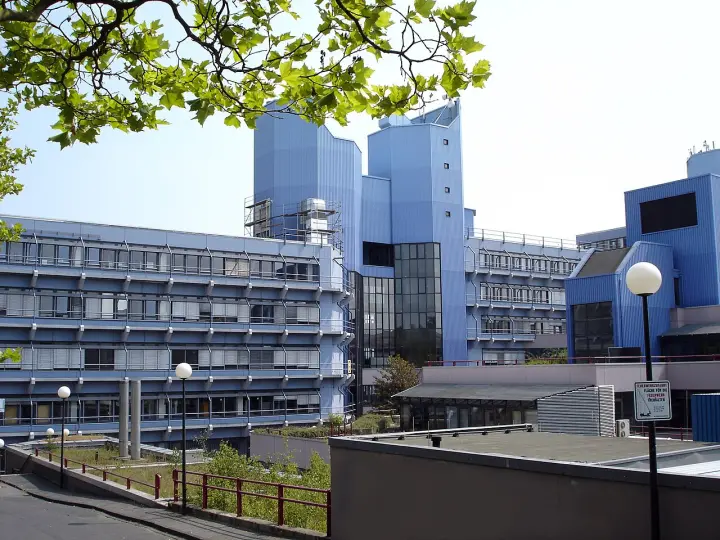
No tuition fee Tuition · sourced 2 years Duration View detailsCampus photos on this page: Bob Ionescu (Attribution) — via Wikimedia Commons.
Electrical Engineering (Electronics Design / Communication Engineering / Automation) — FAQs
5 questions
Tuition is No tuition fee. Taken from the university's published fees page, not re-checked since — confirm it before you budget. We confirm the current fee and the scholarships you qualify for — free.
The main intake is Winter semester. Most universities admit on a rolling basis — we confirm the exact deadline for your profile, free.
We expect our applicants to have a good Bachelor’s degree equivalent to University of Siegen's Bachelor's degree in Electrical Engineering. This could be a degree in Electronics Engineering, Electrical Engineering, Communication/Telecommunication Engineering, Computer Science/Engineering, Instrumentation/Control Engineering, Engineering Physics or Mechatronics covering at least six semesters. The equivalent Bachelor's degree must have taught skills in the following areas to the specified minimum credit points: mathematical foundations (20 CP), scientific basics (15 CP), basics of electrical engineering and measurement technology (20 CP), theoretical electrical engineering (field theory, signal and system theory – 10 CP) project work (including Bachelor's thesis – 10 CP). For admission to “Communications Technology", students should have studied a minimum of 20 CP in their Bachelor's covering theory and practice in the fields of "Communications Engineering", "Optical Communications Engineering", "High Frequency Technology", "Electromagnetic Field Theory" and "Signal and Systems Theory". Similarly, for "Electronics Design and Technology", they should have studied 20 CP worth of "Semiconductor and Circuit Technology", "Semiconductor Physics", "Power Electronics" and "High Frequency Technology" or equivalent courses. Similarly, for "Automation Technology", they should have studied 20 CP worth of "Control Technology", "Automation Technology" and "Power Electronics and Drive Technology" or equivalent courses. English: E.G. TOEFL iBT (before 2026): 87 Reading: 21 Listening: 21 Speaking: 21 Writing: 21 IELTS Academic: 6.
The programme runs about 24 months full-time.
Yes — shortlisting, SOP, LOR, Resume, application, scholarships and visa guidance are all free. We're paid by partner universities, not by you.
Apply to Electrical Engineering (Electronics Design / Communication Engineering / Automation) — free help
A counsellor calls you back during office hours — 9am to 8pm IST, Mon to Sat. We are open now.