Chemistry
Universität Siegen · Siegen, Europe
Duration
24 mo
Tuition
No tuition fee
sourcedIntake
Winter semester
English
—
Winter semester intake. Most universities admit on a rolling basis — we confirm the exact application deadline for your profile, free.
Course details verified 10 Sep 2026 — intakes, entry requirements and course facts · official source
Fee sourced Taken from the university's published fees page, not re-checked since — confirm it before you budget. See the university fees page.
About this programme
The Department of Chemistry and Biology offers a four-semester Master of Science in Chemistry programme with excellent training and research opportunities. It builds on a Bachelor's degree in Chemistry and further deepens your knowledge through a variety of specialised and research-oriented modules. You will be provided with an in-depth scientific education in a small classroom setting. Your first semester modules will further develop your knowledge of inorganic, organic, and physical chemistry. In addition, you can select modules in analytical chemistry, macromolecular, or building chemistry and gain practical experience in laboratory courses. In the second and third semesters, you can already start to specialise in an area of your choice and gain practical research experience in modern topics of chemistry. In your final Master's thesis project, you will work with a professor in the specialist area of your choice, giving you practical experience with modern equipment and a valuable postgraduate experience. We have a strong teaching record in chemistry and were among the first universities in Germany to offer an international chemistry programme. Many of our international students stay on to join our research groups in the Department of Chemistry as PhD students or are hired by some of the world's largest chemical companies. The programme is built upon the recommendations of the German Chemical Society (GDCh) and is fully accredited. While the programme consists of some mandatory modules, a lot of elective courses are available. You may select areas of chemistry that you wish to specialise in, such as analytical, building, inorganic, materials, macromolecular, organic, physical, and theoretical chemistry. Topics of courses include: Analytical Chemistry Biomimetic Molecular Machines Chemo- and Biosensors Chemistry of Building Materials and Ceramics Fast Ion Conductors Interface and Colloid Science Ionic Liquids Languages and Soft Skills Luminescent Materials Materials Science and Testing Methods Micro- and Nanofabrication Techniques Modern Microscopy and Surface Analysis Nanostructured Functional Materials Nanotechnology Organic Radicals Photochemistry and Photobiology Polymer Chemistry Quantum Chemistry Solid State and Coordination Chemistry Solid State NMR Spectroscopy Supercritical Fluids Supramolecular Nanoassemblies Ultrafast Laser Spectroscopy The Master's programme will provide you with an in-depth scientific education. You will be trained in high-quality theoretical and experimental chemistry modules comprised of lectures, seminars, and laboratory courses. Your first semester modules will further develop your knowledge of inorganic, organic, and physical chemistry. In addition, you can select modules in analytical chemistry, macromolecular chemistry, or building chemistry and gain practical experience in laboratory courses. In the second and third semesters, you can already start to specialise in an area of your choice and gain practical research experience in modern topics of chemistry. In your final Master's thesis project, you will work with a professor in the specialist area of your choice; through this, you will gain practical experience with modern equipment and a valuable postgraduate experience. The Master of Science degree in Chemistry will be awarded upon successful completion of the programme. The Master of Science degree requires a total of 120 credits. The grades and credits of the programme are based on the European Credit Transfer System (ECTS), which guarantees an international acceptance of the MSc degree. Research Opportunities The Department of Chemistry and Biology is home to excellent groups across the chemistry disciplines and offers state-of-the-art research equipment, including DTA, TG/DTG, automatic synthesizer, high-resolution NMR, SEM, several X-ray diffractometers, HPLC-MS, GC-MS, ToF-SIMS, ICP-OES, ICP-MS, IR and Raman spectroscopy, and AFM. Much more special equipment is available in the
Intakes & deadlines
Winter semester
Dates confirmed for your profile · Open
Entry requirements
-
English
E.G. TOEFL iBT (before 2026): 72 Reading: 18 Listening: 18 Speaking: 18 Writing: 18 IELTS Academic: 6 Cambridge English Qualifications: C1 Advanced
-
Prerequisites
Bachelor of Science in Chemistry certificate or equivalent (with grade 2.5 or better according to ECTS) Transcript of records Tabular résumé Proof of English language skills (see below for details) Two professional references (name of two scientists or former employers) are needed. Formal reference letters are not required. All applications must be submitted online via Unisono.
-
Documents
SOP, LOR & Resume — generate them free in 2 minutes.
Fees & scholarships
No tuition fee tuition (sourced). We confirm the exact costs and the scholarships you qualify for at Universität Siegen — free, for your profile.
Other programmes at Universität Siegen
Computer Science
No tuition fee Tuition · sourced 2 years Duration View details SI Universität SiegenEconomic Policy (MSc)
No tuition fee Tuition · sourced 2 years Duration View details SI Universität SiegenElectrical Engineering (Electronics Design / Communication Engineering / Automation)
No tuition fee Tuition · sourced 2 years Duration View details SI Universität SiegenEuropean Master's in Embedded Intelligence Nanosystems Engineering (EMINENT)
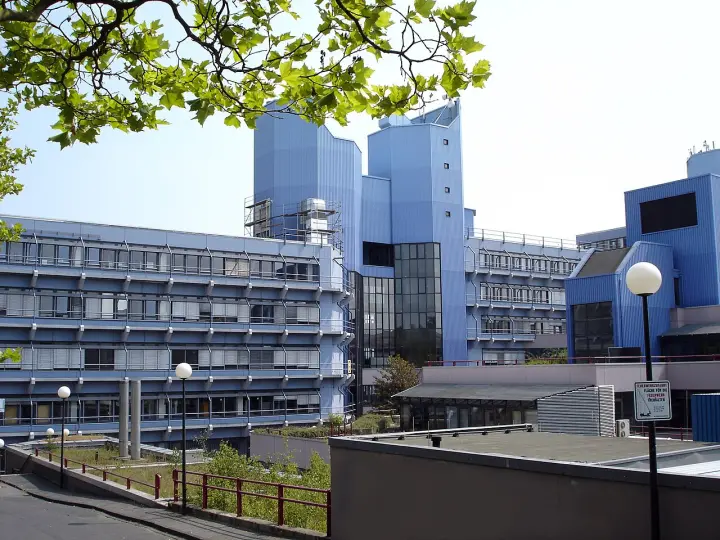
No tuition fee Tuition · sourced 2 years Duration View detailsCampus photos on this page: Bob Ionescu (Attribution) — via Wikimedia Commons.
Chemistry — FAQs
5 questions
Tuition is No tuition fee. Taken from the university's published fees page, not re-checked since — confirm it before you budget. We confirm the current fee and the scholarships you qualify for — free.
The main intake is Winter semester. Most universities admit on a rolling basis — we confirm the exact deadline for your profile, free.
Bachelor of Science in Chemistry certificate or equivalent (with grade 2.5 or better according to ECTS) Transcript of records Tabular résumé Proof of English language skills (see below for details) Two professional references (name of two scientists or former employers) are needed. Formal reference letters are not required. All applications must be submitted online via Unisono. English: E.G. TOEFL iBT (before 2026): 72 Reading: 18 Listening: 18 Speaking: 18 Writing: 18 IELTS Academic: 6 Cambridge English Qualifications: C1 Advanced.
The programme runs about 24 months full-time.
Yes — shortlisting, SOP, LOR, Resume, application, scholarships and visa guidance are all free. We're paid by partner universities, not by you.
Apply to Chemistry — free help
A counsellor calls you back during office hours — 9am to 8pm IST, Mon to Sat. We are open now.