Metallic Materials Technology
Technische Universität Bergakademie Freiberg · Freiberg, Europe
Duration
24 mo
Tuition
No tuition fee
sourcedIntake
Summer semester
English
—
Summer semester intake. Most universities admit on a rolling basis — we confirm the exact application deadline for your profile, free.
Course details verified 10 Sep 2026 — intakes, entry requirements and course facts · official source
Fee sourced Taken from the university's published fees page, not re-checked since — confirm it before you budget. See the university fees page.
About this programme
The Master’s programme in Metallic Materials Technology (MMT) at TU Freiberg equips students with advanced knowledge and practical skills in the field of metallic materials. Whether you have a background in mechanical engineering, materials science, or a related discipline, this programme offers a unique opportunity to specialise in cutting-edge technologies that are driving innovation in automotive, aerospace, green energy, and advanced manufacturing industries. Join a diverse international community, deepen your expertise, and position yourself for a successful career in materials engineering. The MMT programme builds upon a Bachelor’s degree in mechanical engineering, materials science, or metallurgy and aims to provide students with advanced expertise in metallic materials. The curriculum focuses on both theoretical and practical aspects, combining technical skills with a scientific approach to solving real-world challenges. Students can tailor their studies by choosing from four specialisations (see Course organisation), each designed to provide in-depth knowledge and industry-relevant skills. The programme is conducted entirely in English, attracting a diverse and international student body. The MMT programme usually starts in the summer semester. The curriculum is designed to provide students with... Core Subjects: Materials science, mechanical properties, and manufacturing processes Elective Modules: Flexibility to tailor the education to individual career goals A Master's thesis research project addressing real-world industry challenges. In the first semester, students receive an overview of the fundamentals of materials science and materials engineering. From the second semester onwards, students have to choose one of four specialisations: Foundry Technology Focuses on the fundamentals and advanced aspects of modern casting processes: moulding materials, binders, and core-making processes; metallurgy of ferrous and non-ferrous casting materials including melt treatment and analysis techniques; operation of melting furnaces and quality assurance in foundry processes; post-treatment of castings, surface engineering and defect prevention strategies. Metal Forming Covers the transformation of metallic materials into semi-finished and finished products through various techniques: advanced rolling, forging, and extrusion technologies; theoretical and experimental analysis of metal deformation behaviour; the influence of microstructural properties on mechanical performance; numerical simulation and process chain optimisation. Non-ferrous Metallurgy Focusing on the production and recycling of non-ferrous metals such as aluminium, copper and rare earths, this specialisation includes: high-temperature, hydrometallurgical electrochemical processes for extracting and refining metals; advanced recycling technologies to recover valuable metals from batteries, electronic waste, and industrial by-products; sustainable production techniques aimed at minimising environmental impact. Steel Production Provides expertise in the entire steelmaking process, from raw material processing to advanced refining techniques: primary and secondary metallurgy, including decarburisation and alloying; clean steel production, energy efficiency, and sustainable practices; structural and mechanical properties of steel for construction and transport applications; circular economy strategies for reducing emissions and improving resource efficiency.
Intakes & deadlines
Summer semester
Dates confirmed for your profile · Open
Entry requirements
-
English
E.G. TOEFL iBT (before 2026): 90 Reading: 23 Listening: 23 Speaking: 22 Writing: 22 IELTS Academic: 6.5
-
Prerequisites
Bachelor's degree (at least six semesters) or equivalent degree in a degree course in the fields of metallurgy, materials engineering or a related discipline Industrial Internship Qualification assessment procedure Candidate's Profile: MMT is open to students who wish to upgrade their knowledge in engineering science, specialised in metal forming, foundry technology, non-ferrous metallurgy, or steel production. The programme is designed to attract students from different fields of science and engineering to create an interdisciplinary environment and enable teamwork between scientists and engineers.
-
Documents
SOP, LOR & Resume — generate them free in 2 minutes.
This is an indicative early-career range for the whole Engineering (general) field in Europe, from official graduate-outcome data — not a figure for this programme or university, and not a guarantee of what you will earn. What you actually earn depends on the role, employer, city and your visa.
Source: Profiling Institut - Gehaltsranking nach Studienfach 2026 (StepStone Gehaltsreport 2026), 2026. Market job-board data — less official than a government survey; treat as indicative.
Rupee figure converted at the 18 Aug 2026 mid-market rate; your bank's rate will be worse and currencies move, so use it for planning, not as the amount you will receive.
Fees & scholarships
No tuition fee tuition (sourced). We confirm the exact costs and the scholarships you qualify for at Technische Universität Bergakademie Freiberg — free, for your profile.
Other programmes at Technische Universität Bergakademie Freiberg
Advanced Materials Analysis
No tuition fee Tuition · sourced 2 years Duration View details TBF Technische Universität Bergakademie FreibergApplied Geoscience
No tuition fee Tuition · sourced 2 years Duration View details TBF Technische Universität Bergakademie FreibergChemical Engineering
No tuition fee Tuition · sourced 2 years Duration View details TBF Technische Universität Bergakademie FreibergComputational Materials Science (CMS)
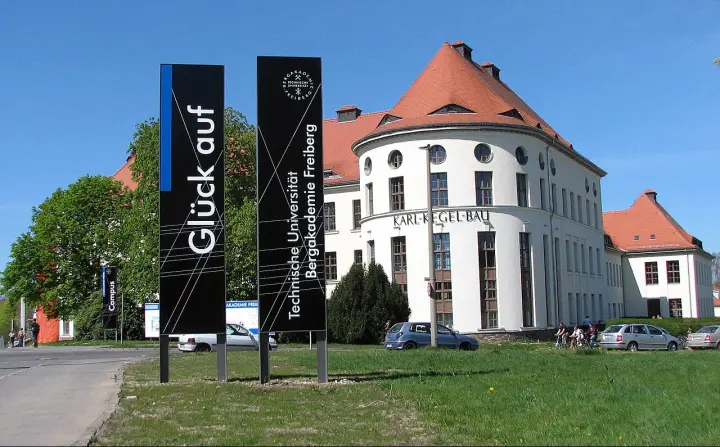
No tuition fee Tuition · sourced 2 years Duration View detailsCampus photos on this page: RobertPorter (Public domain) — via Wikimedia Commons.
Metallic Materials Technology — FAQs
5 questions
Tuition is No tuition fee. Taken from the university's published fees page, not re-checked since — confirm it before you budget. We confirm the current fee and the scholarships you qualify for — free.
The main intake is Summer semester. Most universities admit on a rolling basis — we confirm the exact deadline for your profile, free.
Bachelor's degree (at least six semesters) or equivalent degree in a degree course in the fields of metallurgy, materials engineering or a related discipline Industrial Internship Qualification assessment procedure Candidate's Profile: MMT is open to students who wish to upgrade their knowledge in engineering science, specialised in metal forming, foundry technology, non-ferrous metallurgy, or steel production. The programme is designed to attract students from different fields of science and engineering to create an interdisciplinary environment and enable teamwork between scientists and engineers. English: E.G. TOEFL iBT (before 2026): 90 Reading: 23 Listening: 23 Speaking: 22 Writing: 22 IELTS Academic: 6.5.
The programme runs about 24 months full-time.
Yes — shortlisting, SOP, LOR, Resume, application, scholarships and visa guidance are all free. We're paid by partner universities, not by you.
Apply to Metallic Materials Technology — free help
A counsellor calls you back during office hours — 9am to 8pm IST, Mon to Sat. We are closed right now, so your request is first in line when we reopen.