
Computational Materials Science (CMS)
Technische Universität Bergakademie Freiberg · Freiberg, Europe
Duration
24 mo
Tuition
No tuition fee
sourcedIntake
Winter semester
English
—
Winter semester intake. Most universities admit on a rolling basis — we confirm the exact application deadline for your profile, free.
Course details verified 10 Sep 2026 — intakes, entry requirements and course facts · official source
Fee sourced Taken from the university's published fees page, not re-checked since — confirm it before you budget. See the university fees page.
About this programme
The constantly accelerating technological progress of today's society requires engineers and scientists who have a sound knowledge of natural and materials sciences and are able to apply programming and simulation techniques as well as data processing and analysis. Computational Materials Science graduates become key players in industrial research and development; they shape scientific and engineering research that focuses on the design, processing and application of novel high-tech materials with superior mechanical, thermodynamic and electronic properties. At TU Bergakademie Freiberg, we bring together renowned researchers and enthusiastic lecturers from different scientific fields to provide our students with the education they need for an outstanding career in Computational Materials Science (CMS). Theoretical concepts presented in the CMS lectures are illustrated by state-of-the-art research applications. An intensive introductory seminar brings students up to speed with scientific programming and modern computing environments. During the research seminars, they have the opportunity to exchange ideas with leading scientists and experienced engineers at the industrial partners. In accompanying practical exercises, students learn how to apply all relevant modern simulation methods — and that is just one of the truly outstanding aspects of this degree programme. In elective subjects, you will be introduced to special topics in computational engineering/mechanics — or to advanced topics in data mining and machine learning in data-driven materials science. Among other things, you will learn the theoretical background and practical application of the following numerical/simulation methods: Linear/non-linear finite element methods (FEM) Molecular statics and molecular dynamics (MS/MD) Machine learning (ML), in particular Deep Learning (DL) Phase Field Methods (PFM) Statistical Analysis Methods Digital Image Analysis/Correlation Monte Carlo Methods (MC) Cellular Automata (CA) CMS students are in the top five percent of their year, which ensures an intensive study environment with excellent performance. Small classes encourage interaction and discussion and allow you to develop your ideas. In addition, the study environment shines with an exceptional ratio of teaching staff to the total number of students enrolled. For more, constantly updated information, visit the extra pages at https://cms-tubaf.de. Alumni experiences can be found here: https://cms-tubaf.de/CMS/international-master-in-computational-materials-science/experiences.html.
Intakes & deadlines
Winter semester
Dates confirmed for your profile · Open
Entry requirements
-
English
E.G. TOEFL iBT (before 2026): 90 Reading: 23 Listening: 23 Speaking: 22 Writing: 22 IELTS Academic: 6.5
-
Prerequisites
Typical Candidates' Profiles A typical CMS student is interested in mechanics of materials and structures, in programming, and in simulation methods, and is curious to know how things work. A distinctive feature of this student is that she/he would like to know how computer simulations and data analysis can be used to predict the behaviour of specimens, devices, or maybe even of the yet non-existent "virtual materials" with superior properties. Candidates who have a background in applied computer science, applied mathematics and similar subjects strive to achieve domain knowledge in linking software development and methods of deep learning with materials science in order to broaden their professional profiles. Minimum Conditions for Admission to CMS: Bachelor's degree or an equivalent degree in the field of Mechanical Engineering, Civil Engineering, Aerospace Engineering, Computational Engineering, Applied Maths, Applied Computer Science, Materials Science, (Solid State) Physics, Nanotechnology, or other comparable studies Grade Point Average (GPA) of at least 75% This is equivalent to 2.0 (German grading system) and 3.0 of 4.0 maximum points (United States grading system) English certificate (see below) Programming skills are an advantage.
-
Documents
SOP, LOR & Resume — generate them free in 2 minutes.
This is an indicative early-career range for the whole Engineering (general) field in Europe, from official graduate-outcome data — not a figure for this programme or university, and not a guarantee of what you will earn. What you actually earn depends on the role, employer, city and your visa.
Source: Profiling Institut - Gehaltsranking nach Studienfach 2026 (StepStone Gehaltsreport 2026), 2026. Market job-board data — less official than a government survey; treat as indicative.
Rupee figure converted at the 18 Aug 2026 mid-market rate; your bank's rate will be worse and currencies move, so use it for planning, not as the amount you will receive.
Fees & scholarships
No tuition fee tuition (sourced). We confirm the exact costs and the scholarships you qualify for at Technische Universität Bergakademie Freiberg — free, for your profile.
Other programmes at Technische Universität Bergakademie Freiberg
Advanced Materials Analysis
No tuition fee Tuition · sourced 2 years Duration View details TBF Technische Universität Bergakademie FreibergApplied Geoscience
No tuition fee Tuition · sourced 2 years Duration View details TBF Technische Universität Bergakademie FreibergChemical Engineering
No tuition fee Tuition · sourced 2 years Duration View details TBF Technische Universität Bergakademie FreibergGeomatics for Mineral Resource Management
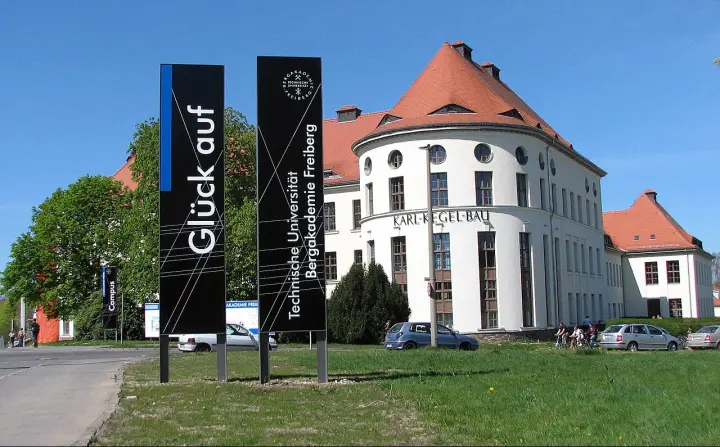
No tuition fee Tuition · sourced 2 years Duration View detailsCampus photos on this page: RobertPorter (Public domain) — via Wikimedia Commons.
Computational Materials Science (CMS) — FAQs
5 questions
Tuition is No tuition fee. Taken from the university's published fees page, not re-checked since — confirm it before you budget. We confirm the current fee and the scholarships you qualify for — free.
The main intake is Winter semester. Most universities admit on a rolling basis — we confirm the exact deadline for your profile, free.
Typical Candidates' Profiles A typical CMS student is interested in mechanics of materials and structures, in programming, and in simulation methods, and is curious to know how things work. A distinctive feature of this student is that she/he would like to know how computer simulations and data analysis can be used to predict the behaviour of specimens, devices, or maybe even of the yet non-existent "virtual materials" with superior properties. Candidates who have a background in applied computer science, applied mathematics and similar subjects strive to achieve domain knowledge in linking software development and methods of deep learning with materials science in order to broaden their professional profiles. Minimum Conditions for Admission to CMS: Bachelor's degree or an equivalent degree in the field of Mechanical Engineering, Civil Engineering, Aerospace Engineering, Computational Engineering, Applied Maths, Applied Computer Science, Materials Science, (Solid State) Physics, Nanotechnology, or other comparable studies Grade Point Average (GPA) of at least 75% This is equivalent to 2.0 (German grading system) and 3.0 of 4.0 maximum points (United States grading system) English certificate (see below) Programming skills are an advantage. English: E.G. TOEFL iBT (before 2026): 90 Reading: 23 Listening: 23 Speaking: 22 Writing: 22 IELTS Academic: 6.5.
The programme runs about 24 months full-time.
Yes — shortlisting, SOP, LOR, Resume, application, scholarships and visa guidance are all free. We're paid by partner universities, not by you.
Apply to Computational Materials Science (CMS) — free help
A counsellor calls you back during office hours — 9am to 8pm IST, Mon to Sat. We are open now.