
Research Master's in Neurocognitive Psychology
Carl von Ossietzky Universität Oldenburg · Oldenburg, Europe
Duration
24 mo
Tuition
No tuition fee
sourcedIntake
Winter semester
English
—
Winter semester intake. Most universities admit on a rolling basis — we confirm the exact application deadline for your profile, free.
Course details verified 10 Sep 2026 — intakes, entry requirements and course facts · official source
Fee sourced Taken from the university's published fees page, not re-checked since — confirm it before you budget. See the university fees page.
About this programme
The Master's degree in Neurocognitive Psychology is a two-year research-oriented international graduate programme that provides systematic coverage of the major fields in psychology and in-depth training in cognitive neuroscience and neuropsychology. In our English-taught classes taught in person in Oldenburg, Germany, you can get in direct contact with teachers and students from all over the world and build a long-lasting professional network. As a graduate student, you will be able to choose from a variety of research and applied modules that span the research focus of the Department of Psychology, and you will be actively involved in its ongoing research activities (cutting-edge topics such as multisensory integration, auditory perception and noise exposure, brain oscillations and behaviour, cortical plasticity, individual differences in cognitive functioning and social cognition, ambulatory assessments of hearing and cognitive decline and non-pharmacological interventions, neuromodulation, neurophysiology of everyday tasks, motor imagery and neurofeedback for functional neurorehabilitation, brain-machine interfaces, pharmaco-neuroimaging, and statistical modelling of brain behaviour associations). The mandatory internship at an external research institution, clinic, administrative body, company or consultancy will help to shape your career path. The programme does not focus on clinical psychology. Reasons to study Neurocognitive Psychology hands-on research experience in state-of-the-art neuroscience and psychology labs (fMRI, (mobile) EEG, transcranial magnetic and alternating current stimulation (TMS/tACS), MEG, fNIRS) English-taught psychology programme with many international students interdisciplinary background of teachers and students ERASMUS+ partnerships for studying abroad with a number of renowned European universities Career perspectives The Master's programme prepares students for a wide range of attractive employment fields. The department regularly organises events to help with the career orientation. Almost all graduates find a job within a few months of graduation or opt to continue their studies: Currently, about 50% continue into a doctoral programme while most others work in a clinical setting. The programme does not result in a license to practice psychotherapy in Germany. Possible career fields include: an academic career (PhD) research in psychology and neuroscience neuropsychological assessment and therapy in neurological hospitals and rehabilitation units areas focusing on human information processing and decision making: human-machine interfaces, usability, cognitive ergonomics data science The general part of the course contains five mandatory modules, including computation in neuroscience with Matlab/PsychoPy, statistics, diagnostics and assessment, and scientific communication. The Minor module allows you to broaden your view and take courses from fields related to psychology, additional psychology courses, or German/academic English courses. The specialised part offers several modules from which students may choose according to their interests (requiring 24 CP). The practical part of the programme includes 12 CP for a mandatory internship (lasting 360 hours) which can be carried out in (clinical) institutions, companies, or research groups that employ psychologists. Another nine CP must be acquired via the practical project module, where you will gain hands-on research experience in one of the psychology labs at the University of Oldenburg. 30 CP are allocated for completing a Master's thesis with an accompanying Master's colloquium. General part (mandatory): 45 CP Research Methods Psychological Assessment and Diagnostics Communication of Scientific Results Minor (choose a class that fits your interests) Computation in Neuroscience Specialised part: choose 24 CP Neurophysiology (EEG) Neurocognition Sex and Cognition Neuropsychology Applied Cognitive Psychology Human Computer Interaction Funct
Intakes & deadlines
Winter semester
Dates confirmed for your profile · Open
Entry requirements
-
English
E.G. IELTS Academic: 5.5 TOEFL iBT (since 2026): 4 Reading: 4 Listening: 4 Speaking: 4 Writing: 4 TOEFL iBT Home Edition (since 2026): 4 Reading: 4 Listening: 4 Speaking: 4 Writing: 4 TOEFL iBT (before 2026): 72 Reading: 18 Listening: 17 Speaking: 20 Writing: 17 UNIcert® English: UNIcert® II Cambridge English Qualifications: B2 First TOEIC: 785 Reading: 385 Listening: 400 Speaking: 160 Writing: 150 telc English: telc English B2-C1 University PTE Academic: 59
-
Prerequisites
Applicants are eligible for admission if they have completed a Bachelor's degree of at least 180 ECTS credits (three year full-time study) in the fields of psychology, cognitive science, or in a related field with the emphasis of study on psychology and/or cognitive sciences. At least 90 credit points (equivalent to 1.5 years) must have been obtained in the area of psychology and/or cognitive sciences. Alternatively, students with a Bachelor's degree from other relevant fields (natural sciences, mathematics, informatics, audiology, or medicine) may apply. All applicants must prove the following: 5 credit points (150 hours) in statistics 5 credit points (150 hours) in experimental psychological or neuroscientific work (e.g. research internship, experimental Bachelor's thesis, research assistant work, experimental projects as part of your studies) 5 credit points (150 hours) in biological psychology/neurosciences Students may have to catch up on missing competencies in statistics in an additional module. The completion of the experimental work and the competencies in biological psychology/neuroscience need to be proven upon application. Students will be admitted based on a ranking order based on the grade of their Bachelor's degree and points for additional qualifications: at least three months of proven work experience or relevant scientific activities, e.g. as a student assistant or a Bachelor's thesis concerning neuropsychology, neurology, neurocognitive psychiatry, or cognitive and neurosciences documented programming experience of at least 2 credit points or 60 hours proven stay abroad relevant to the study of at least four months English skills at level C1 or higher, proof not older than two years at least six months of continuous proven, voluntary social involvement (e.g. committee work, year of voluntary social work) Details on the application and ranking procedure can be found on the course website. We do not ask for letters of recommendation or letters of motivation!
-
Documents
SOP, LOR & Resume — generate them free in 2 minutes.
Fees & scholarships
No tuition fee tuition (sourced). We confirm the exact costs and the scholarships you qualify for at Carl von Ossietzky Universität Oldenburg — free, for your profile.
Other programmes at Carl von Ossietzky Universität Oldenburg
Biology
No tuition fee Tuition · sourced 2 years Duration View details CVO Carl von Ossietzky Universität OldenburgData Science and Machine Learning, MSc
No tuition fee Tuition · sourced 2 years Duration View details CVO Carl von Ossietzky Universität OldenburgDigitalised Energy Systems
No tuition fee Tuition · sourced 2 years Duration View details CVO Carl von Ossietzky Universität OldenburgMaster of Science in Engineering Physics
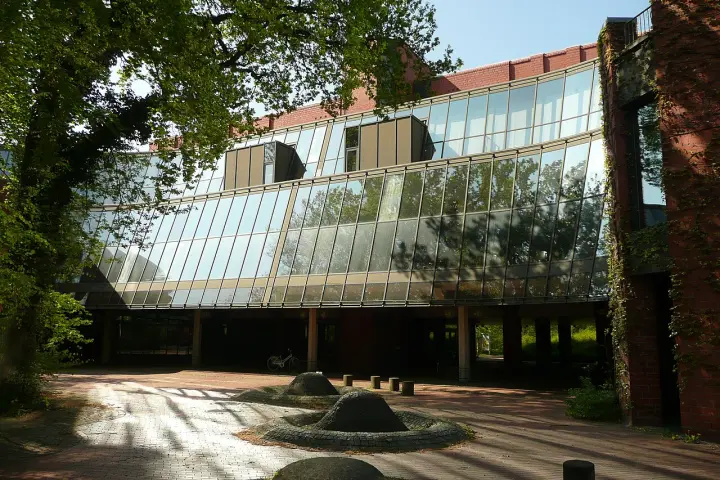
No tuition fee Tuition · sourced 2 years Duration View detailsCampus photos on this page: WilfriedC (Wilfried Cordes) (CC BY-SA 3.0) — via Wikimedia Commons.
Research Master's in Neurocognitive Psychology — FAQs
5 questions
Tuition is No tuition fee. Taken from the university's published fees page, not re-checked since — confirm it before you budget. We confirm the current fee and the scholarships you qualify for — free.
The main intake is Winter semester. Most universities admit on a rolling basis — we confirm the exact deadline for your profile, free.
Applicants are eligible for admission if they have completed a Bachelor's degree of at least 180 ECTS credits (three year full-time study) in the fields of psychology, cognitive science, or in a related field with the emphasis of study on psychology and/or cognitive sciences. At least 90 credit points (equivalent to 1.5 years) must have been obtained in the area of psychology and/or cognitive sciences. Alternatively, students with a Bachelor's degree from other relevant fields (natural sciences, mathematics, informatics, audiology, or medicine) may apply. All applicants must prove the following: 5 credit points (150 hours) in statistics 5 credit points (150 hours) in experimental psychological or neuroscientific work (e.g. research internship, experimental Bachelor's thesis, research assistant work, experimental projects as part of your studies) 5 credit points (150 hours) in biological psychology/neurosciences Students may have to catch up on missing competencies in statistics in an additional module. The completion of the experimental work and the competencies in biological psychology/neuroscience need to be proven upon application. Students will be admitted based on a ranking order based on the grade of their Bachelor's degree and points for additional qualifications: at least three months of proven work experience or relevant scientific activities, e.g. as a student assistant or a Bachelor's thesis concerning neuropsychology, neurology, neurocognitive psychiatry, or cognitive and neurosciences documented programming experience of at least 2 credit points or 60 hours proven stay abroad relevant to the study of at least four months English skills at level C1 or higher, proof not older than two years at least six months of continuous proven, voluntary social involvement (e.g. committee work, year of voluntary social work) Details on the application and ranking procedure can be found on the course website. We do not ask for letters of recommendation or letters of motivation! English: E.G. IELTS Academic: 5.5 TOEFL iBT (since 2026): 4 Reading: 4 Listening: 4 Speaking: 4 Writing: 4 TOEFL iBT Home Edition (since 2026): 4 Reading: 4 Listening: 4 Speaking: 4 Writing: 4 TOEFL iBT (before 2026): 72 Reading: 18 Listening: 17 Speaking: 20 Writing: 17 UNIcert® English: UNIcert® II Cambridge English Qualifications: B2 First TOEIC: 785 Reading: 385 Listening: 400 Speaking: 160 Writing: 150 telc English: telc English B2-C1 University PTE Academic: 59.
The programme runs about 24 months full-time.
Yes — shortlisting, SOP, LOR, Resume, application, scholarships and visa guidance are all free. We're paid by partner universities, not by you.
Apply to Research Master's in Neurocognitive Psychology — free help
A counsellor calls you back during office hours — 9am to 8pm IST, Mon to Sat. We are open now.