
Data Science and Machine Learning, MSc
Carl von Ossietzky Universität Oldenburg · Oldenburg, Europe
Duration
24 mo
Tuition
No tuition fee
sourcedIntake
Winter semester
English
—
Winter semester intake. Most universities admit on a rolling basis — we confirm the exact application deadline for your profile, free.
Course details verified 10 Sep 2026 — intakes, entry requirements and course facts · official source
Fee sourced Taken from the university's published fees page, not re-checked since — confirm it before you budget. See the university fees page.
About this programme
The Data Science and Machine Learning programme concentrates on data science research activities with a focus on life and natural sciences, including medicine. Students in the programme acquire professional and interdisciplinary skills to meet the challenges of digital transformation in society and at the university. They master the methodological foundations of complex data analysis with a strong focus on machine learning methods, and they develop a comprehensive understanding of developing, implementing, and analysing data-driven algorithms on both technical and conceptual levels. The programme enables students to gain specific expertise in applying analytical methods across three specialisation areas and effectively communicate insights to domain experts. We offer the following three specialisations: Theoretical Foundations of Machine Learning in Mathematics and Natural Sciences Data Science and Machine Learning in Medicine and Health Care Data-Driven Speech and Hearing Sciences Students will experience a high proportion of guided but independent research directly in the laboratories of the university. Reasons to study Data Science and Machine Learning Get to know, apply and develop state-of-the art machine learning methods across a broad variety of different data modalities Specialise in one of three areas of specialisation (theoretical foundations, health care, hearing science) and learn how to address data-bound problems in these domains Develop expertise that is sustainable and relevant to society English-taught programme with many international students Interdisciplinary background of teachers and students Small groups with 30 students per year Optional integrated language courses and internship Extensive support structures (tutorials, learning workshops, etc.) Career perspectives Graduates will be excellently qualified for specialist and management positions in various fields of activity involving the collection, management, processing, analysis and interpretation of digital data, as well as for academic research. Possible career fields include: data scientist with a focus on data analysis and model development and validation data analyst specialising in data cleaning and preparation data engineer specialising in the development and management of data pipelines machine learning engineer specialising in the selection, adaptation and further development of machine learning (including deep learning) methods for various information processing tasks Contacts with companies and start-ups will also be promoted. Core 30 CP Introduction to Data Science Applied Deep Learning Machine Learning Statistical Learning Interdisciplinary Lecture Series Data Science & Data Ethics Core Electives: choose 12 CP Exploring Research Data Management Trustworthy Machine Learning Machine Learning II Advanced Topics in Applied Deep Learning Time Series Analysis Introduction to IT Security Designing Explainable Artificial Intelligence Applied AI – Multimodal-Multisensor Interfaces Internship Current topics in Data Science and Machine Learning German / Academic English _______ Specialisation: Theoretical Foundations of Machine Learning in Mathematics and Natural Sciences Compulsory 18 CP Theoretical Foundations of Machine Learning and Data Science Group project Electives: choose 18 CP + additional 12 CP from the core area Mathematical Foundations of Statistical Learning Introduction to Numerical Methods for Partial Differential Equations Computational Physics Modelling of Complex Systems Current Topics in Theoretical Foundations of Machine Learning in Mathematics and Natural Sciences Information Processing and Communication _______ Specialisation: Data Science and Machine Learning in Medicine and Health Care Compulsory 30 CP Medical Data Pipelines Medical Data Analysis with Deep Learning Big Data Analytics and Clinical Decision Support Group project Electives: choose 18 CP Special topics in "Medical Informatics" Medical Technology Medical Basics B
Intakes & deadlines
Winter semester
Dates confirmed for your profile · Open
Entry requirements
-
English
E.G. IELTS Academic: 5.5 TOEFL iBT Home Edition (since 2026): 4 Reading: 4 Listening: 4 Speaking: 4 Writing: 4 TOEFL iBT (since 2026): 4 Reading: 4 Listening: 4 Speaking: 4 Writing: 4 TOEFL iBT Home Edition (before 2026): 72 Reading: 18 Listening: 17 Speaking: 20 Writing: 17 TOEFL iBT (before 2026): 72 Reading: 18 Listening: 17 Speaking: 20 Writing: 17 Cambridge English Qualifications: B2 First UNIcert® English: UNIcert® II TOEIC: 785 Reading: 385 Listening: 400 Speaking: 160 Writing: 150 telc English: telc English B2-C1 University PTE Academic: 59
-
Prerequisites
Applicants are eligible for admission if they have completed a Bachelor's degree of at least 180 ECTS credits (three year full-time study) in the fields of data science, mathematics, statistics, physics, computer science, business informatics or a closely related field. All applicants must prove the following upon application: 30 credit points (900 hours) in mathematics and computer science including at least 20 credit points in mathematics, of which 5 credit points in probability theory or statistics 5 credit points in analysis or linear algebra 10 credit points in computer science, of which 5 credit points in the field of algorithms 5 credit points in a higher programming language (preferably Python) Students without a degree in the fields of data science, mathematics, statistics, physics, computer science, or business informatics must prove an additional 15 credit points (450 hours) in data science. Competencies in data science can also be proven with work experience in the field. If students can prove 20 credit point in mathematics and 10 credit points in computer science and do not miss more than five credit points in the areas of statistics and algorithms/programming, they may catch up on missing competencies in an additional module. Please note that one ECTS credit point equals 30 hours of work including courses, preparation, self-study and exams. Students will be admitted based on a ranking order determined by the grade of their Bachelor's degree and points for additional qualifications: Relevant professional or scientific activity in the field of data science or machine learning (work experience, internships, Bachelor's thesis; at least three months full-time work) Details on the application and ranking procedure can be found on the course website. We do not ask for letters of recommendation or letters of motivation!
-
Documents
SOP, LOR & Resume — generate them free in 2 minutes.
Fees & scholarships
No tuition fee tuition (sourced). We confirm the exact costs and the scholarships you qualify for at Carl von Ossietzky Universität Oldenburg — free, for your profile.
Other programmes at Carl von Ossietzky Universität Oldenburg
Biology
No tuition fee Tuition · sourced 2 years Duration View details CVO Carl von Ossietzky Universität OldenburgDigitalised Energy Systems
No tuition fee Tuition · sourced 2 years Duration View details CVO Carl von Ossietzky Universität OldenburgMaster of Science in Engineering Physics
No tuition fee Tuition · sourced 2 years Duration View details CVO Carl von Ossietzky Universität OldenburgMaster of Science in Neuroscience
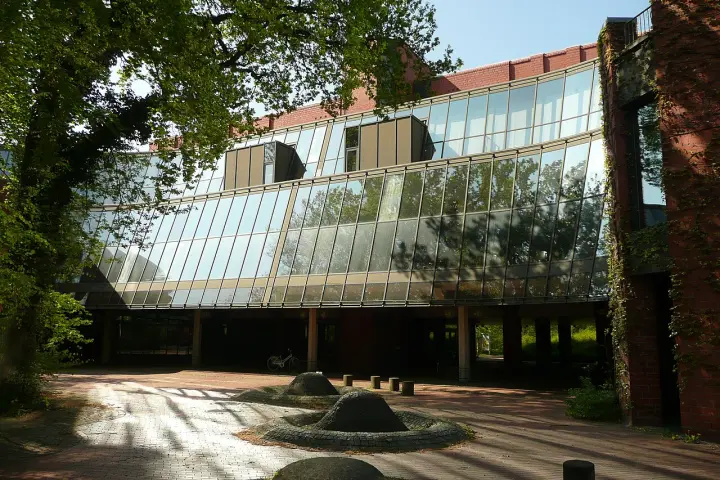
No tuition fee Tuition · sourced 2 years Duration View detailsCampus photos on this page: WilfriedC (Wilfried Cordes) (CC BY-SA 3.0) — via Wikimedia Commons.
Data Science and Machine Learning, MSc — FAQs
5 questions
Tuition is No tuition fee. Taken from the university's published fees page, not re-checked since — confirm it before you budget. We confirm the current fee and the scholarships you qualify for — free.
The main intake is Winter semester. Most universities admit on a rolling basis — we confirm the exact deadline for your profile, free.
Applicants are eligible for admission if they have completed a Bachelor's degree of at least 180 ECTS credits (three year full-time study) in the fields of data science, mathematics, statistics, physics, computer science, business informatics or a closely related field. All applicants must prove the following upon application: 30 credit points (900 hours) in mathematics and computer science including at least 20 credit points in mathematics, of which 5 credit points in probability theory or statistics 5 credit points in analysis or linear algebra 10 credit points in computer science, of which 5 credit points in the field of algorithms 5 credit points in a higher programming language (preferably Python) Students without a degree in the fields of data science, mathematics, statistics, physics, computer science, or business informatics must prove an additional 15 credit points (450 hours) in data science. Competencies in data science can also be proven with work experience in the field. If students can prove 20 credit point in mathematics and 10 credit points in computer science and do not miss more than five credit points in the areas of statistics and algorithms/programming, they may catch up on missing competencies in an additional module. Please note that one ECTS credit point equals 30 hours of work including courses, preparation, self-study and exams. Students will be admitted based on a ranking order determined by the grade of their Bachelor's degree and points for additional qualifications: Relevant professional or scientific activity in the field of data science or machine learning (work experience, internships, Bachelor's thesis; at least three months full-time work) Details on the application and ranking procedure can be found on the course website. We do not ask for letters of recommendation or letters of motivation! English: E.G. IELTS Academic: 5.5 TOEFL iBT Home Edition (since 2026): 4 Reading: 4 Listening: 4 Speaking: 4 Writing: 4 TOEFL iBT (since 2026): 4 Reading: 4 Listening: 4 Speaking: 4 Writing: 4 TOEFL iBT Home Edition (before 2026): 72 Reading: 18 Listening: 17 Speaking: 20 Writing: 17 TOEFL iBT (before 2026): 72 Reading: 18 Listening: 17 Speaking: 20 Writing: 17 Cambridge English Qualifications: B2 First UNIcert® English: UNIcert® II TOEIC: 785 Reading: 385 Listening: 400 Speaking: 160 Writing: 150 telc English: telc English B2-C1 University PTE Academic: 59.
The programme runs about 24 months full-time.
Yes — shortlisting, SOP, LOR, Resume, application, scholarships and visa guidance are all free. We're paid by partner universities, not by you.
Apply to Data Science and Machine Learning, MSc — free help
A counsellor calls you back during office hours — 9am to 8pm IST, Mon to Sat. We are open now.