
Master of Science in Neuroscience
Carl von Ossietzky Universität Oldenburg · Oldenburg, Europe
Duration
24 mo
Tuition
No tuition fee
sourcedIntake
Winter semester
English
—
Winter semester intake. Most universities admit on a rolling basis — we confirm the exact application deadline for your profile, free.
Course details verified 10 Sep 2026 — intakes, entry requirements and course facts · official source
Fee sourced Taken from the university's published fees page, not re-checked since — confirm it before you budget. See the university fees page.
About this programme
The Master's programme in Neuroscience at University of Oldenburg provides in-depth training in the neurosciences. The programme is research-oriented and international. It aims to attract students with a variety of different Bachelor's degrees. Our Master’s programme Neuroscience is devoted to basic science and mainly covers the nervous systems of vertebrate and invertebrate animals. The programme focuses on Sensory, Behavioural, and Computational Neuroscience. Students can choose to specialise within these areas or combine them with neighbouring disciplines. In addition to theoretical and experimental neuroscience background knowledge, students acquire transferable skills and hands-on research experience in at least one research project prior to their Master’s thesis. Four out of many distinctive characteristics: International: All courses in English, semester abroad is possible Science-oriented: Intensive hands-on modules in small groups and individual student projects connecting to ongoing research projects Interdisciplinary: Teachers & students with diverse backgrounds, joint courses with the Master's programmes in Biology, Neurocognitive Psychology, Molecular Biomedicine and Physics, Engineering and Medicine Flexible: There are no mandatory courses. Students design their individual curriculum from a large range of elective modules based on their interests. The unique focus on Sensory, Behavioural, and Computational Neuroscience builds on our local strengths as reflected in a number of cooperative research and graduate education programmes. These established structures integrate basic biological research and applied research on sensory processes. Our Master's students are guided towards independent scientific work by direct interaction within internationally recognised research labs. The broad scope of sensory research also offers a wide range of methods to learn, from molecular genetics to electrophysiology, anatomy, and behaviour, and from mathematical modelling to modern imaging techniques. Finally, our teaching faculty directly reflects the multidisciplinary nature of neuroscience, providing a unique choice for developing individual strengths and interests. Students who are specifically interested in molecular or in cognitive psychology should consider our "sister programmes" in Molecular Biomedicine or Neurocognitive Psychology, which are also offered at University of Oldenburg. The programme takes two years to achieve 120 ECTS credit points. All courses are elective. One research module and a Master's thesis are mandatory and can be chosen from a broad variety of topics. Courses can be selected according to your individual preference for topics and types of modules: Background modules: Provide background knowledge on a neuroscientific topic. Courses for eight to 20 students are organised in full-time blocks of two to seven weeks and usually comprise lectures, seminars, and hands-on practical experience. A minimum of 30 credit points must be acquired in background modules. Research modules: These are individual student research projects in the supervisor's lab. The aim is to practise independent research, including experiments, background literature, and presentation of results. One research module has 15 ECTS and typically consists of six to eight weeks lab time plus time for preparation and for writing the report. Research modules are taken in one of the neuroscientific research groups at University of Oldenburg. External projects at a university, research institution, or a company science laboratory, either in Germany or abroad, are also possible. A minimum of 15 credit points must be acquired in research modules. Skills modules: Professional skills beyond the specifics of neuroscience are developed in courses for up to 24 students. Topics include programming and statistical data analysis, science communication and ethical discussions. A minimum of six credit points must be acquired in skills modules. Electives: O
Intakes & deadlines
Winter semester
Dates confirmed for your profile · Open
Entry requirements
-
English
E.G. TOEFL iBT (since 2026): 4 Reading: 4 Listening: 4 Speaking: 4 Writing: 4 IELTS Academic: 5.5
-
Prerequisites
Mandatory qualifications / documents: Applicants must hold a Bachelor's degree, e.g. in neuroscience, biology, natural sciences, or engineering. At least 150 credit points must be documented. At least 12 credit points must have been obtained in neuroscience and a further 12 credit points in mathematics, statistics, or programming. (We also acknowledge certificates from extracurricular online courses.) Up to six credit points in one of these two broad areas may be acquired in catch-up individual studies. Proof of English proficiency The completed specific eligibility form Advantageous qualifications: Category A: German grade average of Bachelor's degree (calculation of German grade is done by uni-assist) 1.00 - 1.29 (6 points) 1.30 - 1.49 (5 points) 1.50 - 1.69 (4 points) 1.70 - 1.89 (3 points) 1.90 - 2.19 (2 points) 2.20 - 2.49 (1 point) 2.50 - 4.00 (0 points) Category B: Further points can be obtained through additional qualifications. Scientific project experience (BSc thesis and scientific projects in neuroscience) up to 1.5 points Relevant specialised knowledge (at least 18 ECTS in neurobiology and 12 ECTS in statistics, programming, or mathematics) up to 1 point English language skills (proven English proficiency C1 or higher; not older than two years) 1 point Relevant professional experience (inside or outside of the university) 0.5 point International experience (study-related stay abroad outside the home country for at least one semester) 0.5 point Special academic achievements (proven publication, award or prize for academic achievements) 0.5 point Commitment (proven voluntary social or community commitment for at least six months) 0.5 point Please make sure to include all relevant supporting documents in your application, including the completed eligibility form. These are the only basis for the admissions committee to evaluate your specific eligibility.
-
Documents
SOP, LOR & Resume — generate them free in 2 minutes.
Fees & scholarships
No tuition fee tuition (sourced). We confirm the exact costs and the scholarships you qualify for at Carl von Ossietzky Universität Oldenburg — free, for your profile.
Other programmes at Carl von Ossietzky Universität Oldenburg
Biology
No tuition fee Tuition · sourced 2 years Duration View details CVO Carl von Ossietzky Universität OldenburgData Science and Machine Learning, MSc
No tuition fee Tuition · sourced 2 years Duration View details CVO Carl von Ossietzky Universität OldenburgDigitalised Energy Systems
No tuition fee Tuition · sourced 2 years Duration View details CVO Carl von Ossietzky Universität OldenburgMaster of Science in Engineering Physics
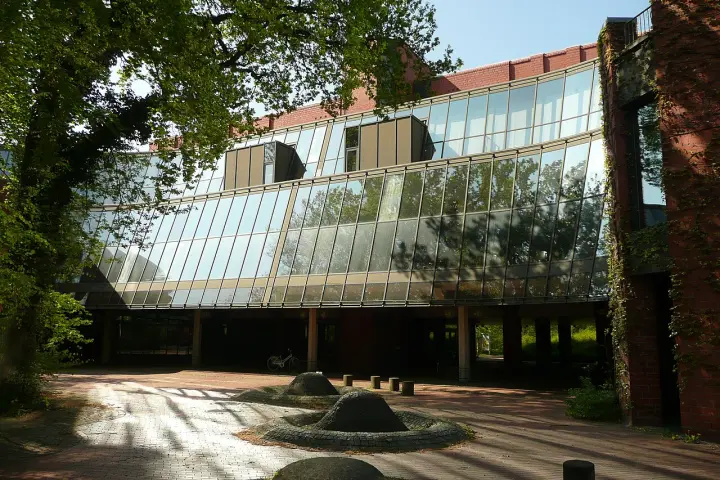
No tuition fee Tuition · sourced 2 years Duration View detailsCampus photos on this page: WilfriedC (Wilfried Cordes) (CC BY-SA 3.0) — via Wikimedia Commons.
Master of Science in Neuroscience — FAQs
5 questions
Tuition is No tuition fee. Taken from the university's published fees page, not re-checked since — confirm it before you budget. We confirm the current fee and the scholarships you qualify for — free.
The main intake is Winter semester. Most universities admit on a rolling basis — we confirm the exact deadline for your profile, free.
Mandatory qualifications / documents: Applicants must hold a Bachelor's degree, e.g. in neuroscience, biology, natural sciences, or engineering. At least 150 credit points must be documented. At least 12 credit points must have been obtained in neuroscience and a further 12 credit points in mathematics, statistics, or programming. (We also acknowledge certificates from extracurricular online courses.) Up to six credit points in one of these two broad areas may be acquired in catch-up individual studies. Proof of English proficiency The completed specific eligibility form Advantageous qualifications: Category A: German grade average of Bachelor's degree (calculation of German grade is done by uni-assist) 1.00 - 1.29 (6 points) 1.30 - 1.49 (5 points) 1.50 - 1.69 (4 points) 1.70 - 1.89 (3 points) 1.90 - 2.19 (2 points) 2.20 - 2.49 (1 point) 2.50 - 4.00 (0 points) Category B: Further points can be obtained through additional qualifications. Scientific project experience (BSc thesis and scientific projects in neuroscience) up to 1.5 points Relevant specialised knowledge (at least 18 ECTS in neurobiology and 12 ECTS in statistics, programming, or mathematics) up to 1 point English language skills (proven English proficiency C1 or higher; not older than two years) 1 point Relevant professional experience (inside or outside of the university) 0.5 point International experience (study-related stay abroad outside the home country for at least one semester) 0.5 point Special academic achievements (proven publication, award or prize for academic achievements) 0.5 point Commitment (proven voluntary social or community commitment for at least six months) 0.5 point Please make sure to include all relevant supporting documents in your application, including the completed eligibility form. These are the only basis for the admissions committee to evaluate your specific eligibility. English: E.G. TOEFL iBT (since 2026): 4 Reading: 4 Listening: 4 Speaking: 4 Writing: 4 IELTS Academic: 5.5.
The programme runs about 24 months full-time.
Yes — shortlisting, SOP, LOR, Resume, application, scholarships and visa guidance are all free. We're paid by partner universities, not by you.
Apply to Master of Science in Neuroscience — free help
A counsellor calls you back during office hours — 9am to 8pm IST, Mon to Sat. We are open now.