
Knowledge and Communication
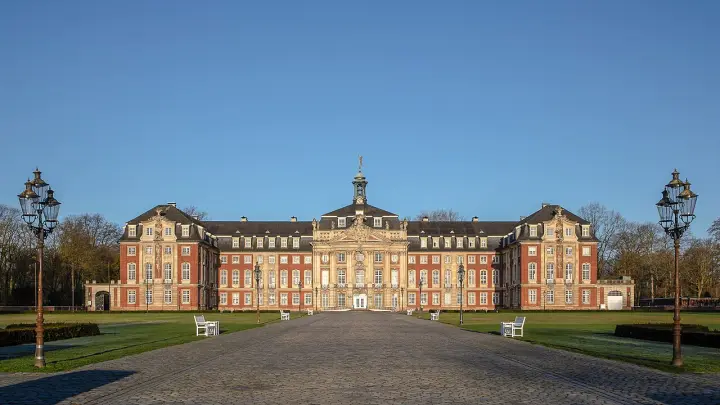
University of Münster · Münster, Europe
Duration
24 mo
Tuition
No tuition fee
sourcedIntake
Winter semester
English
—
Winter semester intake. Most universities admit on a rolling basis — we confirm the exact application deadline for your profile, free.
Course details verified 09 Sep 2026 — intakes, entry requirements and course facts · official source
Fee sourced Taken from the university's published fees page, not re-checked since — confirm it before you budget. See the university fees page.
About this programme
Bridging Science and Society In this MA programme, students learn to analyse the role of knowledge communication in society. The programme broadly examines how knowledge is created, processed, disseminated, and used, including the effects of knowledge and knowledge communication. Our concept of knowledge encompasses not only knowledge validated by the scientific system but also alternative forms of knowledge and everyday understanding. Following this approach, knowledge can be generated in many different ways, with data playing a central role. By specialising in computational communication science, students gain expertise in linking large volumes of data and knowledge, and in processing, organising, and interpreting knowledge in the form of data. With its emphasis on highly topical content and computational social science, this Master’s programme develops sought-after specialists who are well-prepared for diverse career opportunities. Three key aspects distinguish the “Knowledge and Communication” programme from other study programmes at the Department of Communication in Münster, as well as from those at other universities: It offers a consistent specialisation in knowledge communication while being integrated with other areas of communication science. It emphasises computational communication science while also covering other methodological skills. It is the department’s first programme offered in English. This thematic focus, combined with a concentration on computational methods and English as the internationally applicable language of instruction, makes the Master’s in Knowledge and Communication truly unique. Prospective students can find all the important information on the structure and organisation of the MA in Knowledge and Communication, as well as on the admission requirements, student life, accommodation, visas and financing, in an FAQ on our website. The modules of the MA Knowledge and Communication build upon one another. The first semester provides advanced knowledge in the field of knowledge and science communication. It also expands expertise in methods of empirical social research. The basic concepts, i.e., approaches and theories of knowledge communication, are anchored in clearly defined compulsory courses in Modules 1 and 3. Module 1 ("Concepts in Knowledge and Science Communication") teaches basic notions of knowledge communication and related theories and models in two seminars. The "Knowledge Transfer" seminar in Module 3 spotlights mechanisms of knowledge communication practice. The MA Knowledge and Communication is a consecutive programme. Therefore, it builds on the knowledge that students bring from their BA programmes. In this respect, Module 2 ("Quantitative and Qualitative Methods of Empirical Research") builds on students' basic expertise in quantitative ("statistics") and qualitative social research. The second semester deepens disciplinary and specialist knowledge. Particular emphasis is placed on broadening and deepening analytical and methodological skills. In Module 6 ("Specific Aspects of Knowledge Communication I"), students extend their skills in the field of knowledge communication. In Module 5 ("Computational Communication Science"), students receive an introduction to computational methods as a specialisation of the programme. The modules in the first semester are fundamental to complete the research module, Module 4 ("Research Module: Knowledge and Communication"). In this module, students design, plan, and carry out a comprehensive research project. To have sufficient time to complete the research project from conception to final analysis, the research seminar, unlike other seminars in the programme, is held for four hours per week instead of two and lasts for two semesters: the second and third semesters. In the third semester, students conduct independent research and round off their disciplinary knowledge repertoire. Both in Module 9 ("Specific Aspects of Knowledge Communicatio
Intakes & deadlines
Winter semester
Dates confirmed for your profile · Open
Entry requirements
-
English
E.G. Cambridge English Qualifications: C1 Advanced TOEFL iBT (since 2026): 5 Reading: 5 Listening: 5 Speaking: 5 Writing: 5 TOEFL iBT (before 2026): 95 Reading: 24 Listening: 22 Speaking: 25 Writing: 24 IELTS Academic: 7 TOEIC: 945 Reading: 455 Listening: 490 Speaking: 180 Writing: 180
-
Prerequisites
This programme is designed for graduates with a Bachelor’s degree in communication science or media studies and a background in social science methods. Consequently, the first requirement is a degree in a relevant study programme with a standard period of study of at least six semesters, which has been successfully completed with a Bachelor’s or another professionally qualifying degree (e.g. "Magister", Diploma, state examination, etc.) To be relevant to the study programme, at least 70 ECTS credits (or equivalent) must have been earned in communication science, journalism studies, or media studies. The 70 credit points must include at least 10 credit points in communication science theories and approaches. A maximum of 10 of the required 70 credit points may be earned from practical media and communication courses. In addition, at least 20 credits of the required 70 must be earned in relevant empirical research methods (e.g. survey methods, content analysis, statistical analysis). Of these, a maximum of 10 credits may be proven by empirical project seminars or by an empirical Bachelor’s thesis. Applicants must also have earned at least 5 ECTS credits in statistics. A basic understanding of descriptive and inferential statistics is essential, as this prior knowledge is built on from the very first semester. Courses on general academic work are not recognised. A certificate or transcript of records must clearly evidence the credit points. The credit points must also be listed in a course overview. Applicants must also provide evidence of their English language skills (see below). A checklist of all required documents for the application can be found on the "Application and Enrolment" page of the programme. Details of the requirements can also be found in the Admissions Regulations on the "Forms and Downloads" page.
-
Documents
SOP, LOR & Resume — generate them free in 2 minutes.
Fees & scholarships
No tuition fee tuition (sourced). We confirm the exact costs and the scholarships you qualify for at University of Münster — free, for your profile.
Other programmes at University of Münster
Business Administration
No tuition fee Tuition · sourced 2 years Duration View details MÜ University of MünsterBusiness Development
No tuition fee Tuition · sourced 2 years Duration View details MÜ University of MünsterComparative and Global Law (LLM)
No tuition fee Tuition · sourced 1 year Duration View details MÜ University of MünsterData Science
€4,238/yr Tuition · sourced 2 years Duration View detailsCampus photos on this page: Dietmar Rabich (CC BY-SA 4.0) — via Wikimedia Commons.
Knowledge and Communication — FAQs
5 questions
Tuition is No tuition fee. Taken from the university's published fees page, not re-checked since — confirm it before you budget. We confirm the current fee and the scholarships you qualify for — free.
The main intake is Winter semester. Most universities admit on a rolling basis — we confirm the exact deadline for your profile, free.
This programme is designed for graduates with a Bachelor’s degree in communication science or media studies and a background in social science methods. Consequently, the first requirement is a degree in a relevant study programme with a standard period of study of at least six semesters, which has been successfully completed with a Bachelor’s or another professionally qualifying degree (e.g. "Magister", Diploma, state examination, etc.) To be relevant to the study programme, at least 70 ECTS credits (or equivalent) must have been earned in communication science, journalism studies, or media studies. The 70 credit points must include at least 10 credit points in communication science theories and approaches. A maximum of 10 of the required 70 credit points may be earned from practical media and communication courses. In addition, at least 20 credits of the required 70 must be earned in relevant empirical research methods (e.g. survey methods, content analysis, statistical analysis). Of these, a maximum of 10 credits may be proven by empirical project seminars or by an empirical Bachelor’s thesis. Applicants must also have earned at least 5 ECTS credits in statistics. A basic understanding of descriptive and inferential statistics is essential, as this prior knowledge is built on from the very first semester. Courses on general academic work are not recognised. A certificate or transcript of records must clearly evidence the credit points. The credit points must also be listed in a course overview. Applicants must also provide evidence of their English language skills (see below). A checklist of all required documents for the application can be found on the "Application and Enrolment" page of the programme. Details of the requirements can also be found in the Admissions Regulations on the "Forms and Downloads" page. English: E.G. Cambridge English Qualifications: C1 Advanced TOEFL iBT (since 2026): 5 Reading: 5 Listening: 5 Speaking: 5 Writing: 5 TOEFL iBT (before 2026): 95 Reading: 24 Listening: 22 Speaking: 25 Writing: 24 IELTS Academic: 7 TOEIC: 945 Reading: 455 Listening: 490 Speaking: 180 Writing: 180.
The programme runs about 24 months full-time.
Yes — shortlisting, SOP, LOR, Resume, application, scholarships and visa guidance are all free. We're paid by partner universities, not by you.
Apply to Knowledge and Communication — free help
A counsellor calls you back during office hours — 9am to 8pm IST, Mon to Sat. We are closed right now, so your request is first in line when we reopen.