
The Economics of Global Challenges
Universität Bremen · Bremen, Europe
Duration
24 mo
Tuition
No tuition fee
sourcedIntake
Winter semester
English
—
Winter semester intake. Most universities admit on a rolling basis — we confirm the exact application deadline for your profile, free.
Course details verified 10 Sep 2026 — intakes, entry requirements and course facts · official source
Fee sourced Taken from the university's published fees page, not re-checked since — confirm it before you budget. See the university fees page.
About this programme
Who is addressed: As a consecutive study programme, the Master's degree programme The Economics of Global Challenges follows a completed Bachelor's degree (or comparable first degree) in one of the following subjects: Economics Political Science Sociology Business Studies Law Business Informatics Industrial Engineering (or similar) What to expect: The study programme is interdisciplinary and internationally oriented. It is closely oriented towards current economic research, enables students to look at the most challenging economic problems and crises of global societies from different perspectives and to penetrate them analytically. The language of instruction is English. What to achieve: After the completion of the Master's programme, students can enter a profession directly or deepen their economics knowledge within a doctoral programme. How to get there: Economics graduates who wish to address the world’s most pressing challenges and who are able to analyse these challenges from different angles, need a wide range of economic and interdisciplinary skills. This extensive range of skills is taught in the course of dealing with specific areas of application – the “global challenges”. The United Nations described these global challenges in its Sustainable Development Goals (SDGs) as the goals for socially, ecologically and economically sustainable development and a just future. In order to gain a deeper understanding of these challenges, insights from other disciplines such as anthropology, psychology, sociology and evolutionary biology are also drawn upon. Double degree programme: A double degree programme is offered together with the University of Groningen. Information on the double degree programme "Economics" is published on the programme website: https://www.uni-bremen.de/en/wiwi/studies/master/the-economics-of-global-challenges. During the first year (first and second semesters), the students deepen their previous knowledge and the insights into microeconomics, macroeconomics and econometrics. Moreover, they get to know major impacts of the environment, like development and behaviour issues. The modules of the first year of study include: The Economics of Innovation (12 CP) Economic Policy (12 CP) Advanced Economics (6 CP) Advanced Econometrics (12 CP) The Economics of Growth and Development (6 | 12 CP) Understanding Human (Economic) Behaviour (6 | 12 CP) The course of study then focuses on the application of theoretical concepts on real-life concerns. In the third semester, the perspective shifts to trends, digitalisation and sustainability. Courses focus on current topics and the future. The application of knowledge in project work and the implementation of independent research projects in group and individual work round off the degree programme during the second year of study: The Economics of Digitisation (6 CP) Sustainability and the Economy of the Future (6 CP) Pluralist Economics (6 CP) Research Project (12 CP) Master’s Thesis (30 CP) Teaching regularly takes place in the form of seminars. In contrast to a lecture, seminars are geared more towards student participation. In the research project, students apply the knowledge they have already acquired, e.g. in solving case studies and subject-specific problems.
Intakes & deadlines
Winter semester
Dates confirmed for your profile · Open
Entry requirements
-
English
E.G. IELTS Academic: 7 TOEFL iBT (since 2026): 5 Reading: 5 Listening: 5 Speaking: 5 Writing: 5 TOEFL iBT (before 2026): 95 Reading: 24 Listening: 22 Speaking: 25 Writing: 24 Cambridge English Qualifications: C1 Advanced TOEIC: 945 Reading: 455 Listening: 490 Speaking: 180 Writing: 180 PTE Academic: 76 ISE (paper edition): ISE III UNIcert® English: UNIcert® III
-
Prerequisites
The admission requirements include: 1. Bachelor’s degree with a minimum of 180 ECTS from a degree programme of Economics Political Science Sociology Business Studies Law Business Informatics Industrial Engineering or similar 2. a minimum grade of 2.7 (German grading system) as the overall grade of the previous degree 3. knowledge of economics amounting to at least 12 CP from a prior degree programme 4. knowledge of statistical / econometric methods amounting to at least 9 CP from a prior degree programme 5. proof of English language proficiency (B2 for application, C1 for enrolment) --> please note: An MOI certificate is accepted to replace a separate language certificate.
-
Documents
SOP, LOR & Resume — generate them free in 2 minutes.
Fees & scholarships
No tuition fee tuition (sourced). We confirm the exact costs and the scholarships you qualify for at Universität Bremen — free, for your profile.
Other programmes at Universität Bremen
Applied Geosciences
No tuition fee Tuition · sourced 2 years Duration View details BR Universität BremenCommunication & Information Technology, MSc (CIT)
No tuition fee Tuition · sourced 2 years Duration View details BR Universität BremenControl, Microsystems, Microelectronics (CMM)
No tuition fee Tuition · sourced 2 years Duration View details BR Universität BremenDigital Media
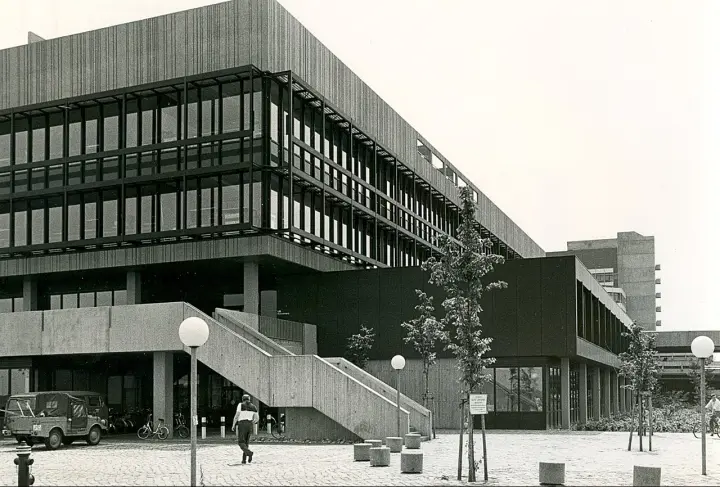
No tuition fee Tuition · sourced 2 years Duration View detailsCampus photos on this page: Roland Kutzki (CC BY-SA 3.0) — via Wikimedia Commons.
The Economics of Global Challenges — FAQs
5 questions
Tuition is No tuition fee. Taken from the university's published fees page, not re-checked since — confirm it before you budget. We confirm the current fee and the scholarships you qualify for — free.
The main intake is Winter semester. Most universities admit on a rolling basis — we confirm the exact deadline for your profile, free.
The admission requirements include: 1. Bachelor’s degree with a minimum of 180 ECTS from a degree programme of Economics Political Science Sociology Business Studies Law Business Informatics Industrial Engineering or similar 2. a minimum grade of 2.7 (German grading system) as the overall grade of the previous degree 3. knowledge of economics amounting to at least 12 CP from a prior degree programme 4. knowledge of statistical / econometric methods amounting to at least 9 CP from a prior degree programme 5. proof of English language proficiency (B2 for application, C1 for enrolment) --> please note: An MOI certificate is accepted to replace a separate language certificate. English: E.G. IELTS Academic: 7 TOEFL iBT (since 2026): 5 Reading: 5 Listening: 5 Speaking: 5 Writing: 5 TOEFL iBT (before 2026): 95 Reading: 24 Listening: 22 Speaking: 25 Writing: 24 Cambridge English Qualifications: C1 Advanced TOEIC: 945 Reading: 455 Listening: 490 Speaking: 180 Writing: 180 PTE Academic: 76 ISE (paper edition): ISE III UNIcert® English: UNIcert® III.
The programme runs about 24 months full-time.
Yes — shortlisting, SOP, LOR, Resume, application, scholarships and visa guidance are all free. We're paid by partner universities, not by you.
Apply to The Economics of Global Challenges — free help
A counsellor calls you back during office hours — 9am to 8pm IST, Mon to Sat. We are closed right now, so your request is first in line when we reopen.