Digital Media and Society
Universität Bremen · Bremen, Europe
Duration
24 mo
Tuition
No tuition fee
sourcedIntake
Winter semester
English
—
Winter semester intake. Most universities admit on a rolling basis — we confirm the exact application deadline for your profile, free.
Course details verified 10 Sep 2026 — intakes, entry requirements and course facts · official source
Fee sourced Taken from the university's published fees page, not re-checked since — confirm it before you budget. See the university fees page.
About this programme
Digitalisation is changing the world around us. Datafication – the growing number of data that can be aggregated and processed in automated ways – is increasingly becoming characteristic for our societies. As part of these processes, the role of media and communication devices and what we mean by media and communication studies is changing as well. The MA Digital Media and Society is situated at the leading edge of these developments. Its aim is to qualify students for media planning and decision-making positions in a datafied society. The media still function as businesses and institutions that provide us with information, education and entertainment. But in addition, they have also developed into tools of data collection that interconnect previously independent areas of life. For example, it is now possible to predict the shared characteristics of media users by their online practices. What do we mean by digitalisation and datafication? Owing to the information that the platforms we use gather about us and the people close to us, we are encouraged to follow or get in touch with certain people on social networks. Similarly, we can track our own activities with the help of gadgets and receive feedback and statistics on our behavioural patterns. But digitalisation and datafication go way beyond the personal. On a societal level, these processes have a great impact too. Think about decision-making processes in institutions like schools and universities, the financial industry, governmental organisation and agricultural businesses. These are just a few examples of areas in which processes of digitalisation and datafication have had a great impact on how information is gathered, stored and analysed. Digitalisation and datafication require that we critically rethink the role that media and communication devices play in our everyday lives. The in-depth analysis of these developments in different segments of society is a central theme running through the modules of the MA Digital Media and Society. In addition to the enhancement of critical and analytical thinking, a second core theme is to provide students with the required skills and knowledge to work in businesses, organisations and institutions dealing with aspects of digitalisation and datafication. The Master’s programme adopts an integrative approach, as we understand digitalisation and datafication in their broadest sense and in their interrelations to society as a whole. With such an overarching perspective this MA encompasses a core area of advanced theory and methods training in communication and media research with a focus on digital media. Moreover, the programme includes cross-disciplinary electives with study components from the field of computer sciences and other disciplines as well as hands-on experience within the regional (media) industry. The MA in Digital Media and Society is a two-year full-time programme. We encourage students to integrate a semester abroad or an internship into their studies. The first semester serves to deepen knowledge in the field of digital media and the datafied society in particular, besides theoretical aspects of (digital) research methods. It also offers initial orientation in the area of digital media practice, which can be further developed in the following semesters. The goal of this semester is to develop a shared conceptual understanding and apparatus. The focus of the second semester is on (digital) methods. Not only is the methods-training module localised in this semester, but also the beginning of the two-semester research seminar with the development of an empirical student project. Parallel to this, the second semester serves to explore other areas of digital societies in depth, with particular emphasis on questions arising from processes of deep mediatisation and datafication. The central focus of the third semester is on research practice. While students conduct the data collection and analysis as part of their resea
Intakes & deadlines
Winter semester
Dates confirmed for your profile · Open
Entry requirements
-
English
E.G. IELTS Academic: 7
-
Prerequisites
Students must fulfil the following prerequisites for admission to the MA in Digital Media and Society: A Bachelor’s degree or a university degree in a subject belonging to the field of communication and media studies, digital media or cultural studies, or an equivalent course of studies carrying at least 180 credit points (CP based on the European Credit Transfer System) A minimum grade of 2.3 (German university grading system) as the overall grade of the previous degree or the average grade achieved at the time of application (min. 150 CP) Sound knowledge in the field of communication and media studies methods in the field of communications / journalism / content research, or research on media use / appropriation / reception English language skills corresponding to at least level C1 of the European Framework of Reference for Languages (details below) A letter of motivation (maximum of two pages) stating reasons why you wish to be admitted to the Master’s programme Digital Media and Society The Master’s programme is subject to restricted admission and a selection procedure: The procedure and selection criteria are specified in the admission regulations. There is no warranty for the correctness of the study requirements at time of application. They are an excerpt from the admission regulations of 15 November 2017. Applicants should note that admission restrictions and the admission regulations may change from time to time. Current information can be found on the website https://zemki.uni-bremen.de/en/studies/m-a-digital-media-and-society/.
-
Documents
SOP, LOR & Resume — generate them free in 2 minutes.
Fees & scholarships
No tuition fee tuition (sourced). We confirm the exact costs and the scholarships you qualify for at Universität Bremen — free, for your profile.
Other programmes at Universität Bremen
Applied Geosciences
No tuition fee Tuition · sourced 2 years Duration View details BR Universität BremenCommunication & Information Technology, MSc (CIT)
No tuition fee Tuition · sourced 2 years Duration View details BR Universität BremenControl, Microsystems, Microelectronics (CMM)
No tuition fee Tuition · sourced 2 years Duration View details BR Universität BremenDigital Media
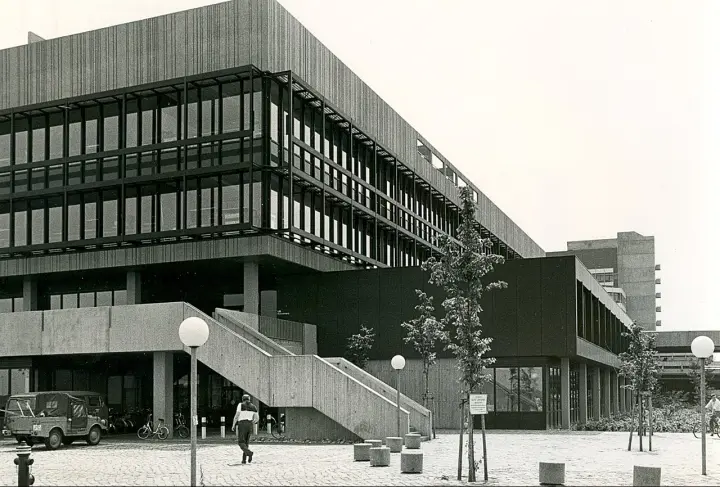
No tuition fee Tuition · sourced 2 years Duration View detailsCampus photos on this page: Roland Kutzki (CC BY-SA 3.0) — via Wikimedia Commons.
Digital Media and Society — FAQs
5 questions
Tuition is No tuition fee. Taken from the university's published fees page, not re-checked since — confirm it before you budget. We confirm the current fee and the scholarships you qualify for — free.
The main intake is Winter semester. Most universities admit on a rolling basis — we confirm the exact deadline for your profile, free.
Students must fulfil the following prerequisites for admission to the MA in Digital Media and Society: A Bachelor’s degree or a university degree in a subject belonging to the field of communication and media studies, digital media or cultural studies, or an equivalent course of studies carrying at least 180 credit points (CP based on the European Credit Transfer System) A minimum grade of 2.3 (German university grading system) as the overall grade of the previous degree or the average grade achieved at the time of application (min. 150 CP) Sound knowledge in the field of communication and media studies methods in the field of communications / journalism / content research, or research on media use / appropriation / reception English language skills corresponding to at least level C1 of the European Framework of Reference for Languages (details below) A letter of motivation (maximum of two pages) stating reasons why you wish to be admitted to the Master’s programme Digital Media and Society The Master’s programme is subject to restricted admission and a selection procedure: The procedure and selection criteria are specified in the admission regulations. There is no warranty for the correctness of the study requirements at time of application. They are an excerpt from the admission regulations of 15 November 2017. Applicants should note that admission restrictions and the admission regulations may change from time to time. Current information can be found on the website https://zemki.uni-bremen.de/en/studies/m-a-digital-media-and-society/. English: E.G. IELTS Academic: 7.
The programme runs about 24 months full-time.
Yes — shortlisting, SOP, LOR, Resume, application, scholarships and visa guidance are all free. We're paid by partner universities, not by you.
Apply to Digital Media and Society — free help
A counsellor calls you back during office hours — 9am to 8pm IST, Mon to Sat. We are closed right now, so your request is first in line when we reopen.