
Space Sciences and Technologies – Sensing, Processing, Communication (Space-ST)
Universität Bremen · Bremen, Europe
Duration
24 mo
Tuition
No tuition fee
sourcedIntake
Winter semester
English
—
Winter semester intake. Most universities admit on a rolling basis — we confirm the exact application deadline for your profile, free.
Course details verified 10 Sep 2026 — intakes, entry requirements and course facts · official source
Fee sourced Taken from the university's published fees page, not re-checked since — confirm it before you budget. See the university fees page.
About this programme
The application-oriented, international Master's programme in Space Sciences and Technologies (Space-ST) covers the three main data handling technologies: Sensing Processing Communication The programme offers a choice of two areas of focus: Physics for Space Observation and Information Technologies for Space. The programme provides knowledge in the fields of remote sensing, earth observation, retrieval theory, electronics, communication, digital image processing and data analysis. Lectures and example classes as well as the interdisciplinary laboratory practical classes with experiments from the three subject areas offer the possibility to deepen the learned theories and methods with practical examples. The international Master's programme is taught entirely in English. The structure of the programme is modular and comprises compulsory core modules, specialisation subjects, elective modules and practical courses. In the first academic year (first and second semesters), students read about the foundations and choose one out of two specialisation subjects (either Physics for Space Observation or Information Technologies for Space). In the second academic year (third and fourth semesters), the study of the specialisation subject continues and research starts, culminating in the Master's thesis. PDF Download
Intakes & deadlines
Winter semester
Dates confirmed for your profile · Open
Entry requirements
-
English
E.G. IELTS Academic: 7
-
Prerequisites
Academic admission requirements include a first academic degree (equivalent to a Bachelor's degree) in Electrical Engineering, Physics, Systems Engineering, Industrial Mathematics, Electrical Engineering with Management or a course of studies which does not reveal any significant differences in the content, scope and requirements of those mentioned above, with at least 180 credit points (CP) according to the European Credit Transfer and Accumulation System (ECTS). The degree must include either 90 CP in physics or 65 CP in electrical engineering and 16 CP in mathematics courses. English language skills at a level of C1 (see language requirements) Letter of motivation stating reasons why you have chosen to apply for the MSc Space Sciences and Technologies programme
-
Documents
SOP, LOR & Resume — generate them free in 2 minutes.
This is an indicative early-career range for the whole Engineering (general) field in Europe, from official graduate-outcome data — not a figure for this programme or university, and not a guarantee of what you will earn. What you actually earn depends on the role, employer, city and your visa.
Source: Profiling Institut - Gehaltsranking nach Studienfach 2026 (StepStone Gehaltsreport 2026), 2026. Market job-board data — less official than a government survey; treat as indicative.
Rupee figure converted at the 18 Aug 2026 mid-market rate; your bank's rate will be worse and currencies move, so use it for planning, not as the amount you will receive.
Fees & scholarships
No tuition fee tuition (sourced). We confirm the exact costs and the scholarships you qualify for at Universität Bremen — free, for your profile.
Other programmes at Universität Bremen
Applied Geosciences
No tuition fee Tuition · sourced 2 years Duration View details BR Universität BremenCommunication & Information Technology, MSc (CIT)
No tuition fee Tuition · sourced 2 years Duration View details BR Universität BremenControl, Microsystems, Microelectronics (CMM)
No tuition fee Tuition · sourced 2 years Duration View details BR Universität BremenDigital Media
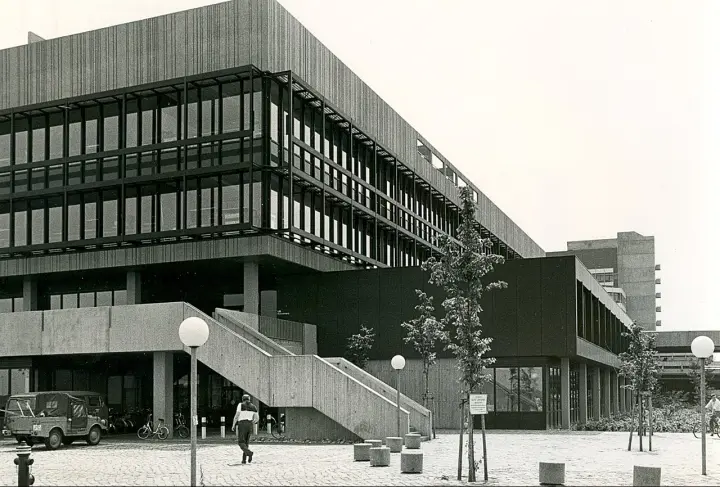
No tuition fee Tuition · sourced 2 years Duration View detailsCampus photos on this page: Roland Kutzki (CC BY-SA 3.0) — via Wikimedia Commons.
Space Sciences and Technologies – Sensing, Processing, Communication (Space-ST) — FAQs
5 questions
Tuition is No tuition fee. Taken from the university's published fees page, not re-checked since — confirm it before you budget. We confirm the current fee and the scholarships you qualify for — free.
The main intake is Winter semester. Most universities admit on a rolling basis — we confirm the exact deadline for your profile, free.
Academic admission requirements include a first academic degree (equivalent to a Bachelor's degree) in Electrical Engineering, Physics, Systems Engineering, Industrial Mathematics, Electrical Engineering with Management or a course of studies which does not reveal any significant differences in the content, scope and requirements of those mentioned above, with at least 180 credit points (CP) according to the European Credit Transfer and Accumulation System (ECTS). The degree must include either 90 CP in physics or 65 CP in electrical engineering and 16 CP in mathematics courses. English language skills at a level of C1 (see language requirements) Letter of motivation stating reasons why you have chosen to apply for the MSc Space Sciences and Technologies programme English: E.G. IELTS Academic: 7.
The programme runs about 24 months full-time.
Yes — shortlisting, SOP, LOR, Resume, application, scholarships and visa guidance are all free. We're paid by partner universities, not by you.
Apply to Space Sciences and Technologies – Sensing, Processing, Communication (Space-ST) — free help
A counsellor calls you back during office hours — 9am to 8pm IST, Mon to Sat. We are open now.