
MSc Mathematics
Universität Bremen · Bremen, Europe
Duration
24 mo
Tuition
No tuition fee
sourcedIntake
Winter semester
English
—
Winter semester intake. Most universities admit on a rolling basis — we confirm the exact application deadline for your profile, free.
Course details verified 10 Sep 2026 — intakes, entry requirements and course facts · official source
Fee sourced Taken from the university's published fees page, not re-checked since — confirm it before you budget. See the university fees page.
About this programme
Why should you study Mathematics (MSc) in Bremen? Are you a Bachelor of Mathematics graduate looking to expand your horizons and job prospects? Does the idea of increasing your analytical and methodological proficiency excite you? Are you interested in applying such skills to real-life problems? If so, the Mathematics Master's programme at the University of Bremen is the perfect choice. Here, you can study at a young, innovative university while enjoying the vibrant and affordable city of Bremen — an ideal place to continue your mathematical journey. Our department is characterised by strong research and a firm commitment to high-quality teaching, reflected in excellent national rankings. The teaching profile is geared towards research-based learning, which is central to our Master's programme. It offers a unique learning experience and flexibility to match your scientific interests. You can also benefit from Collaborative Research Centres and Research Training Groups, which provide early opportunities for postgraduate studies. Goals of the Master’s programme and career opportunities As a graduate of our international Master's programme in Mathematics at the University of Bremen, you will acquire a wide range of cutting-edge mathematical problem-solving strategies that will prepare you for a professional life both inside and outside academia. Mathematicians are in demand worldwide; not only in science, but also in almost all areas of the job market – especially in high-tech fields, in finance and insurance, in software development, in management consulting, and in medicine as well as in digital communication. Specialisation areas You can choose from a wide range of advanced research courses in the following areas, with each direction represented by specialised research groups from our department: Algebra Analysis Numerical Analysis Statistics/Stochastics You can select between two variants of the curriculum: a more theoretical direction focusing on mathematics without a secondary subject, or an application-oriented track, in which you choose a secondary subject such as Biology (German) Chemistry (English/German) Computer Science (English/German) Economics (English/German) Electrical Engineering (English/German) Geosciences (English) Mechanical Engineering (German) Philosophy (German) Physics (English/German). Our special focus in research and teaching is on algebra and topology, ergodic theory and dynamical systems, hyperbolic geometry, mathematical stochastics and statistics (especially multiple testing), and a broad spectrum of applied mathematics, such as inverse problems, AI methods, optimisation and optimal control, and discrete optimisation. You can choose a specialisation ("Specialisation A/B/C" in the sample study plans) from the four areas of Algebra Analysis Numerical Analysis Statistics/Stochastics. Courses in the other three areas contribute to broadening your knowledge ("Diversification A/B/C" in the sample study plans). As mentioned before, you can choose to study mathematics with or without an application subject such as biology, chemistry, computer science, economics, electrical engineering, geosciences, mechanical engineering, philosophy, or physics. In this way, you will have the opportunity to tailor your study programme to your individual interests and strengths. For the first three semesters, you will create an individual study plan from the following module types: Lectures (typically with weekly exercise sessions) Graduate seminars Reading courses General studies The fourth semester is reserved for writing and presenting the Master's thesis. See the illustration below for sample curricula. The module of "Advanced Communications" consists of two graduate seminars. Further information can be found here.
Intakes & deadlines
Winter semester
Dates confirmed for your profile · Open
Summer semester
Dates confirmed for your profile · Open
Entry requirements
-
English
E.G. TOEIC: 785 Reading: 385 Listening: 400 Speaking: 160 Writing: 150 UNIcert® English: UNIcert® II Cambridge English Qualifications Business (BEC) : B2 Business Vantage Cambridge English Qualifications: B2 First TOEFL iBT (before 2026): 72 Reading: 18 Listening: 17 Speaking: 20 Writing: 17
-
Prerequisites
The admission requirements are set out in the Admission Regulations for the Master’s programme in "Mathematics". The main requirements are as follows: a Bachelor's degree in mathematics or a comparable undergraduate degree with at least 180 ECTS points at least 90 ECTS points in mathematics a cover letter in English which explains both your motivation for applying as well as your intended area of specialisation (algebra, analysis, numerical analysis, or statistics/stochastics)
-
Documents
SOP, LOR & Resume — generate them free in 2 minutes.
Fees & scholarships
No tuition fee tuition (sourced). We confirm the exact costs and the scholarships you qualify for at Universität Bremen — free, for your profile.
Other programmes at Universität Bremen
Applied Geosciences
No tuition fee Tuition · sourced 2 years Duration View details BR Universität BremenCommunication & Information Technology, MSc (CIT)
No tuition fee Tuition · sourced 2 years Duration View details BR Universität BremenControl, Microsystems, Microelectronics (CMM)
No tuition fee Tuition · sourced 2 years Duration View details BR Universität BremenDigital Media
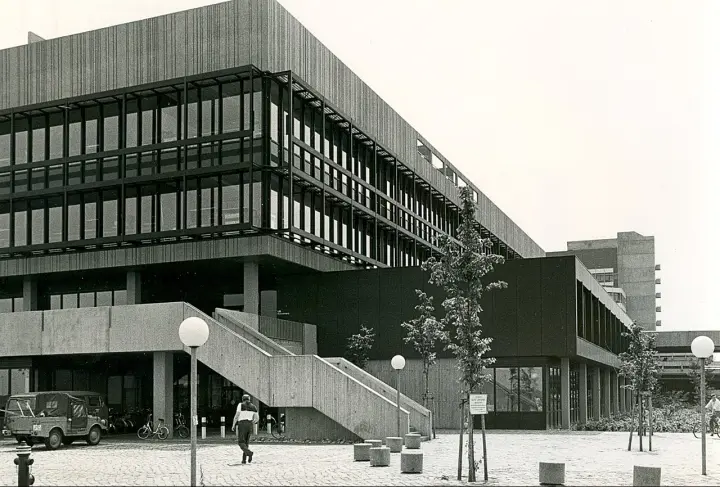
No tuition fee Tuition · sourced 2 years Duration View detailsCampus photos on this page: Roland Kutzki (CC BY-SA 3.0) — via Wikimedia Commons.
MSc Mathematics — FAQs
5 questions
Tuition is No tuition fee. Taken from the university's published fees page, not re-checked since — confirm it before you budget. We confirm the current fee and the scholarships you qualify for — free.
The main intake is Winter semester. Most universities admit on a rolling basis — we confirm the exact deadline for your profile, free.
The admission requirements are set out in the Admission Regulations for the Master’s programme in "Mathematics". The main requirements are as follows: a Bachelor's degree in mathematics or a comparable undergraduate degree with at least 180 ECTS points at least 90 ECTS points in mathematics a cover letter in English which explains both your motivation for applying as well as your intended area of specialisation (algebra, analysis, numerical analysis, or statistics/stochastics) English: E.G. TOEIC: 785 Reading: 385 Listening: 400 Speaking: 160 Writing: 150 UNIcert® English: UNIcert® II Cambridge English Qualifications Business (BEC) : B2 Business Vantage Cambridge English Qualifications: B2 First TOEFL iBT (before 2026): 72 Reading: 18 Listening: 17 Speaking: 20 Writing: 17.
The programme runs about 24 months full-time.
Yes — shortlisting, SOP, LOR, Resume, application, scholarships and visa guidance are all free. We're paid by partner universities, not by you.
Apply to MSc Mathematics — free help
A counsellor calls you back during office hours — 9am to 8pm IST, Mon to Sat. We are open now.