MSc in Electronics Engineering
Universität Bremen · Bremen, Europe
Duration
18 mo
Tuition
No tuition fee
sourcedIntake
Winter semester
English
—
Winter semester intake. Most universities admit on a rolling basis — we confirm the exact application deadline for your profile, free.
Course details verified 10 Sep 2026 — intakes, entry requirements and course facts · official source
Fee sourced Taken from the university's published fees page, not re-checked since — confirm it before you budget. See the university fees page.
About this programme
We offer two profiles indicating the professional orientation in the field of Intelligent Systems: Development and fabrication of intelligent systems Application of intelligent systems Depending on the collections of course modules attended, this qualifies students for professional careers in the following fields: Machine learning, artificial intelligence and signal processing in sensorics Autonomous vehicles Automated test and measurement, IIOT, intelligent sensors, edge control Microelectronics and microsystems design and fabrication System-on-Chip design, mixed-signal electronics Optical technologies and LASER systems Satellite-, wireless-, underwater- and fibre optic communication systems Aerospace application Content design of integrated circuits and systems FPGA programming mixed signal systems design fundamentals of machine learning hardware implementation of AI microstructuring of silicon laser microprocessing microsensors and microactuators medical, environmental and automotive applications of microsystems automated measurement and test machine learning and pattern recognition signal processing in measurement and instrumentation technical optics, optical sensors, laser measurement electrical measurement of non-electric quantities satellite and wireless communications optical communications digital signal processing microwave engineering underwater acoustics and SONAR We offer a three- and a four-semester variant, depending on your qualification. Students holding a Bachelor's of 180 ECTS equivalent qualify for the four-semester variant, and students holding a Bachelor's with 210 ECTS qualify for the three-semester variant. Applicants from India, Bangladesh, and Vietnam with a four-years Bachelor's degree should apply for four-semester variant only. Each semester comprises five modules, each with 6 ECTS credits. A workload of 30 hours corresponds to 1 ECTS credit. Hours per week represent contact hours in classes, seminars or laboratories. Each contact hour equals 45 minutes. Additionally, for each contact hour, students are expected to allocate two hours for self-paced studies. Credits indicate student workload according to ECTS standards. The course of study comprises two categories of modules: Engineering modules: selected to define the individual profiles Economics and language modules: relevant for all course profiles In general, the modules comprise lectures with integrated exercises in small groups, seminars, laboratory work and projects/case studies. Assessments usually take place throughout the semester, accompanying lab exercises, seminar talks and home assignments. Usually, an additional written or oral exam takes place at the end of each semester. A thesis with workload of 30 credits comprises 22 weeks of work as well as written documentation and a defence. Structure of the course of studies in the three-semester variant: first semester, 20 contact hours/week: 30 credits second semester, 20 contact hours/week: 30 credits thesis semester: 30 credits For the two semesters of teaching, the workload of 60 credits is distributed as follows: engineering modules – 48 credits economics and language modules – 12 credits Structure of the course of studies in the four-semester variant: Depending of your study background, additional first semester content develops your practical and writing skills with a high amount of hands-on lab work, and a beginners course to German language, OR completes your three-years Bachelor's with additional technical courses regarding advanced programming and data visualisation. The second and third semesters are identical to the first two semesters of the three-semester variant. PDF Download
Intakes & deadlines
Winter semester
Dates confirmed for your profile · Open
Summer semester
Dates confirmed for your profile · Open
Entry requirements
-
English
E.G. IELTS Academic: 7
-
Prerequisites
Bachelor's or equivalent first academic degree in electrical engineering, electronics, information engineering, engineering physics, microsystems, mechatronics, instrumentation, computer science or related disciplines, relevant to the programme a final grade corresponding to German grade "good" or "very good" (minimum 2.5) according to uni-assist VPD International students are required to have a CGPA (cumulative grade point average) of at least 3.00/4.00 or 7.50/10.00, a first class degree or have graduated first class with distinction (for Indian universities with a percentage larger than 70%). English C1 (for details, please see language requirements) basic knowledge of German (for details, please see language requirements)
-
Documents
SOP, LOR & Resume — generate them free in 2 minutes.
Fees & scholarships
No tuition fee tuition (sourced). We confirm the exact costs and the scholarships you qualify for at Universität Bremen — free, for your profile.
Other programmes at Universität Bremen
Applied Geosciences
No tuition fee Tuition · sourced 2 years Duration View details BR Universität BremenCommunication & Information Technology, MSc (CIT)
No tuition fee Tuition · sourced 2 years Duration View details BR Universität BremenControl, Microsystems, Microelectronics (CMM)
No tuition fee Tuition · sourced 2 years Duration View details BR Universität BremenDigital Media
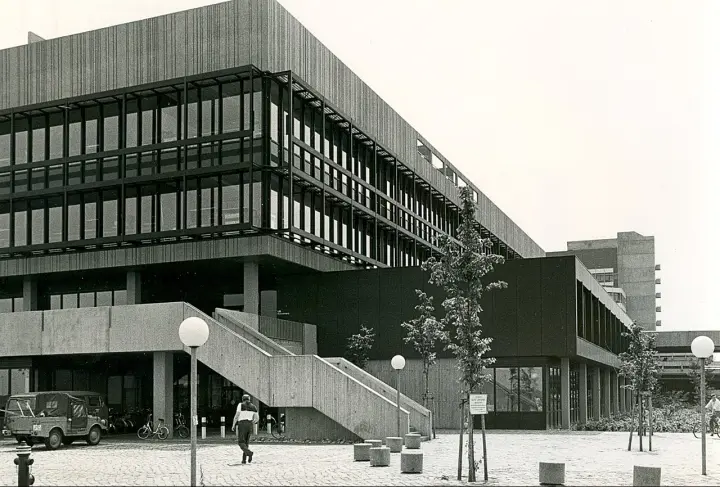
No tuition fee Tuition · sourced 2 years Duration View detailsCampus photos on this page: Roland Kutzki (CC BY-SA 3.0) — via Wikimedia Commons.
MSc in Electronics Engineering — FAQs
5 questions
Tuition is No tuition fee. Taken from the university's published fees page, not re-checked since — confirm it before you budget. We confirm the current fee and the scholarships you qualify for — free.
The main intake is Winter semester. Most universities admit on a rolling basis — we confirm the exact deadline for your profile, free.
Bachelor's or equivalent first academic degree in electrical engineering, electronics, information engineering, engineering physics, microsystems, mechatronics, instrumentation, computer science or related disciplines, relevant to the programme a final grade corresponding to German grade "good" or "very good" (minimum 2.5) according to uni-assist VPD International students are required to have a CGPA (cumulative grade point average) of at least 3.00/4.00 or 7.50/10.00, a first class degree or have graduated first class with distinction (for Indian universities with a percentage larger than 70%). English C1 (for details, please see language requirements) basic knowledge of German (for details, please see language requirements) English: E.G. IELTS Academic: 7.
The programme runs about 18 months full-time.
Yes — shortlisting, SOP, LOR, Resume, application, scholarships and visa guidance are all free. We're paid by partner universities, not by you.
Apply to MSc in Electronics Engineering — free help
A counsellor calls you back during office hours — 9am to 8pm IST, Mon to Sat. We are open now.