Marine Biology
Universität Bremen · Bremen, Europe
Duration
24 mo
Tuition
No tuition fee
sourcedIntake
Winter semester
English
—
Winter semester intake. Most universities admit on a rolling basis — we confirm the exact application deadline for your profile, free.
Course details verified 10 Sep 2026 — intakes, entry requirements and course facts · official source
Fee sourced Taken from the university's published fees page, not re-checked since — confirm it before you budget. See the university fees page.
About this programme
The MSc programme Marine Biology is strongly research-orientated. The graduates are trained to develop hypotheses-driven research concepts and to design appropriate experimental approaches in order to answer profound questions related to the large field of marine ecosystem and organism functioning and of potential impacts of local, regional and global environmental change. Teaching of the MSc programme Marine Biology at the University of Bremen follows a unique concept. The university has very close ties and intense cooperation with several world-class marine research institutions located in the Federal State of Bremen. Most heads of departments and many principal investigators at the Alfred Wegener Institute for Polar and Marine Research (AWI), at the Leibniz Centre for Tropical Marine Research (ZMT), and at the Max Planck Institute for Marine Microbiology (MPI) are professors at the University of Bremen and contribute to teaching the MSc programme Marine Biology at the same time. Many courses are actually taught in the laboratories and facilities of the institutes benefiting from cutting-edge research infrastructure and first-hand contact to leading experts. This unique context sets the scene for direct links from current state of research to academic training. Four semesters with modular structure, theoretical and practical courses; full-time programme
Intakes & deadlines
Winter semester
Dates confirmed for your profile · Open
Entry requirements
-
English
E.G. IELTS Academic: 7 TOEFL iBT (since 2026): 5 Reading: 5 Listening: 5 Speaking: 5 Writing: 5 TOEFL iBT (before 2026): 95 Reading: 24 Listening: 22 Speaking: 25 Writing: 24 UNIcert® English: UNIcert® III PTE Academic: 76 TOEIC: 945 Reading: 455 Listening: 490 Speaking: 180 Writing: 180
-
Prerequisites
Applicants must hold a Bachelor's (BSc) degree in biology, ecology, environmental sciences, oceanography or a closely related discipline with an overall grade of at least 2.5 according to the German grading scheme, in which 1.0 equals "excellent", 2.0 "good", 3.0 "satisfactory", 4.0 "sufficient", and 5.0 "fail". Grades from international applicants will be converted to the German grading scheme by the university administration. Applications may (and should) already be submitted before the previous study degree (i.e., usually BSc) has been finished, if at least 135 ECTS have been obtained, equivalent to the work load of 4.5 semesters. In those cases, admission can be granted on the condition that the previous degree will be successfully finished by the start of the programme. Your application must include a curriculum vitae, letter of motivation in English language, transcript of study records of your BSc studies indicating the curriculum, study efforts (ECTS or hours of study) and grades, proof of sufficient English language skills, and any additional documents of relevant qualifications, such as internships or academic awards. You must upload all requested documents as PDF files. Do not send any application documents by mail! Only those candidates who are actually admitted to the study programme will have to submit hard copies of their application package at a later stage. They will be asked explicitly to do so by the Secretariat for Students International (SfS-I). Please address all queries regarding the formal application procedure to SfS-I (e-mail: master@uni-bremen.de). The selection board will meet in May (or early June) and evaluate all applications according to the following criteria: overall grade of the previous degree (40%), individual academic and non-academic qualifications relevant to the scope of marine biology (40%), and Letter of Motivation (20%). If there are more applicants than vacant study places, applicants will be admitted according to their rank in the evaluation.
-
Documents
SOP, LOR & Resume — generate them free in 2 minutes.
Fees & scholarships
No tuition fee tuition (sourced). We confirm the exact costs and the scholarships you qualify for at Universität Bremen — free, for your profile.
Other programmes at Universität Bremen
Applied Geosciences
No tuition fee Tuition · sourced 2 years Duration View details BR Universität BremenCommunication & Information Technology, MSc (CIT)
No tuition fee Tuition · sourced 2 years Duration View details BR Universität BremenControl, Microsystems, Microelectronics (CMM)
No tuition fee Tuition · sourced 2 years Duration View details BR Universität BremenDigital Media
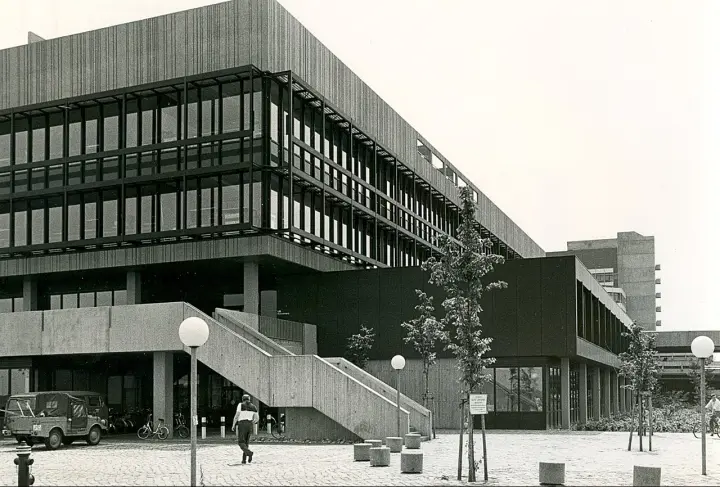
No tuition fee Tuition · sourced 2 years Duration View detailsCampus photos on this page: Roland Kutzki (CC BY-SA 3.0) — via Wikimedia Commons.
Marine Biology — FAQs
5 questions
Tuition is No tuition fee. Taken from the university's published fees page, not re-checked since — confirm it before you budget. We confirm the current fee and the scholarships you qualify for — free.
The main intake is Winter semester. Most universities admit on a rolling basis — we confirm the exact deadline for your profile, free.
Applicants must hold a Bachelor's (BSc) degree in biology, ecology, environmental sciences, oceanography or a closely related discipline with an overall grade of at least 2.5 according to the German grading scheme, in which 1.0 equals "excellent", 2.0 "good", 3.0 "satisfactory", 4.0 "sufficient", and 5.0 "fail". Grades from international applicants will be converted to the German grading scheme by the university administration. Applications may (and should) already be submitted before the previous study degree (i.e., usually BSc) has been finished, if at least 135 ECTS have been obtained, equivalent to the work load of 4.5 semesters. In those cases, admission can be granted on the condition that the previous degree will be successfully finished by the start of the programme. Your application must include a curriculum vitae, letter of motivation in English language, transcript of study records of your BSc studies indicating the curriculum, study efforts (ECTS or hours of study) and grades, proof of sufficient English language skills, and any additional documents of relevant qualifications, such as internships or academic awards. You must upload all requested documents as PDF files. Do not send any application documents by mail! Only those candidates who are actually admitted to the study programme will have to submit hard copies of their application package at a later stage. They will be asked explicitly to do so by the Secretariat for Students International (SfS-I). Please address all queries regarding the formal application procedure to SfS-I (e-mail: master@uni-bremen.de). The selection board will meet in May (or early June) and evaluate all applications according to the following criteria: overall grade of the previous degree (40%), individual academic and non-academic qualifications relevant to the scope of marine biology (40%), and Letter of Motivation (20%). If there are more applicants than vacant study places, applicants will be admitted according to their rank in the evaluation. English: E.G. IELTS Academic: 7 TOEFL iBT (since 2026): 5 Reading: 5 Listening: 5 Speaking: 5 Writing: 5 TOEFL iBT (before 2026): 95 Reading: 24 Listening: 22 Speaking: 25 Writing: 24 UNIcert® English: UNIcert® III PTE Academic: 76 TOEIC: 945 Reading: 455 Listening: 490 Speaking: 180 Writing: 180.
The programme runs about 24 months full-time.
Yes — shortlisting, SOP, LOR, Resume, application, scholarships and visa guidance are all free. We're paid by partner universities, not by you.
Apply to Marine Biology — free help
A counsellor calls you back during office hours — 9am to 8pm IST, Mon to Sat. We are closed right now, so your request is first in line when we reopen.