
Industrial Mathematics and Data Analysis (MSc)
Universität Bremen · Bremen, Europe
Duration
24 mo
Tuition
No tuition fee
sourcedIntake
Winter semester
English
—
Winter semester intake. Most universities admit on a rolling basis — we confirm the exact application deadline for your profile, free.
Course details verified 10 Sep 2026 — intakes, entry requirements and course facts · official source
Fee sourced Taken from the university's published fees page, not re-checked since — confirm it before you budget. See the university fees page.
About this programme
Industrial mathematics, as a young discipline of applied mathematics, focuses on using modern mathematical methods to solve problems from science, engineering, and industry. Recently, mathematical foundations and algorithms for analysing big data have become a key part of this. In four semesters, our newly established international Master's programme provides a broad variety of lectures, seminars, and projects. Students can choose from topics such as machine learning, inverse problems, optimal control, applied statistics, and finite element methods. Central to our Master's programme is the so-called "modelling project": teams of students are assigned real-world problems in cooperation with our partners from industry and institutes, and they use mathematical modelling and analysis combined with numerical simulations to solve these problems. Finally, with the Master's thesis, each student will join an area of current mathematical research. Our Master's programme can be succeeded with a PhD qualification. This Master's programme consists of lectures and seminars on topics regarding industrial mathematics and data analysis. Typically, lectures are accompanied by problem sessions with weekly exercises. For seminars, every participating student works out one topic and presents it to the audience. The specific topics for lectures and seminars vary from semester to semester, the students make their own choices and create individual course plans, according to their personal interests. The common starting point in the first semester are two lectures (mandatory) on "mathematical methods for data analysis and image processing" and on "numerical methods for PDE". Based on these lectures, each student chooses either data analysis or industrial mathematics as a specialisation. In the following semesters, elective courses, i.e., lectures and seminars, are taken in order to specialise and for broadening regarding the other branch, respectively. Possible topics include the following: machine learning, inverse problems, applied statistics, parameter identification (data analysis branch) and optimal control, discrete optimisation, adaptive FEM (industrial mathematics branch). In the heart of this Master's programme is the "modelling project". Teams of students are assigned real-world problems – not from the literature but actual problems from collaborations with engineering institutes or companies. They utilise mathematical modelling, analysis and optimisation techniques to tackle their problems in order to find answers for the customer, i.e., the institute or company that has assigned the problem. In particular, students design, analyse and perform algorithms for numerical simulations, and they visualise their results appropriately. The mathematical part of the programme is accompanied by courses from an area of technical applications. Each student chooses either electrical engineering, mechanical engineering, geosciences, applied physics, or computer science as minor subject. They attend Master's courses on this, offered by the corresponding department. For this, basic knowledge on the chosen subject from Bachelor's studies is indispensable. Last but not least, the complete final semester is designated for the Master's thesis. This is an individual project on a recent research topic, worked out by the student and guided by an expert in this field, i.e., a professor or postdoc. This is summarised in the following study plans. The workload each course entails is implied by the given numbers of ECTS credit points (CP). PDF Download
Intakes & deadlines
Winter semester
Dates confirmed for your profile · Open
Summer semester
Dates confirmed for your profile · Open
Entry requirements
-
English
E.G. UNIcert® English: UNIcert® II TOEFL iBT (before 2026): 72 Reading: 18 Listening: 17 Speaking: 20 Writing: 17 IELTS Academic: 5.5 TOEIC: 785 Reading: 385 Listening: 400 Speaking: 160 Writing: 150 Cambridge English Qualifications Business (BEC) : B2 Business Vantage Cambridge English Qualifications: B2 First
-
Prerequisites
The admission requirements are set out in the Admission Regulations for the Master’s programme in "Industrial Mathematics and Data Analysis". The main requirements are as follows: a Bachelor's degree or other comparable undergraduate degree, with a minimum of 180 ECTS points proof, typically via the transcript of records, of at least 90 ECTS points in mathematics during the undergraduate degree programme proof of at least 24 ECTS points in a technical application subject or in computer science a letter of motivation, written in English, that explicitly explains the applicant's special interest in industrial mathematics and data analysis and in the University of Bremen; The planned choice of a minor subject (see description of the programme) should be mentioned.
-
Documents
SOP, LOR & Resume — generate them free in 2 minutes.
Fees & scholarships
No tuition fee tuition (sourced). We confirm the exact costs and the scholarships you qualify for at Universität Bremen — free, for your profile.
Other programmes at Universität Bremen
Applied Geosciences
No tuition fee Tuition · sourced 2 years Duration View details BR Universität BremenCommunication & Information Technology, MSc (CIT)
No tuition fee Tuition · sourced 2 years Duration View details BR Universität BremenControl, Microsystems, Microelectronics (CMM)
No tuition fee Tuition · sourced 2 years Duration View details BR Universität BremenDigital Media
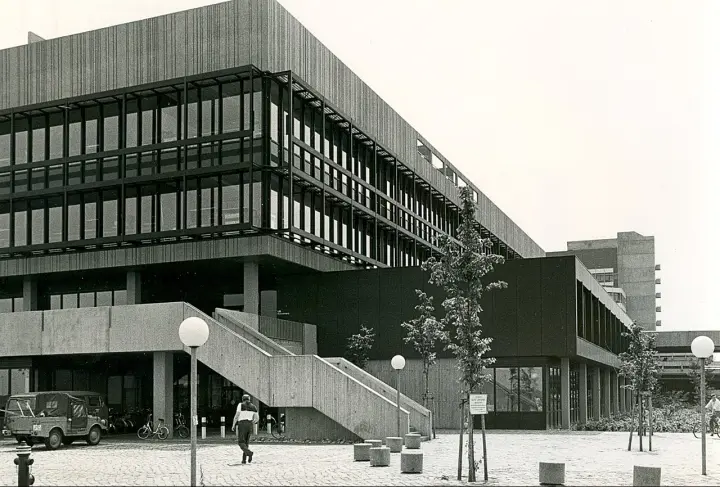
No tuition fee Tuition · sourced 2 years Duration View detailsCampus photos on this page: Roland Kutzki (CC BY-SA 3.0) — via Wikimedia Commons.
Industrial Mathematics and Data Analysis (MSc) — FAQs
5 questions
Tuition is No tuition fee. Taken from the university's published fees page, not re-checked since — confirm it before you budget. We confirm the current fee and the scholarships you qualify for — free.
The main intake is Winter semester. Most universities admit on a rolling basis — we confirm the exact deadline for your profile, free.
The admission requirements are set out in the Admission Regulations for the Master’s programme in "Industrial Mathematics and Data Analysis". The main requirements are as follows: a Bachelor's degree or other comparable undergraduate degree, with a minimum of 180 ECTS points proof, typically via the transcript of records, of at least 90 ECTS points in mathematics during the undergraduate degree programme proof of at least 24 ECTS points in a technical application subject or in computer science a letter of motivation, written in English, that explicitly explains the applicant's special interest in industrial mathematics and data analysis and in the University of Bremen; The planned choice of a minor subject (see description of the programme) should be mentioned. English: E.G. UNIcert® English: UNIcert® II TOEFL iBT (before 2026): 72 Reading: 18 Listening: 17 Speaking: 20 Writing: 17 IELTS Academic: 5.5 TOEIC: 785 Reading: 385 Listening: 400 Speaking: 160 Writing: 150 Cambridge English Qualifications Business (BEC) : B2 Business Vantage Cambridge English Qualifications: B2 First.
The programme runs about 24 months full-time.
Yes — shortlisting, SOP, LOR, Resume, application, scholarships and visa guidance are all free. We're paid by partner universities, not by you.
Apply to Industrial Mathematics and Data Analysis (MSc) — free help
A counsellor calls you back during office hours — 9am to 8pm IST, Mon to Sat. We are closed right now, so your request is first in line when we reopen.