
Transportation Economics and Data Science
Technische Universität Dresden · Dresden, Europe
Duration
24 mo
Tuition
No tuition fee
sourcedIntake
Winter semester
English
—
Winter semester intake. Most universities admit on a rolling basis — we confirm the exact application deadline for your profile, free.
Course details verified 10 Sep 2026 — intakes, entry requirements and course facts · official source
Fee sourced Taken from the university's published fees page, not re-checked since — confirm it before you budget. See the university fees page.
About this programme
Our Master’s programme in Transportation Economics and Data Science provides you with scientific methods and tools for understanding, processing and solving imminent transport-related issues. The compulsory module (25 credits) provides the sound methodological knowledge for this degree programme. As part of the elective modules (65 credits), at least four modules from five offered specialisations, one from five research seminars, as well as supplementary courses from the fields of transport economics, economics, business administration, transport engineering, technical languages and a professional internship must be chosen. These are the five specialisations: Computational Logistics: The course content consists of analytical methods for solving problems and supporting decisions in transport and logistics companies as well as managing transport systems and services. Transport Policy: The course content consists of economic and econometric methods for the analysis of a variety of transport policy issues (e.g. emissions, congestion, noise, and safety) and the design and assessment of adequate transport policy measures. Spatial and Environmental Economics: Contents include economic and econometric methods for analysing the spatial, economic and environmental impact of mobility in cities and regions as well as the evaluation and design of relevant policy interventions to improve the spatial allocation and reduce negative environmental impacts of transport. Statistics: This course deals with methods of multivariate statistics. The theoretical basics as well as the application of the methods to transport and economic data are covered. Data Analytics in Transportation: This course covers methods of data analytics and their application. These methods are relevant for preparing and analysing surveys and experiments and studying structured and unstructured data (Big Data) in the transport sector. In addition, you can acquire skills in foreign languages or integrate a vocational internship into your studies. Therefore, the Master's programme provides a high level of flexibility. You can include your ideas, wishes and interests in your studies. The degree programme has a modular structure and runs over four semesters (eight semesters in part-time study). Modules worth at least 90 credit points (ECTS) have to be taken. The module examinations are taken during the course of study. A Master's thesis (fourth semester or seventh or eighth semester) including a disputation must be completed (30 ECTS). First Semester (30 ECTS): 25 ECTS Compulsory modules (a total of five modules of 5 ECTS each: all five courses are compulsory): Operations Research and Logistics Methods in Transport Policy Spatial Economics and the Environment Theoretical Multivariate Statistics Methods in Data Analytics 5 ECTS Supplementary courses (usually one module) Objective: Creating common methodological knowledge in addition to the admission requirements as preparation for the specialisations Second Semester (30 ECTS): 20 ECTS in modules of specialisations in transport economics 10 ECTS Supplementary courses (compulsory elective modules; in-depth modules of non-selected specialisations in transportation economics: modules in economics, transport engineering, foreign language and selected modules of other degree programmes) Third Semester (30 ECTS; mobility window): 15 ECTS Research work: in one of the two chosen specialisations (compulsory elective) The aim of the research work is to deal in depth and in a research-oriented manner with a transport economics topic. This will usually be done as a preliminary work for the Master's thesis. In addition, you can choose one of the following: 15 ECTS Supplementary courses (modules from economics, transport engineering, foreign language communication and individual modules from other degree programmes) or 15 ECTS Work experience (vocational internship) (compulsory elective module) You can use the third semester (mobility window
Intakes & deadlines
Winter semester
Dates confirmed for your profile · Open
Entry requirements
-
English
E.G. TOEFL iBT Home Edition (since 2026): 4 Reading: 4 Listening: 4 Speaking: 4 Writing: 4 IELTS Academic: 5.5 TOEFL iBT (before 2026): 72 Reading: 18 Listening: 17 Speaking: 20 Writing: 17
-
Prerequisites
The prerequisites for admission to the programme are: a first university degree recognised in Germany that qualifies you for a specific profession, or a degree from a state or state-recognised university of cooperative education in the field of economics, transportation economics, or from a STEM field (mathematics, information technology, natural sciences and technology) or a degree in another course of study with a strong quantitative orientation in terms of content In addition, special knowledge in the fields of economics, business management, and quantitative methods (mathematics, statistics, econometrics, operations research, programming, data analytics) is required.* * For more details, see: https://tu-dresden.de/studium/vor-dem-studium/studienangebot/sins/sins_eignungsfeststellung_detail?autoid=31374.
-
Documents
SOP, LOR & Resume — generate them free in 2 minutes.
This is an indicative early-career range for the whole Engineering (general) field in Europe, from official graduate-outcome data — not a figure for this programme or university, and not a guarantee of what you will earn. What you actually earn depends on the role, employer, city and your visa.
Source: Profiling Institut - Gehaltsranking nach Studienfach 2026 (StepStone Gehaltsreport 2026), 2026. Market job-board data — less official than a government survey; treat as indicative.
Rupee figure converted at the 18 Aug 2026 mid-market rate; your bank's rate will be worse and currencies move, so use it for planning, not as the amount you will receive.
Fees & scholarships
No tuition fee tuition (sourced). We confirm the exact costs and the scholarships you qualify for at Technische Universität Dresden — free, for your profile.
Other programmes at Technische Universität Dresden
AI, Regulatory Affairs & Transformation in Medical Technology (MBA)
€4,170/yr Tuition · sourced 2 years Duration View details TD Technische Universität DresdenAir Transport and Logistics
No tuition fee Tuition · sourced 2 years Duration View details TD Technische Universität DresdenBiochemistry
No tuition fee Tuition · sourced 2 years Duration View details TD Technische Universität DresdenChemistry
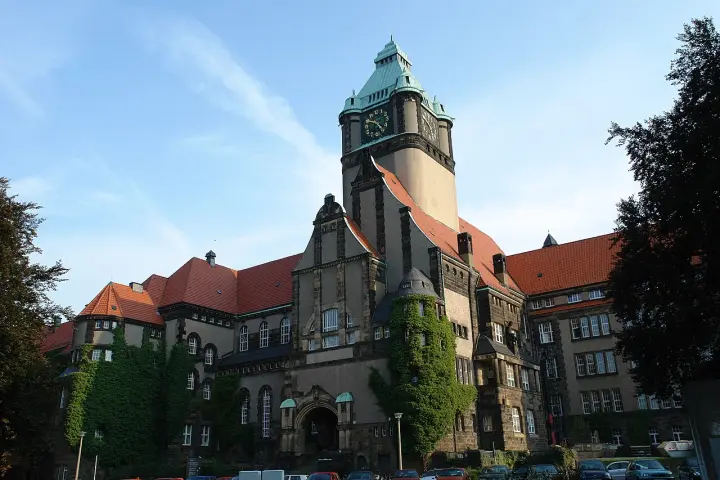
No tuition fee Tuition · sourced 2 years Duration View detailsCampus photos on this page: Hullbr3ach (CC BY-SA 2.5) — via Wikimedia Commons.
Transportation Economics and Data Science — FAQs
5 questions
Tuition is No tuition fee. Taken from the university's published fees page, not re-checked since — confirm it before you budget. We confirm the current fee and the scholarships you qualify for — free.
The main intake is Winter semester. Most universities admit on a rolling basis — we confirm the exact deadline for your profile, free.
The prerequisites for admission to the programme are: a first university degree recognised in Germany that qualifies you for a specific profession, or a degree from a state or state-recognised university of cooperative education in the field of economics, transportation economics, or from a STEM field (mathematics, information technology, natural sciences and technology) or a degree in another course of study with a strong quantitative orientation in terms of content In addition, special knowledge in the fields of economics, business management, and quantitative methods (mathematics, statistics, econometrics, operations research, programming, data analytics) is required.* * For more details, see: https://tu-dresden.de/studium/vor-dem-studium/studienangebot/sins/sins_eignungsfeststellung_detail?autoid=31374. English: E.G. TOEFL iBT Home Edition (since 2026): 4 Reading: 4 Listening: 4 Speaking: 4 Writing: 4 IELTS Academic: 5.5 TOEFL iBT (before 2026): 72 Reading: 18 Listening: 17 Speaking: 20 Writing: 17.
The programme runs about 24 months full-time.
Yes — shortlisting, SOP, LOR, Resume, application, scholarships and visa guidance are all free. We're paid by partner universities, not by you.
Apply to Transportation Economics and Data Science — free help
A counsellor calls you back during office hours — 9am to 8pm IST, Mon to Sat. We are closed right now, so your request is first in line when we reopen.