
Computational Modelling and Simulation
Technische Universität Dresden · Dresden, Europe
Duration
24 mo
Tuition
No tuition fee
sourcedIntake
Winter semester
English
—
Winter semester intake. Most universities admit on a rolling basis — we confirm the exact application deadline for your profile, free.
Course details verified 10 Sep 2026 — intakes, entry requirements and course facts · official source
Fee sourced Taken from the university's published fees page, not re-checked since — confirm it before you budget. See the university fees page.
About this programme
The Master’s programme in "Computational Modelling and Simulation" (CMS) is research-oriented, interdisciplinary and international. It is a joint curriculum between TUD’s Faculty of Computer Science, the Faculty of Mathematics, and the Centre for Molecular and Cellular Bioengineering (CMCB) with participation of the Faculty of Psychology, the Faculty of Medicine, the Faculty of Business and Economics, the Faculty of Electrical and Computer Engineering, the Faculty of Environmental Sciences and the Faculty of Mechanical Science and Engineering. This programme teaches the mathematical and algorithmic foundations and applications of computational modelling (learning models from data/machine learning, inverse problem, artificial intelligence) and computer simulation (numerical simulation, forward problem, logic). Specialisation is provided in one of the following application-specific tracks, offering unique flexibility to students: Computational Life Sciences (CMCB, Computer Science) Computational Mathematics (Mathematics) Visual Computing (Computer Science) Computational Modelling in Energy Economics (Economics) Computational Engineering (Mechanical Engineering) Applied Artificial Intelligence (Computer Science) Computational Environmental Science and Engineering (Environmental Sciences) The CMS programme also offers the possibility to study on a fast-track into a structured PhD programme, benefiting from the participation of local key partners in the relevant fields, such as an international Max Planck graduate programme. The curriculum focuses on long-lasting, transferable knowledge in a unique combination with cross-application problem-solving competence. The former is achieved through the universally valid contents of the foundational core modules, and the latter is achieved through cross-track seminars and a hands-on research project in an interdisciplinary environment. The standard duration of studies is four semesters, including three semesters for coursework and one semester for the Master’s thesis. The core curriculum teaches computational modelling (machine learning and data analysis) and computer simulation (numerical methods). The tracks cover a wide range of applications. The application-specific track must be selected upon application. The programme has a modular structure consisting of the compulsory area, the basic compulsory elective area (COR-modules, language modules, scientific methodological basic training modules) and the track-specific compulsory and compulsory elective area. The modules contain lectures, exercises, seminars, tutorials, research projects, and language courses. First semester: Students select three COR-modules (in the scope of about 15 credit points) Soft Skills module (2 credit points) Students select modules of the respective track according to the study plan (in the scope of about 15 credit points) Second semester: Students select one language course (5 credit points) Students select one seminar of the scientific methodology basic area (3 credit points) Students select modules of the respective track according to the study plan (in the scope of about 20 credit points) Third semester: Research module (15 credit points): application of acquired knowledge in an independent research project Students select modules of the respective track according to the study plan (in the scope of about 15 credit points) The compulsory elective area of the selected track comprises modules in the scope of 50 credits. Fourth semester Master's thesis project and defence as individual research work (30 credits) PDF Download
Intakes & deadlines
Winter semester
Dates confirmed for your profile · Open
Entry requirements
-
English
E.G. IELTS Academic: 6 TOEFL iBT Home Edition (since 2026): 4.5 Reading: 4.5 Listening: 4.5 Speaking: 4.5 Writing: 4.5 PTE Academic: 60 UNIcert® English: UNIcert® II
-
Prerequisites
First university degree qualifying for professional activity in Computer Science, Mathematics, Natural Science, Economics/Finance, or Engineering (BSc or higher, including MSc, German "Diplom", BSc [Hons], etc.) Knowledge of English corresponding to at least level B2 of the European Frame of Reference for Language Proficiency in computer programming in (at least one) compiled programming language Calculus of functions in one and multiple variables (partial derivatives, integrals, etc.) Basics of linear algebra (matrix and vector operations, matrix inversion, decomposition) Basics of probability (distributions, elementary probabilities, axioms) Basics of algorithms and data structures (arrays, lists, search and sorting, complexity) BSc-level knowledge in the application domain of the elected track The CMS programme focuses on teaching the computer science and mathematics foundations of modelling and simulation and assumes familiarity with the above basics of the respective disciplines. Completed lectures on one or several of the following topics would be helpful but are not strictly requested: Parallel Programming / High-Performance Computing Numerical Methods / Numerical Algorithms / Numerical Analysis Stochastics / Probability / Stochastic Algorithms Data Visualisation / Information Visualisation / Scientific Visualisation Statistics / Experimental Design / Inference Methods Theoretical Computer Science / Formal Languages / Complexity and Computability Intelligent Agents / Knowledge Systems Software Engineering / Design Patterns / Scientific Code Development Database Management / Relational Data Models / Big Data Platforms Machine Learning / Data Mining / Computational Statistics
-
Documents
SOP, LOR & Resume — generate them free in 2 minutes.
This is an indicative early-career range for the whole Engineering (general) field in Europe, from official graduate-outcome data — not a figure for this programme or university, and not a guarantee of what you will earn. What you actually earn depends on the role, employer, city and your visa.
Source: Profiling Institut - Gehaltsranking nach Studienfach 2026 (StepStone Gehaltsreport 2026), 2026. Market job-board data — less official than a government survey; treat as indicative.
Rupee figure converted at the 18 Aug 2026 mid-market rate; your bank's rate will be worse and currencies move, so use it for planning, not as the amount you will receive.
Fees & scholarships
No tuition fee tuition (sourced). We confirm the exact costs and the scholarships you qualify for at Technische Universität Dresden — free, for your profile.
Other programmes at Technische Universität Dresden
AI, Regulatory Affairs & Transformation in Medical Technology (MBA)
€4,170/yr Tuition · sourced 2 years Duration View details TD Technische Universität DresdenAir Transport and Logistics
No tuition fee Tuition · sourced 2 years Duration View details TD Technische Universität DresdenBiochemistry
No tuition fee Tuition · sourced 2 years Duration View details TD Technische Universität DresdenChemistry
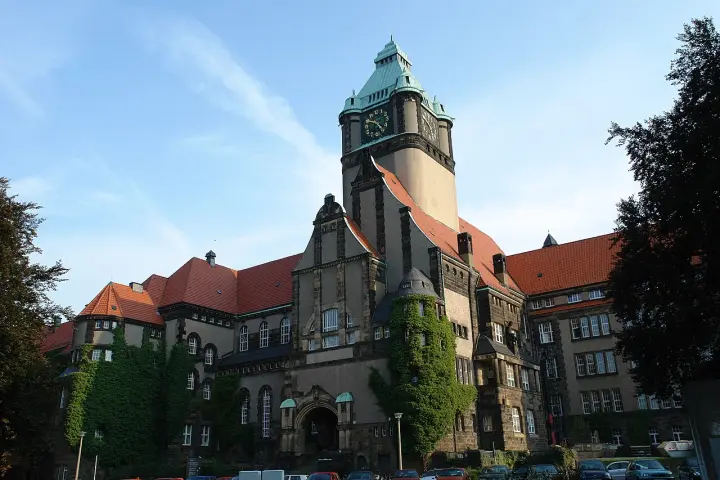
No tuition fee Tuition · sourced 2 years Duration View detailsCampus photos on this page: Hullbr3ach (CC BY-SA 2.5) — via Wikimedia Commons.
Computational Modelling and Simulation — FAQs
5 questions
Tuition is No tuition fee. Taken from the university's published fees page, not re-checked since — confirm it before you budget. We confirm the current fee and the scholarships you qualify for — free.
The main intake is Winter semester. Most universities admit on a rolling basis — we confirm the exact deadline for your profile, free.
First university degree qualifying for professional activity in Computer Science, Mathematics, Natural Science, Economics/Finance, or Engineering (BSc or higher, including MSc, German "Diplom", BSc [Hons], etc.) Knowledge of English corresponding to at least level B2 of the European Frame of Reference for Language Proficiency in computer programming in (at least one) compiled programming language Calculus of functions in one and multiple variables (partial derivatives, integrals, etc.) Basics of linear algebra (matrix and vector operations, matrix inversion, decomposition) Basics of probability (distributions, elementary probabilities, axioms) Basics of algorithms and data structures (arrays, lists, search and sorting, complexity) BSc-level knowledge in the application domain of the elected track The CMS programme focuses on teaching the computer science and mathematics foundations of modelling and simulation and assumes familiarity with the above basics of the respective disciplines. Completed lectures on one or several of the following topics would be helpful but are not strictly requested: Parallel Programming / High-Performance Computing Numerical Methods / Numerical Algorithms / Numerical Analysis Stochastics / Probability / Stochastic Algorithms Data Visualisation / Information Visualisation / Scientific Visualisation Statistics / Experimental Design / Inference Methods Theoretical Computer Science / Formal Languages / Complexity and Computability Intelligent Agents / Knowledge Systems Software Engineering / Design Patterns / Scientific Code Development Database Management / Relational Data Models / Big Data Platforms Machine Learning / Data Mining / Computational Statistics English: E.G. IELTS Academic: 6 TOEFL iBT Home Edition (since 2026): 4.5 Reading: 4.5 Listening: 4.5 Speaking: 4.5 Writing: 4.5 PTE Academic: 60 UNIcert® English: UNIcert® II.
The programme runs about 24 months full-time.
Yes — shortlisting, SOP, LOR, Resume, application, scholarships and visa guidance are all free. We're paid by partner universities, not by you.
Apply to Computational Modelling and Simulation — free help
A counsellor calls you back during office hours — 9am to 8pm IST, Mon to Sat. We are open now.