Chemistry
Technische Universität Dresden · Dresden, Europe
Duration
24 mo
Tuition
No tuition fee
sourcedIntake
Winter semester
English
—
Winter semester intake. Most universities admit on a rolling basis — we confirm the exact application deadline for your profile, free.
Course details verified 10 Sep 2026 — intakes, entry requirements and course facts · official source
Fee sourced Taken from the university's published fees page, not re-checked since — confirm it before you budget. See the university fees page.
About this programme
Graduates of the Master’s degree programme in chemistry have a broad command of theoretical and practical fundamentals and corresponding knowledge of methods and material. They are able to address topics in the field of chemistry with a critical eye and in a scientifically sound manner. They can also solve tasks independently and work in an interdisciplinary capacity, thereby contributing to development in this field. At the same time, graduates can recognise the relevance of scientific fields closely related to chemistry and use these effectively. In addition to subject-specific skills, graduates also possess key qualifications relevant to their profession, such as communication skills, teamwork, effective project planning and work organisation. Students of this degree programme graduate with the academic title "Master of Science", giving them a good basis for pursuing further qualifications, in particular doctoral studies. This will increase their chances of starting an independent and self-directed profession. Following the tradition of our university, our professors maintain contacts with leading chemical companies in Germany, especially for your benefit. Graduates possess the in-depth specialist knowledge required for professional practice, understand interdisciplinary links and are qualified for highly specialised activities, for example, working at teaching and research institutions, in industry and with public authorities. The programme is organised in modules. The curriculum is divided into three semesters. The fourth semester is dedicated to completing the Master’s thesis. The programme generally comprises elective compulsory modules totalling 70 credits (ECTS). Students select their specialisation within the module groups. Students must achieve 20 to 30 credits (ECTS) in each of the “Materials Chemistry” (M) and “Biologically-Oriented Chemistry” (B) module groups. Modules of the “Cross-Sectional Field” module group are assigned half of the credit points to be achieved in groups M and B. Students must select modules with a total of ten credits from the “Practical Application” module group. They must also select modules totalling between five and ten credits from the “General Education Modules” group. The elective compulsory modules are supplemented by the compulsory modules “Advanced Research Internship” and “Research Lab Class,” which each total 10 credits (ECTS). The compulsory Master’s thesis is worth 25 credits (ECTS) and the corresponding colloquium is awarded 5 credits (ECTS). The appropriate allocation of the modules to the individual semesters – the observance of which makes it possible to complete the programme within the standard period of study – as well as the type and scope of each of the courses are defined in the study schedule. Content and qualification objectives, teaching and learning methods, requirements, usability, frequency, workload, and duration of the individual modules are listed in the module descriptions. PDF Download
Intakes & deadlines
Winter semester
Dates confirmed for your profile · Open
Summer semester
Dates confirmed for your profile · Open
Entry requirements
-
English
E.G. IELTS Academic: 6 TOEFL iBT Home Edition (since 2026): 4 Reading: 4 Listening: 4 Speaking: 4 Writing: 4 TOEFL iBT (before 2026): 75 Reading: 18 Listening: 18 Speaking: 18 Writing: 18 UNIcert® English: UNIcert® II
-
Prerequisites
Admission restrictions: open admission with aptitude assessment The admission requirements for this degree programme are: A Bachelor’s degree in chemistry Proficiency in English at the B2 level of the Common European Framework of Reference for Languages Academic qualifications as specified in the Aptitude Assessment Regulations on the faculty’s website The aptitude assessment is based on previous academic performance and proof of qualifications. There will be no interview or examination requiring in-person attendance. For further information on the admission requirements, please see the programme description and the FAQ website.
-
Documents
SOP, LOR & Resume — generate them free in 2 minutes.
Fees & scholarships
No tuition fee tuition (sourced). We confirm the exact costs and the scholarships you qualify for at Technische Universität Dresden — free, for your profile.
Other programmes at Technische Universität Dresden
AI, Regulatory Affairs & Transformation in Medical Technology (MBA)
€4,170/yr Tuition · sourced 2 years Duration View details TD Technische Universität DresdenAir Transport and Logistics
No tuition fee Tuition · sourced 2 years Duration View details TD Technische Universität DresdenBiochemistry
No tuition fee Tuition · sourced 2 years Duration View details TD Technische Universität DresdenClinical Research (MSc)
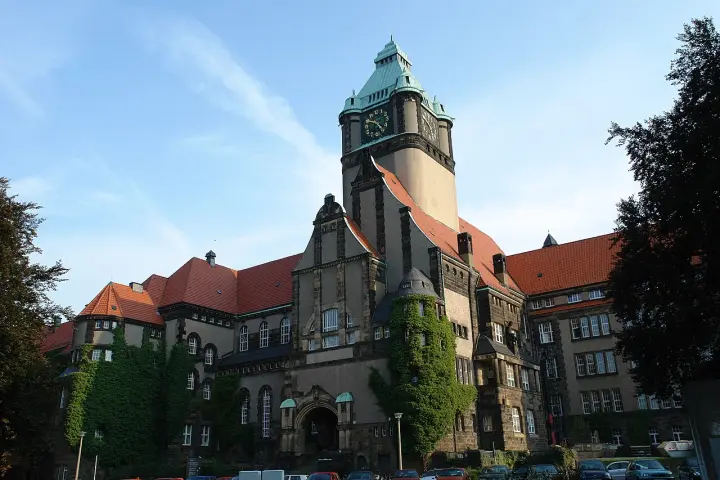
€5,370/yr Tuition · sourced 18 months Duration View detailsCampus photos on this page: Hullbr3ach (CC BY-SA 2.5) — via Wikimedia Commons.
Chemistry — FAQs
5 questions
Tuition is No tuition fee. Taken from the university's published fees page, not re-checked since — confirm it before you budget. We confirm the current fee and the scholarships you qualify for — free.
The main intake is Winter semester. Most universities admit on a rolling basis — we confirm the exact deadline for your profile, free.
Admission restrictions: open admission with aptitude assessment The admission requirements for this degree programme are: A Bachelor’s degree in chemistry Proficiency in English at the B2 level of the Common European Framework of Reference for Languages Academic qualifications as specified in the Aptitude Assessment Regulations on the faculty’s website The aptitude assessment is based on previous academic performance and proof of qualifications. There will be no interview or examination requiring in-person attendance. For further information on the admission requirements, please see the programme description and the FAQ website. English: E.G. IELTS Academic: 6 TOEFL iBT Home Edition (since 2026): 4 Reading: 4 Listening: 4 Speaking: 4 Writing: 4 TOEFL iBT (before 2026): 75 Reading: 18 Listening: 18 Speaking: 18 Writing: 18 UNIcert® English: UNIcert® II.
The programme runs about 24 months full-time.
Yes — shortlisting, SOP, LOR, Resume, application, scholarships and visa guidance are all free. We're paid by partner universities, not by you.
Apply to Chemistry — free help
A counsellor calls you back during office hours — 9am to 8pm IST, Mon to Sat. We are closed right now, so your request is first in line when we reopen.