
Physics of Life
Technische Universität Dresden · Dresden, Europe
Duration
24 mo
Tuition
No tuition fee
sourcedIntake
Winter semester
English
—
Winter semester intake. Most universities admit on a rolling basis — we confirm the exact application deadline for your profile, free.
Course details verified 10 Sep 2026 — intakes, entry requirements and course facts · official source
Fee sourced Taken from the university's published fees page, not re-checked since — confirm it before you budget. See the university fees page.
About this programme
Which equations determine the motion of molecules in an organism? How do cells generate and distribute energy to keep themselves alive? What makes tissues deform into distinct shapes when an embryo evolves? How can we measure the forces in cells and tissues? Biological Physics combines the power of physics and the complexity of biological systems. If you enjoy applying mathematical models and physical principles, then this field opens the door for you to cutting-edge research at the intersection of multiple disciplines including physics, biology, chemistry, and medicine. The international Master of Science in Physics of Life provides a unique opportunity to learn how to solve exciting real-world biological problems through a physicist's lens. If you are intrigued by the "how" and "why" of life at a fundamental level — how proteins fold, how cells communicate, or how organisms develop — biological physics provides a versatile platform to explore these questions in detail, using the rigorous, quantitative methods of physics. From addressing modelling of pandemics to designing bioengineered tissues, the field of biological physics has an immediate and long-term impact with ample opportunities inside and beyond academia. By combining computational models and experimental techniques, you will learn how to tackle open problems in biophysics from different angles. Through lab courses and rotations, programming tutorials, and a research-oriented Master’s thesis, you will gain first-hand research experience. In the first semester, the students dive into the exciting world of biophysics, polymer physics, physical and biological chemistry, molecular cell biology, and experimental design. These courses will let you explore the building blocks of life and their interactions. It's not all theory though, you will also get hands-on practicals and computational biology projects. In the second semester, students explore stochastic processes, continuum descriptions of living matter, mechanobiology, biological physics of molecular machines, as well as the fascinating realms of cell and tissue biology. Already in the second semester, students choose their path by focusing on one of three specialisations: Experimental Biological Physics Theoretical Biological Physics Nanobiotechnology Each specialisation offers a unique set of elective courses tailored to deepen your expertise. In the third semester, students delve deeper into topics such as pattern formation and active matter theory, while also attending courses in their chosen specialisation. Additionally, students start an extensive lab project, which can either broaden their horizons or already lay groundwork for their Master's theses. In the fourth semester, students dedicate their time exclusively to their Master's theses. The theses are part of ongoing real-life scientific projects within the research groups associated with the Cluster of Excellence Physics of Life (PoL), as well as B CUBE, BIOTEC, and CRTD. Additionally, students have the opportunity to work at other TU Dresden departments or our partner institutions. PDF Download
Intakes & deadlines
Winter semester
Dates confirmed for your profile · Open
Entry requirements
-
English
E.G. TOEFL iBT (since 2026): 4.5 TOEFL iBT (before 2026): 92 IELTS Academic: 6.5 Cambridge English Qualifications: B2 First
-
Prerequisites
Applicants are required to have: Bachelor's degree, Diploma degree, or an equivalent qualification in one of the following fields: physics biophysics applied mathematics engineering (esp. nanotechnology) quantitative biology with a strong background in physics education or a related subject with a strong background in physics education good knowledge in the fundamentals of physics including mechanics, statistical physics, good knowledge of linear algebra, calculus and differential equations as well as basic knowledge in chemistry and biology a good command of English (see below)
-
Documents
SOP, LOR & Resume — generate them free in 2 minutes.
Fees & scholarships
No tuition fee tuition (sourced). We confirm the exact costs and the scholarships you qualify for at Technische Universität Dresden — free, for your profile.
Other programmes at Technische Universität Dresden
AI, Regulatory Affairs & Transformation in Medical Technology (MBA)
€4,170/yr Tuition · sourced 2 years Duration View details TD Technische Universität DresdenAir Transport and Logistics
No tuition fee Tuition · sourced 2 years Duration View details TD Technische Universität DresdenBiochemistry
No tuition fee Tuition · sourced 2 years Duration View details TD Technische Universität DresdenChemistry
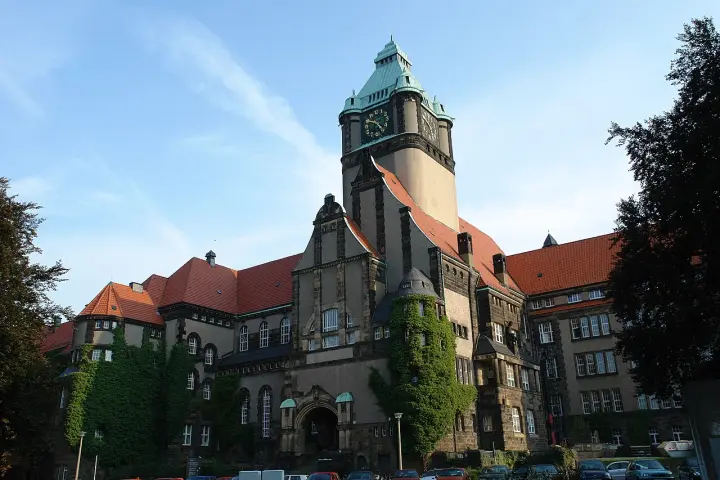
No tuition fee Tuition · sourced 2 years Duration View detailsCampus photos on this page: Hullbr3ach (CC BY-SA 2.5) — via Wikimedia Commons.
Physics of Life — FAQs
5 questions
Tuition is No tuition fee. Taken from the university's published fees page, not re-checked since — confirm it before you budget. We confirm the current fee and the scholarships you qualify for — free.
The main intake is Winter semester. Most universities admit on a rolling basis — we confirm the exact deadline for your profile, free.
Applicants are required to have: Bachelor's degree, Diploma degree, or an equivalent qualification in one of the following fields: physics biophysics applied mathematics engineering (esp. nanotechnology) quantitative biology with a strong background in physics education or a related subject with a strong background in physics education good knowledge in the fundamentals of physics including mechanics, statistical physics, good knowledge of linear algebra, calculus and differential equations as well as basic knowledge in chemistry and biology a good command of English (see below) English: E.G. TOEFL iBT (since 2026): 4.5 TOEFL iBT (before 2026): 92 IELTS Academic: 6.5 Cambridge English Qualifications: B2 First.
The programme runs about 24 months full-time.
Yes — shortlisting, SOP, LOR, Resume, application, scholarships and visa guidance are all free. We're paid by partner universities, not by you.
Apply to Physics of Life — free help
A counsellor calls you back during office hours — 9am to 8pm IST, Mon to Sat. We are closed right now, so your request is first in line when we reopen.