
Physics (MSc)
Technische Universität Dresden · Dresden, Europe
Duration
24 mo
Tuition
No tuition fee
sourcedIntake
Winter semester
English
—
Winter semester intake. Most universities admit on a rolling basis — we confirm the exact application deadline for your profile, free.
Course details verified 10 Sep 2026 — intakes, entry requirements and course facts · official source
Fee sourced Taken from the university's published fees page, not re-checked since — confirm it before you budget. See the university fees page.
About this programme
The Master's degree programme in Physics at TU Dresden aims to consolidate insights into interrelations between different areas of physics as well as connections to neighbouring disciplines. During the one-year research phase, you will acquire the necessary skills to become acquainted with current topics in physics, to design and conduct experiments or develop theoretical methods in this field, to categorise the results and to draw conclusions for applications to technical developments and for general scientific progress. The specialisation areas are: Applied Physics and Photonics Solid State and Materials Physics Particle and Nuclear Physics Theoretical Physics Soft Matter Physics and Biophysics Collaboration with other subject areas in the natural sciences, technology and the humanities in 12 minor subjects, each with multiple elective topics, guarantees a diverse profile for acquiring a basic understanding of topics in other subject areas and the necessary skills for interdisciplinary work. Examples of minor subjects are: Mathematics Bio Mathematics Electrical Engineering, Electronics, Nano-Electronics Civil Engineering, Energy Technologies, Aviation and Aerospace Engineering, Hydrogen and Nuclear Energy Technologies Chemistry (organic, inorganic) Biology, Molecular Biology Computer Science Philosophy Materials Science, Nano-Science Economics, Business Administration The Master's course in Physics at TU Dresden is structured in two parts: a one-year phase of regular studies with courses and seminars, and a one-year research phase. In the first year, the obligatory courses in experimental and theoretical physics offer a broad overview of modern physics topics and their interconnections. Specialisation courses and a seminar can be chosen in the fields of applied physics, solid state and material physics, particle and nuclear physics, theoretical physics, soft matter physics and biophysics. These topics correspond to the main research areas at the Department of Physics at TU Dresden. In case of experimental specialisation, an advanced laboratory course is part of the curriculum. A non-physics minor can be selected among a large variety of 12 non-physics subjects. The second year of the Master's programme is devoted to a research project, which is divided into scientific research studies and the Master's thesis. The research topic can be chosen within the specialisation areas offered at the Department of Physics and by the affiliated research institutes. The scientific studies and the Master's thesis are usually on a single, overarching research topic. More details can be found on the course website. PDF Download
Intakes & deadlines
Winter semester
Dates confirmed for your profile · Open
Summer semester
Dates confirmed for your profile · Open
Entry requirements
-
English
E.G. TOEFL iBT (before 2026): 72 Reading: 17 Listening: 17 Speaking: 17 Writing: 17 UNIcert® English: UNIcert® II IELTS Academic: 5.5
-
Prerequisites
Requirements for admission to the Master's degree programme in Physics: Completion of a first professionally qualifying university degree that is recognised in Germany or a degree from a state or state-recognised university of cooperative education in the field of physics or a degree programme with a closely related subject area Sound specialised knowledge of the fundamentals of experimental physics in the area of mechanics, heat and thermodynamics, electromagnetism, optics, quantum physics, atomic and molecular physics, as well as solid state physics or nuclear physics or particle physics or biological physics of the fundamentals of theoretical physics in the area of theoretical mechanics, theoretical electrodynamics, theoretical quantum mechanics, as well as statistical physics or theoretical thermodynamics physics laboratory training, including programming skills, and mathematical training Proof of the particular suitability is provided by an aptitude assessment.
-
Documents
SOP, LOR & Resume — generate them free in 2 minutes.
Fees & scholarships
No tuition fee tuition (sourced). We confirm the exact costs and the scholarships you qualify for at Technische Universität Dresden — free, for your profile.
Other programmes at Technische Universität Dresden
AI, Regulatory Affairs & Transformation in Medical Technology (MBA)
€4,170/yr Tuition · sourced 2 years Duration View details TD Technische Universität DresdenAir Transport and Logistics
No tuition fee Tuition · sourced 2 years Duration View details TD Technische Universität DresdenBiochemistry
No tuition fee Tuition · sourced 2 years Duration View details TD Technische Universität DresdenChemistry
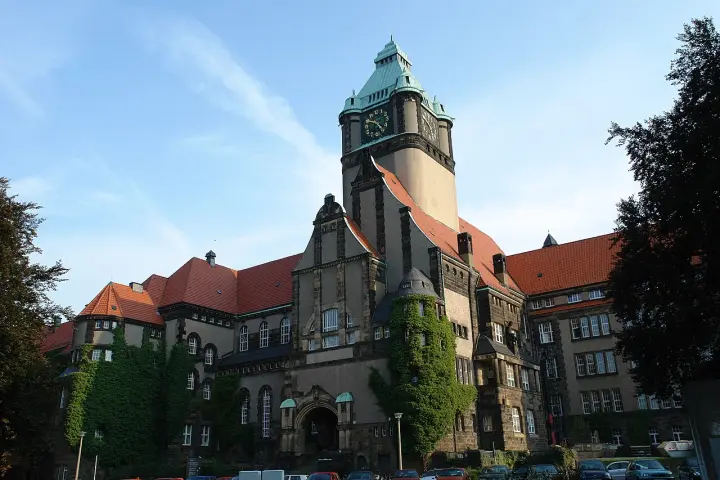
No tuition fee Tuition · sourced 2 years Duration View detailsCampus photos on this page: Hullbr3ach (CC BY-SA 2.5) — via Wikimedia Commons.
Physics (MSc) — FAQs
5 questions
Tuition is No tuition fee. Taken from the university's published fees page, not re-checked since — confirm it before you budget. We confirm the current fee and the scholarships you qualify for — free.
The main intake is Winter semester. Most universities admit on a rolling basis — we confirm the exact deadline for your profile, free.
Requirements for admission to the Master's degree programme in Physics: Completion of a first professionally qualifying university degree that is recognised in Germany or a degree from a state or state-recognised university of cooperative education in the field of physics or a degree programme with a closely related subject area Sound specialised knowledge of the fundamentals of experimental physics in the area of mechanics, heat and thermodynamics, electromagnetism, optics, quantum physics, atomic and molecular physics, as well as solid state physics or nuclear physics or particle physics or biological physics of the fundamentals of theoretical physics in the area of theoretical mechanics, theoretical electrodynamics, theoretical quantum mechanics, as well as statistical physics or theoretical thermodynamics physics laboratory training, including programming skills, and mathematical training Proof of the particular suitability is provided by an aptitude assessment. English: E.G. TOEFL iBT (before 2026): 72 Reading: 17 Listening: 17 Speaking: 17 Writing: 17 UNIcert® English: UNIcert® II IELTS Academic: 5.5.
The programme runs about 24 months full-time.
Yes — shortlisting, SOP, LOR, Resume, application, scholarships and visa guidance are all free. We're paid by partner universities, not by you.
Apply to Physics (MSc) — free help
A counsellor calls you back during office hours — 9am to 8pm IST, Mon to Sat. We are open now.