Molecular Bioengineering
Technische Universität Dresden · Dresden, Europe
Duration
24 mo
Tuition
No tuition fee
sourcedIntake
Winter semester
English
—
Winter semester intake. Most universities admit on a rolling basis — we confirm the exact application deadline for your profile, free.
Course details verified 10 Sep 2026 — intakes, entry requirements and course facts · official source
Fee sourced Taken from the university's published fees page, not re-checked since — confirm it before you budget. See the university fees page.
About this programme
Let’s move to the nanoscale! It is at this level of spatial resolution that 21st-century technology meets modern biology. Proteins, the mighty molecules in our cells and all life on Earth, are nanomachines encoded in a genetic language. They function at a much smaller scale and a greater efficiency than is currently possible with the available micro-technologies. Become a molecular bioengineer and learn how to engineer cellular machines. The Molecular Bioengineering programme brings together a novel combination of biology, biochemistry, biophysics, material science, medical science, bioinformatics, and nanotechnology. Join us and learn the fundamentals of biology, biomedicine, and bionanotechnology. Combine life science with technology. Explore biology to understand how nature engineers its mighty molecules. Use nanotechnology and computational biology to engineer nanomachines, tiny molecular factories, and biomaterials for medical and industrial applications. The Molecular Bioengineering is a comprehensive Master's programme. Over the course of four semesters, the students receive a well-rounded education and gain sought-after wet lab skills. The initial three semesters are dedicated to build foundational knowledge in a variety of courses that fall into two categories: The biomedical modules comprise genomics and stem cell engineering, proteomics, and chemistry with biomolecules. The technological modules include bioinformatics, bionanotechnology and biomaterials, biophysics and cellular machines. Starting in the second semester, the students have the opportunity to dive deeper in their areas of interest by selecting one out of two elective (optional) modules: application in biomedicine (Materials in Biomedicine, Biomedical Tissue Engineering) application in technology (Microsystems Technology, Applied Bionanotechnology) Students also have the opportunity to participate in a workshop on public and economic aspects of bioengineering that discusses ethical and legal issues, patenting, and skills required to found and lead biotechnological companies. Over the course of the third semester, the students have the ability to gain valuable hands-on experience in one of the laboratories at the CMCB, TU Dresden, or partner institution. The studies culminate in the fourth semester which is dedicated to the Master's thesis. The students have the flexibility to choose from a variety of research topics and work in one of the research groups at the B CUBE, BIOTEC, CRTD or POL. They can also reach out to groups at other TU Dresden departments or partner institutions. PDF Download
Intakes & deadlines
Winter semester
Dates confirmed for your profile · Open
Entry requirements
-
English
E.G. TOEFL iBT (since 2026): 4.5 TOEFL iBT (before 2026): 92 Cambridge English Qualifications: B2 First UNIcert® English: UNIcert® II IELTS Academic: 6.5
-
Prerequisites
Applicants are required to have: 1. A Bachelor's degree, Diploma degree, or an equivalent qualification in one of the following fields: biology/life sciences biotechnology chemistry/biochemistry computer science materials science medicine physics nanotechnology 2. Proven basic knowledge in biochemistry, cell biology, materials science, physics and mathematics 3. A good command of English (see below)
-
Documents
SOP, LOR & Resume — generate them free in 2 minutes.
This is an indicative early-career range for the whole Engineering (general) field in Europe, from official graduate-outcome data — not a figure for this programme or university, and not a guarantee of what you will earn. What you actually earn depends on the role, employer, city and your visa.
Source: Profiling Institut - Gehaltsranking nach Studienfach 2026 (StepStone Gehaltsreport 2026), 2026. Market job-board data — less official than a government survey; treat as indicative.
Rupee figure converted at the 18 Aug 2026 mid-market rate; your bank's rate will be worse and currencies move, so use it for planning, not as the amount you will receive.
Fees & scholarships
No tuition fee tuition (sourced). We confirm the exact costs and the scholarships you qualify for at Technische Universität Dresden — free, for your profile.
Other programmes at Technische Universität Dresden
AI, Regulatory Affairs & Transformation in Medical Technology (MBA)
€4,170/yr Tuition · sourced 2 years Duration View details TD Technische Universität DresdenAir Transport and Logistics
No tuition fee Tuition · sourced 2 years Duration View details TD Technische Universität DresdenBiochemistry
No tuition fee Tuition · sourced 2 years Duration View details TD Technische Universität DresdenChemistry
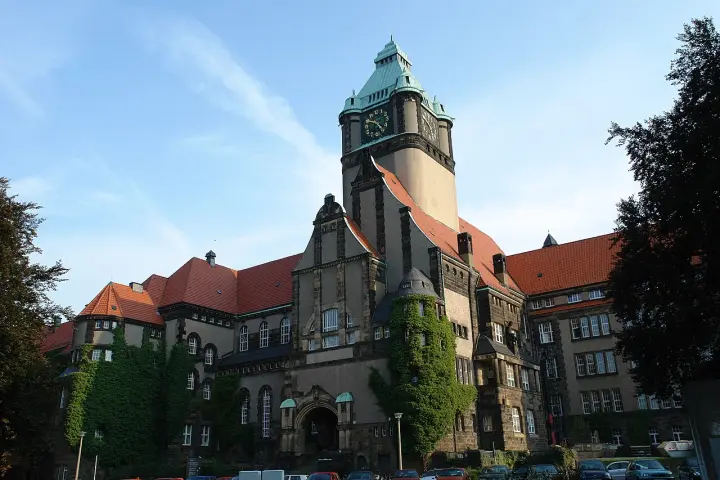
No tuition fee Tuition · sourced 2 years Duration View detailsCampus photos on this page: Hullbr3ach (CC BY-SA 2.5) — via Wikimedia Commons.
Molecular Bioengineering — FAQs
5 questions
Tuition is No tuition fee. Taken from the university's published fees page, not re-checked since — confirm it before you budget. We confirm the current fee and the scholarships you qualify for — free.
The main intake is Winter semester. Most universities admit on a rolling basis — we confirm the exact deadline for your profile, free.
Applicants are required to have: 1. A Bachelor's degree, Diploma degree, or an equivalent qualification in one of the following fields: biology/life sciences biotechnology chemistry/biochemistry computer science materials science medicine physics nanotechnology 2. Proven basic knowledge in biochemistry, cell biology, materials science, physics and mathematics 3. A good command of English (see below) English: E.G. TOEFL iBT (since 2026): 4.5 TOEFL iBT (before 2026): 92 Cambridge English Qualifications: B2 First UNIcert® English: UNIcert® II IELTS Academic: 6.5.
The programme runs about 24 months full-time.
Yes — shortlisting, SOP, LOR, Resume, application, scholarships and visa guidance are all free. We're paid by partner universities, not by you.
Apply to Molecular Bioengineering — free help
A counsellor calls you back during office hours — 9am to 8pm IST, Mon to Sat. We are open now.