
Groundwater and Global Change – Impacts and Adaptation (GroundwatCh)
Technische Universität Dresden · Dresden, Europe
Duration
24 mo
Tuition
€5,000/yr
sourcedIntake
Winter semester
English
—
Winter semester intake. Most universities admit on a rolling basis — we confirm the exact application deadline for your profile, free.
Course details verified 10 Sep 2026 — intakes, entry requirements and course facts · official source
Fee sourced Taken from the university's published fees page, not re-checked since — confirm it before you budget. See the university fees page.
About this programme
As the largest liquid freshwater reservoir on earth, groundwater has both a huge environmental and economic value, and will be an essential resource for adaptation to climate change and reduction of socio-economic vulnerability, particularly in regions where freshwater availability is highly variable and frequently limited. Several factors foster the need for a more comprehensive and multidisciplinary educational groundwater programme. First, groundwater is a component of the water cycle interacting with all other components at various temporal and spatial scales. Second, groundwater systems are largely interdependent with socio-economic development. The presence of important and productive aquifers can boost socio-economic development and alleviate poverty in low-income countries by providing water for public supply and sustainable irrigation, increasing (environmental-friendly) land use efficiency. On the other hand, the continuous growth of the world population and the socio-economic development of many countries has already caused, and will continue to cause, large impacts on freshwater (including groundwater) systems through uncontrolled exploitation, causing depletion, seawater intrusion, reduction in baseflows in rivers and ecological flows sustaining freshwater ecosystems, or land subsidence. Third, climate change is foreseen to affect freshwater availability globally, with several hotspots, among which many areas that currently already suffer periods of severe droughts and freshwater scarcity, such as the Mediterranean area of southern Europe and Northern Africa, north-east China, northern and south-western Latin America, large parts of Australia and the western United States, among others. Fourth, important feedback mechanisms exist between groundwater (and its use), climate and global change, which vary in time and space. GroundwatCh addresses the current gaps in higher education with regard to the understanding of the complex interactions between groundwater, surface water, climate and global change, and how we should consider these, and can benefit from them, for the implementation of adaptation solutions. Embracing the central theme of Groundwater and Global Change – Impacts and Adaptation, we have linked it to six major thematic fields: Hydrological flow and ecosystems (A) Groundwater quality and pollution (B) Groundwater and climate (C) IWRM and sustainable development (D) Water infrastructure (E) Monitoring, data and modelling (F) As a GroundwatCh student, you will start the academic year at ULisboa IST in September, where you will start with the QGIS introductory (certified) course during the first semester, followed by the mandatory courses addressing core competences in thematic areas A-D, and elective courses in E-F (see https://www.groundwatermaster.eu/about), totalling (at least) 30 ECTS (as you are free to select more elective courses). In February, still in Portugal, you will take preparatory training in interdisciplinary science and fieldwork to prepare for the interdisciplinary project taking place at IHE Delft in the second semester. At the end of February, you will move to IHE Delft, where you will acquire (at least) 30 ECTS in the second semester, taking mandatory and elective courses within all thematic areas. Among the elective courses, you can opt for an ECTS-credited internship at any of the associated partners (APs). Following conclusion of the second semester at the end of July, you can continue your internship if desired, or have a summer break before moving to TU Dresden mid-September, where you will start your third semester with summer school courses and a thematic seminar. Subsequently, you will obtain training (at least 30 ECTS) in thematic areas A, C and F, through compulsory courses in climate modelling and groundwater-soil-land-climate feedback mechanisms as well as a study project and elective courses that can also cover the other thematic areas. At the end of the third semester
Intakes & deadlines
Winter semester
Dates confirmed for your profile · Open
Entry requirements
-
English
E.G. IELTS Academic: 6 TOEFL iBT (since 2026): 4 Reading: 4 Listening: 4 Speaking: 4 Writing: 4 TOEFL iBT (before 2026): 80 Reading: 18 Listening: 17 Speaking: 20 Writing: 17 PTE Academic: 52 Cambridge English Qualifications: B2 First
-
Prerequisites
Proof that the applicant has successfully accomplished a first degree of higher education equivalent to a BSc degree equivalent to 180 credit points according to the European Credit Transfer System (ECTS) A good final mark as shown by a Cumulative Grade Point Average (CGPA) of at least B/B+ (US System) or a classification of at least second upper (UK system) A Bachelor's degree or comparable in one of the following subjects: geologic, hydraulic, civil, environmental or agricultural engineering, geosciences, environmental sciences, climate sciences, geography, geology, or any other similar subject Sufficient academic knowledge of mathematics
-
Documents
SOP, LOR & Resume — generate them free in 2 minutes.
Fees & scholarships
€5,000/yr tuition (sourced). We confirm the exact costs and the scholarships you qualify for at Technische Universität Dresden — free, for your profile.
Other programmes at Technische Universität Dresden
AI, Regulatory Affairs & Transformation in Medical Technology (MBA)
€4,170/yr Tuition · sourced 2 years Duration View details TD Technische Universität DresdenAir Transport and Logistics
No tuition fee Tuition · sourced 2 years Duration View details TD Technische Universität DresdenBiochemistry
No tuition fee Tuition · sourced 2 years Duration View details TD Technische Universität DresdenChemistry
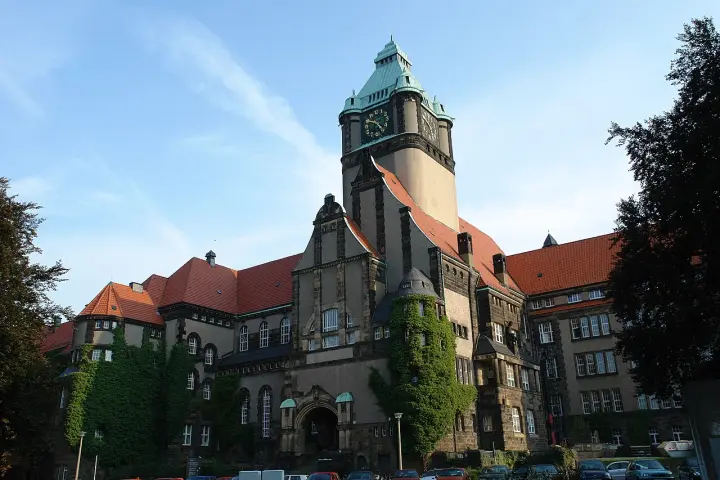
No tuition fee Tuition · sourced 2 years Duration View detailsCampus photos on this page: Hullbr3ach (CC BY-SA 2.5) — via Wikimedia Commons.
Groundwater and Global Change – Impacts and Adaptation (GroundwatCh) — FAQs
5 questions
Tuition is €5,000/yr. Taken from the university's published fees page, not re-checked since — confirm it before you budget. We confirm the current fee and the scholarships you qualify for — free.
The main intake is Winter semester. Most universities admit on a rolling basis — we confirm the exact deadline for your profile, free.
Proof that the applicant has successfully accomplished a first degree of higher education equivalent to a BSc degree equivalent to 180 credit points according to the European Credit Transfer System (ECTS) A good final mark as shown by a Cumulative Grade Point Average (CGPA) of at least B/B+ (US System) or a classification of at least second upper (UK system) A Bachelor's degree or comparable in one of the following subjects: geologic, hydraulic, civil, environmental or agricultural engineering, geosciences, environmental sciences, climate sciences, geography, geology, or any other similar subject Sufficient academic knowledge of mathematics English: E.G. IELTS Academic: 6 TOEFL iBT (since 2026): 4 Reading: 4 Listening: 4 Speaking: 4 Writing: 4 TOEFL iBT (before 2026): 80 Reading: 18 Listening: 17 Speaking: 20 Writing: 17 PTE Academic: 52 Cambridge English Qualifications: B2 First.
The programme runs about 24 months full-time.
Yes — shortlisting, SOP, LOR, Resume, application, scholarships and visa guidance are all free. We're paid by partner universities, not by you.
Apply to Groundwater and Global Change – Impacts and Adaptation (GroundwatCh) — free help
A counsellor calls you back during office hours — 9am to 8pm IST, Mon to Sat. We are open now.