
Ecosystem Services
Technische Universität Dresden · Dresden, Europe
Duration
24 mo
Tuition
No tuition fee
sourcedIntake
Winter semester
English
—
Winter semester intake. Most universities admit on a rolling basis — we confirm the exact application deadline for your profile, free.
Course details verified 10 Sep 2026 — intakes, entry requirements and course facts · official source
Fee sourced Taken from the university's published fees page, not re-checked since — confirm it before you budget. See the university fees page.
About this programme
Ecosystem services as the direct and indirect contributions of ecosystems to human well-being are gaining increasing attention in science, policy, and society. Identifying, mapping, and capturing the values of ecosystem services and the integration of this knowledge in public and private decision-making are important objectives of national, European, and international biodiversity and sustainability strategies. The MSc programme in Ecosystem Services is devoted to understanding the causes of biodiversity loss and ecosystem degradation as well as to analysing their impacts on ecosystem functioning and human well-being in an interdisciplinary manner. Core modules (Zittau and Görlitz): Ecosystem Services – Concepts and Development Applied Ecology Introduction into Key Taxa Methods of Empirical Social Research Intercultural Communication and Foreign Language Skills Biodiversity and Ecosystem Governance Ecosystem Accounting Elective modules: In the focus area of Environmental Social Sciences (mainly Zittau) Nature and Ecosystem Services in the City Resource Management and Sustainability Ecosystem Services – Case Studies Quantitative Methods of Empirical Research Biodiversity Management and Sustainability Environmental Law In the focus area of Biotechnology (Zittau) Environmental Chemistry Environmental and Fungal Genomics Environmental Analysis Applied Microbiology In the focus area of Ecology and Collections (mainly Görlitz) e.g. Field Ecology Museum and Collections Collecting and Analysing Biodiversity Data Diversity and Ecology of Fungi and Lichens Systematics and Bioindication of Bryophytes In the focus area of Forestry (Tharandt) e.g. Forest Sites and Catchment Hydrology International Forest Development Policy Monitoring Forest Growth Using Ground-based and Remote Sensing Methods Agent-based Modelling for Socio-Ecological Systems Conflict Management and Communication International Wildlife Management In the focus area of Spatial Development and Natural Resource Management (Dresden) e.g. Integrated Water Resources Management Circular Economy Ecological and Revitalising Urban Restructuring Global Perspectives of Spatial Development Environmental Development and Risk Management Applied Landscape Ecology Strategic Sustainability Management The programme combines the natural and social sciences expertise of the International Institute (IHI) Zittau and the Faculty of Environmental Sciences at TU Dresden, the Senckenberg Museum of Natural History in Görlitz, and the Leibniz Institute of Ecological Urban and Regional Development (IÖR) in Dresden. Compulsory courses include the basics of ecosystem services, empirical social research methods, biodiversity and ecosystem governance as well as ecosystem accounting. Courses on ecology, such as applied ecology and taxonomy, complement the subjects taught in the first two semesters. Starting in the second semester, students can choose among a variety of optional courses to deepen their knowledge in fields such as Environmental Social Sciences, Ecology and Collections, Forestry, Biotechnology, or Spatial Development and Natural Resource Management. The courses are taught in Zittau and Görlitz (first and second semesters). During the second semester and especially the third semester, courses may also take place in Dresden or Tharandt, depending on the selected focus area. Students can acquire methodological skills in ecosystem services case studies, quantitative methods in empirical social research, or ecological modelling. Alternatively, students can choose to spend a mobility semester abroad during the third semester. The fourth semester is dedicated to preparing the Master's thesis.
Intakes & deadlines
Winter semester
Dates confirmed for your profile · Open
Entry requirements
-
English
E.G. TOEFL iBT Home Edition (before 2026): 80 Reading: 20 Listening: 20 Speaking: 20 Writing: 20 TOEFL iBT Home Edition (since 2026): 4.5 Reading: 4.5 Listening: 4.5 Speaking: 4.5 Writing: 4.5 TOEFL iBT (since 2026): 4.5 Reading: 4.5 Listening: 4.5 Speaking: 4.5 Writing: 4.5 IELTS Academic: 6 TOEFL iBT (before 2026): 80 Reading: 20 Listening: 20 Speaking: 20 Writing: 20
-
Prerequisites
Bachelor's degree (or equivalent) in life or environmental sciences, geography, forestry sciences, or economics, business management and social sciences with expertise in environmental or conservation matters Each applicant has to submit a CV, letter of motivation, school-leaving certificate, university degree certificate, academic transcripts, and proof of English proficiency, e.g. an English language certificate.
-
Documents
SOP, LOR & Resume — generate them free in 2 minutes.
Fees & scholarships
No tuition fee tuition (sourced). We confirm the exact costs and the scholarships you qualify for at Technische Universität Dresden — free, for your profile.
Other programmes at Technische Universität Dresden
AI, Regulatory Affairs & Transformation in Medical Technology (MBA)
€4,170/yr Tuition · sourced 2 years Duration View details TD Technische Universität DresdenAir Transport and Logistics
No tuition fee Tuition · sourced 2 years Duration View details TD Technische Universität DresdenBiochemistry
No tuition fee Tuition · sourced 2 years Duration View details TD Technische Universität DresdenChemistry
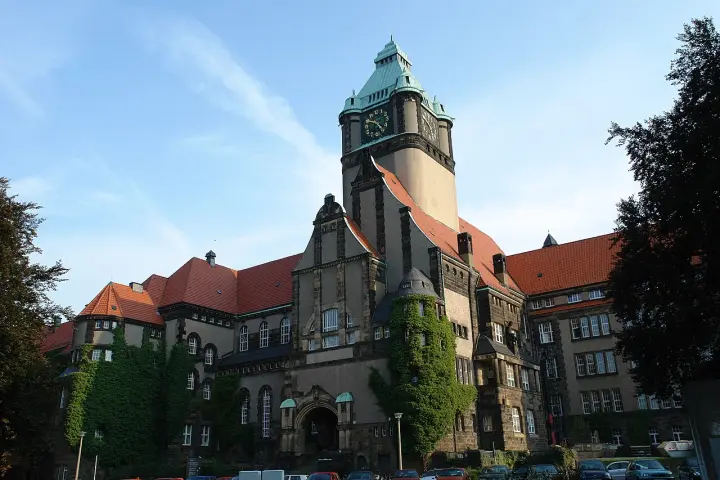
No tuition fee Tuition · sourced 2 years Duration View detailsCampus photos on this page: Hullbr3ach (CC BY-SA 2.5) — via Wikimedia Commons.
Ecosystem Services — FAQs
5 questions
Tuition is No tuition fee. Taken from the university's published fees page, not re-checked since — confirm it before you budget. We confirm the current fee and the scholarships you qualify for — free.
The main intake is Winter semester. Most universities admit on a rolling basis — we confirm the exact deadline for your profile, free.
Bachelor's degree (or equivalent) in life or environmental sciences, geography, forestry sciences, or economics, business management and social sciences with expertise in environmental or conservation matters Each applicant has to submit a CV, letter of motivation, school-leaving certificate, university degree certificate, academic transcripts, and proof of English proficiency, e.g. an English language certificate. English: E.G. TOEFL iBT Home Edition (before 2026): 80 Reading: 20 Listening: 20 Speaking: 20 Writing: 20 TOEFL iBT Home Edition (since 2026): 4.5 Reading: 4.5 Listening: 4.5 Speaking: 4.5 Writing: 4.5 TOEFL iBT (since 2026): 4.5 Reading: 4.5 Listening: 4.5 Speaking: 4.5 Writing: 4.5 IELTS Academic: 6 TOEFL iBT (before 2026): 80 Reading: 20 Listening: 20 Speaking: 20 Writing: 20.
The programme runs about 24 months full-time.
Yes — shortlisting, SOP, LOR, Resume, application, scholarships and visa guidance are all free. We're paid by partner universities, not by you.
Apply to Ecosystem Services — free help
A counsellor calls you back during office hours — 9am to 8pm IST, Mon to Sat. We are open now.