
Advanced Manufacturing – Mechanical Engineering and Production
Technische Universität Chemnitz · Chemnitz, Europe
Duration
24 mo
Tuition
No tuition fee
sourcedIntake
Winter semester
English
—
Winter semester intake. Most universities admit on a rolling basis — we confirm the exact application deadline for your profile, free.
Course details verified 10 Sep 2026 — intakes, entry requirements and course facts · official source
Fee sourced Taken from the university's published fees page, not re-checked since — confirm it before you budget. See the university fees page.
About this programme
This English-taught, research-driven, and interdisciplinary Master’s programme is offered by the Faculty of Mechanical Engineering at TU Chemnitz. It is designed to equip students with cutting-edge scientific methods, knowledge, and skills related to innovative technologies and advanced manufacturing processes. The programme embodies and reflects the core competencies of Chemnitz University of Technology, preparing graduates to shape the future of modern manufacturing. At Chemnitz University of Technology, you will benefit from a long-established tradition of excellent research and teaching in mechanical engineering, natural sciences, human factors and economics. By its seven profile areas, which include Lightweight Technologies, Smart Manufacturing, Industrial Engineering, Printed Functionalities, Materials Engineering, Mechatronics and Automation and Computational Manufacturing Engineering, the degree programme is oriented towards the research key areas of Chemnitz University of Technology in a transdisciplinary, faculty-overarching and future-oriented way. During the integrated internships, you will build strong ties with innovation leaders in industry and business. A focus is also placed on improving your soft skills, which will help you to communicate your ideas and innovations freely and make responsible decisions based on multiple perspectives, e.g. political developments, geographical constellations and regional economics. In addition, the students also acquire intercultural competencies due to the international and heterogeneous character of the degree programme. The Master Advanced Manufacturing is a two-year (four semesters) programme. In the first semester, students will start right away with various key areas of cutting-edge manufacturing technologies. The courses on Digital Tools, Humans in Manufacturing, Composite Structures and Modelling and Simulation equip them with the skills to excel in their Master’s and makes them familiar with the common ground to start off into the seven profiles. In the first semester, the students will gain a first overview of different future-oriented manufacturing methods and current questions regarding the availability and sustainability of resources and stable supply chains. We then offer seven major profiles and a large variety of options, so that students can design their studies according to their individual preferences and the required skills in their desired area of work. We expect our students to become excellent in their knowledge, critical in their reflection of (not only!) the scientific world and valuable contributors for the good of all people. This starts with taking decisions about your future profile. The profiles cover the topics Lightweight Technologies (Fibre-Reinforced Composite Materials, Lightweight Design, Simulation and Optimisation, Recycling), Smart Manufacturing (Joining and Forming Processes, Geometrical Product Specification, Efficient Process Chains), Industrial Engineering (Digital Ergonomics, Human Factors, Logistic Systems, Resilience in Manufacturing), Printed Functionalities (Printing and Additive Manufacturing, Surface Engineering, Structural Design, Quality Assurance), Materials Engineering (Materials Analysis, Polymer Processing, Testing, Lightweight Metals and Ceramics), Mechatronics and Automation (Safety, Data Acquisition, Components, Design and Implementation of Mechatronic Systems) and Computational Manufacturing Engineering (Numerical Methods, Simulation and Modelling in Solid Mechanics, Thermo-Mechanically-Coupled Processes). The in-depth engineering knowledge acquired in the first two semesters is applied to a challenging real-life task, provided by our industrial partners in the Applied Engineering Project module. It is one of many opportunities to present your skills and personality to potential employers. Based on the scientific and methodological abilities acquired, second-year students work on their own research topics in an acade
Intakes & deadlines
Winter semester
Dates confirmed for your profile · Open
Entry requirements
-
English
E.G. UNIcert® English: UNIcert® II TOEIC: 785 Reading: 385 Listening: 400 Speaking: 160 Writing: 150 TOEFL iBT (since 2026): 4 Reading: 4 Listening: 4 Speaking: 4 Writing: 4 TOEFL iBT (before 2026): 72 Reading: 18 Listening: 17 Speaking: 20 Writing: 17 telc English: telc English B2 PTE Academic: 59 IELTS Academic: 5.5 Cambridge English Qualifications Business (BEC) : B2 Business Vantage Cambridge English Qualifications: B2 First
-
Prerequisites
The admission is mainly based on skills, not on a specific previous degree. You must demonstrate proficiency in the following fields: Special mathematical methods of engineering (totalling at least 18 ECTS), which include the topics of Fourier transforms, regression calculation, probability, and mathematical statistics Scientific and engineering data processing (totalling at least 12 ECTS), which include the topics CAD, CAS, numerical simulation, and data acquisition as well as multi-physics simulation and practical experience Metrology and control engineering (totalling at least 8 ECTS), which include the topics of sensors, actuators and digital methods of manufacturing New materials for engineering (totalling at least 8 ECTS), which include the topics of polymers, metals, composites, matrix systems and functional properties In-depth theoretical basics of engineering (totalling at least 12 ECTS), which include the subjects of engineering mechanics, design, manufacturing, and fluid dynamics Resource-efficient manufacturing concepts (totalling at least 8 ECTS), which include the topics of technical and natural cycles and networks, system optimisation and energy concepts
-
Documents
SOP, LOR & Resume — generate them free in 2 minutes.
This is an indicative early-career range for the whole Engineering (general) field in Europe, from official graduate-outcome data — not a figure for this programme or university, and not a guarantee of what you will earn. What you actually earn depends on the role, employer, city and your visa.
Source: Profiling Institut - Gehaltsranking nach Studienfach 2026 (StepStone Gehaltsreport 2026), 2026. Market job-board data — less official than a government survey; treat as indicative.
Rupee figure converted at the 18 Aug 2026 mid-market rate; your bank's rate will be worse and currencies move, so use it for planning, not as the amount you will receive.
Fees & scholarships
No tuition fee tuition (sourced). We confirm the exact costs and the scholarships you qualify for at Technische Universität Chemnitz — free, for your profile.
Other programmes at Technische Universität Chemnitz
Advanced and Computational Mathematics – International Master's Programme
No tuition fee Tuition · sourced 2 years Duration View details TC Technische Universität ChemnitzAdvanced Functional Materials
No tuition fee Tuition · sourced 2 years Duration View details TC Technische Universität ChemnitzAutomation, Robotics and Control
No tuition fee Tuition · sourced 2 years Duration View details TC Technische Universität ChemnitzAutomotive Software Engineering
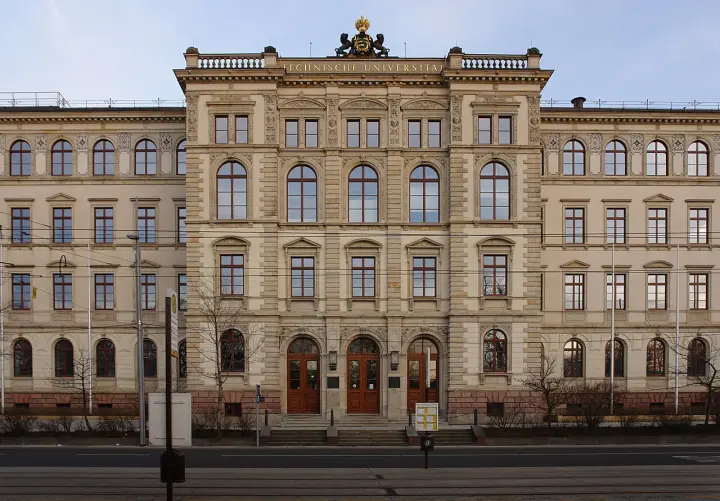
No tuition fee Tuition · sourced 2 years Duration View detailsCampus photos on this page: User:Kolossos (CC BY-SA 3.0) — via Wikimedia Commons.
Advanced Manufacturing – Mechanical Engineering and Production — FAQs
5 questions
Tuition is No tuition fee. Taken from the university's published fees page, not re-checked since — confirm it before you budget. We confirm the current fee and the scholarships you qualify for — free.
The main intake is Winter semester. Most universities admit on a rolling basis — we confirm the exact deadline for your profile, free.
The admission is mainly based on skills, not on a specific previous degree. You must demonstrate proficiency in the following fields: Special mathematical methods of engineering (totalling at least 18 ECTS), which include the topics of Fourier transforms, regression calculation, probability, and mathematical statistics Scientific and engineering data processing (totalling at least 12 ECTS), which include the topics CAD, CAS, numerical simulation, and data acquisition as well as multi-physics simulation and practical experience Metrology and control engineering (totalling at least 8 ECTS), which include the topics of sensors, actuators and digital methods of manufacturing New materials for engineering (totalling at least 8 ECTS), which include the topics of polymers, metals, composites, matrix systems and functional properties In-depth theoretical basics of engineering (totalling at least 12 ECTS), which include the subjects of engineering mechanics, design, manufacturing, and fluid dynamics Resource-efficient manufacturing concepts (totalling at least 8 ECTS), which include the topics of technical and natural cycles and networks, system optimisation and energy concepts English: E.G. UNIcert® English: UNIcert® II TOEIC: 785 Reading: 385 Listening: 400 Speaking: 160 Writing: 150 TOEFL iBT (since 2026): 4 Reading: 4 Listening: 4 Speaking: 4 Writing: 4 TOEFL iBT (before 2026): 72 Reading: 18 Listening: 17 Speaking: 20 Writing: 17 telc English: telc English B2 PTE Academic: 59 IELTS Academic: 5.5 Cambridge English Qualifications Business (BEC) : B2 Business Vantage Cambridge English Qualifications: B2 First.
The programme runs about 24 months full-time.
Yes — shortlisting, SOP, LOR, Resume, application, scholarships and visa guidance are all free. We're paid by partner universities, not by you.
Apply to Advanced Manufacturing – Mechanical Engineering and Production — free help
A counsellor calls you back during office hours — 9am to 8pm IST, Mon to Sat. We are closed right now, so your request is first in line when we reopen.