Systems and Automation — Major of Electrical Engineering and Information Technology
RWTH Aachen University · Aachen, Germany, Europe
Duration
24 mo
Tuition
No tuition fee
sourcedIntake
Winter semester
English
—
Winter semester intake. Most universities admit on a rolling basis — we confirm the exact application deadline for your profile, free.
Course details verified 09 Sep 2026 — intakes, entry requirements and course facts · official source
Fee sourced Taken from the university's published fees page, not re-checked since — confirm it before you budget. See the university fees page.
About this programme
IMPORTANT NOTICE: Students interested in the Systems Engineering and Automation major must apply for the Master's programme in Electrical Engineering and Information Technology. Once accepted and enrolled, they can choose one of the following five majors: Electrical Power Engineering, Micro- and Nanoelectronics, Systems and Automation, Communications Engineering, or Biomedical Systems Engineering. Graduates with a Master's degree in Electrical Engineering and Information Technology with a specialisation in Systems Engineering and Automation will understand systems by combining their in-depth knowledge in systems and control with their knowledge of other disciplines. Graduates from this Master's programme will be able to apply control theory to design systems with a desired behaviour. They will have insight and enhanced appreciation of analysis, modelling, and control of dynamic systems. They will be familiar with calculus, physics, and programming skills. They will have the ability to interpret the physical significance of mathematical results in system analysis. The graduates will be able to apply theoretical concepts of system identification, modelling, and optimisation. For many industrial branches, automation technology is the key to economic performance. The graduates will be able: to take technical-scientific questions from practice, to understand the problems, to formulate them, and then communicate them to others to analyse engineering and technology questions and formulate solutions to understand the impact of design activities on the life cycle of products to adequately report results both in writing and verbally using current technical language and terminology to communicate adequately in their native language and in English The standard period of study is four full-time semesters (two years), including the preparation of the Master's thesis. The course of study may be commenced in either semester. The programme consists of a range of mandatory or mandatory-elective modules that define its specific profile. This part of the curriculum is complemented by a large offer of laboratory work, project work, and seminars. In addition, there is a selection of possible courses that comprise courses from all other Master's programmes offered by the faculty. Finally, there is an assortment of elective courses from the entire RWTH course programme, including courses in economics and soft skills as well as language courses. All Master's students must complete the "Scientific Integrity" module to meet ethical standards of scientific practice. German language courses are compulsory for all students who cannot certify a German language level of at least B1. During the 18-week industrial internship, students will learn how to solve current engineering problems while working with renowned industry partners. This is often the first step towards a future professional career. The Master's thesis is an independent, predefined scientific project to be completed in a fixed period of six months. It is concluded by an oral presentation and defence of the results. A total of 120 ECTS credits are required for the successful completion of the programme, distributed among the various subject areas. Modules from the CORE department are mandatory and must be taken for at least 20 credits. Below you will find a visual structure of the Master's programme to see how many credit points are required in each subject area. The programme utilises the following basic forms of teaching to achieve the defined goals: Lectures – a serial presentation of material, including specific methodologies Tutorials – solidifying and deepening expert knowledge and capabilities by solving problems associated with the lecture material Seminar work – the elaboration of complex questions and scientific knowledge (Students give oral presentations in the seminar.) Intensive courses – compact intensive courses composed of lectures and tutorials Important additional options for
Intakes & deadlines
Winter semester
Dates confirmed for your profile · Open
Summer semester
Dates confirmed for your profile · Open
Entry requirements
-
English
E.G. TOEFL iBT Home Edition (since 2026): 4.5 TOEFL iBT (since 2026): 4.5 TOEFL iBT Home Edition (before 2026): 90 TOEFL iBT (before 2026): 90 IELTS Academic: 6 Cambridge English Qualifications: C1 Advanced
-
Prerequisites
1. In order to apply to the RWTH Master's programme in "Electrical Engineering and Information Technology" with a specialisation in Systems and Automation, applicants must have completed their basic studies (Bachelor of Science, Bachelor of Engineering, or equivalent) at an internationally recognised university. These basic studies should fulfil both the subject requirements listed below and those listed in detail on the homepage of the Faculty of Electrical Engineering and Information Technology. More information about subject requirements At least 28 ECTS credits for advanced mathematics At least 10 ECTS credits for physics and physical principles of electronic devices At least 34 ECTS credits for fundamentals of electrical engineering including circuit technology At least 8 ECTS credits for informatics (computer science) and programming At least 10 ECTS credits for fundamentals of control and mathematical systems theory At least 10 ECTS credits for advanced electromagnetic field theory or theoretical information theory At least 20 ECTS credits for application-oriented courses 2. In addition, at the time of application, all applicants are obliged to prove that they have taken the Graduate Record Examination (GRE) General Test. The test score must fulfil the minimum requirements according to the current examination regulations. Applicants who are citizens of a European Union or European Economic Area (EEA) member state, as well as those with prior educational qualifications from Germany (so-called "Bildungsinländer"), are exempt from this rule. 3. Conditional admission is possible. In this case, additional study requirements must be fulfilled. 4. Admission to this Master's programme requires proof of adequate knowledge of the English language (see below).
-
Documents
SOP, LOR & Resume — generate them free in 2 minutes.
Fees & scholarships
No tuition fee tuition (sourced). We confirm the exact costs and the scholarships you qualify for at RWTH Aachen University — free, for your profile.
Other programmes at RWTH Aachen University
 RWTH Aachen University
Advanced Computational Methods in Civil Engineering
No tuition fee Tuition · sourced 2 years Duration View details
RWTH Aachen University
Applied Geosciences – Applied Mineralogy and Crystallography (AMC) (MSc)
No tuition fee Tuition · sourced 2 years Duration View details
RWTH Aachen University
Applied Geosciences – Computational Geology and Geophysics (CGG) (MSc)
No tuition fee Tuition · sourced 2 years Duration View details
RWTH Aachen University
Applied Geosciences – Energy & Mineral Resources (EMR) (MSc)
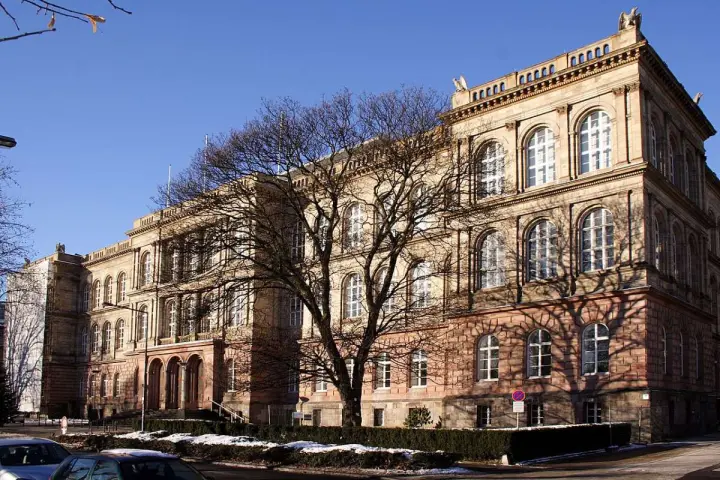
No tuition fee Tuition · sourced 2 years Duration View detailsCampus photos on this page: א (Aleph) (CC BY-SA 2.5) — via Wikimedia Commons.
Systems and Automation — Major of Electrical Engineering and Information Technology — FAQs
5 questions
Tuition is No tuition fee. Taken from the university's published fees page, not re-checked since — confirm it before you budget. We confirm the current fee and the scholarships you qualify for — free.
The main intake is Winter semester. Most universities admit on a rolling basis — we confirm the exact deadline for your profile, free.
1. In order to apply to the RWTH Master's programme in "Electrical Engineering and Information Technology" with a specialisation in Systems and Automation, applicants must have completed their basic studies (Bachelor of Science, Bachelor of Engineering, or equivalent) at an internationally recognised university. These basic studies should fulfil both the subject requirements listed below and those listed in detail on the homepage of the Faculty of Electrical Engineering and Information Technology. More information about subject requirements At least 28 ECTS credits for advanced mathematics At least 10 ECTS credits for physics and physical principles of electronic devices At least 34 ECTS credits for fundamentals of electrical engineering including circuit technology At least 8 ECTS credits for informatics (computer science) and programming At least 10 ECTS credits for fundamentals of control and mathematical systems theory At least 10 ECTS credits for advanced electromagnetic field theory or theoretical information theory At least 20 ECTS credits for application-oriented courses 2. In addition, at the time of application, all applicants are obliged to prove that they have taken the Graduate Record Examination (GRE) General Test. The test score must fulfil the minimum requirements according to the current examination regulations. Applicants who are citizens of a European Union or European Economic Area (EEA) member state, as well as those with prior educational qualifications from Germany (so-called "Bildungsinländer"), are exempt from this rule. 3. Conditional admission is possible. In this case, additional study requirements must be fulfilled. 4. Admission to this Master's programme requires proof of adequate knowledge of the English language (see below). English: E.G. TOEFL iBT Home Edition (since 2026): 4.5 TOEFL iBT (since 2026): 4.5 TOEFL iBT Home Edition (before 2026): 90 TOEFL iBT (before 2026): 90 IELTS Academic: 6 Cambridge English Qualifications: C1 Advanced.
The programme runs about 24 months full-time.
Yes — shortlisting, SOP, LOR, Resume, application, scholarships and visa guidance are all free. We're paid by partner universities, not by you.
Apply to Systems and Automation — Major of Electrical Engineering and Information Technology — free help
A counsellor calls you back during office hours — 9am to 8pm IST, Mon to Sat. We are open now.