
Applied Geosciences – Applied Mineralogy and Crystallography (AMC) (MSc)
RWTH Aachen University · Aachen, Germany, Europe
Duration
24 mo
Tuition
No tuition fee
sourcedIntake
Winter semester
English
—
Winter semester intake. Most universities admit on a rolling basis — we confirm the exact application deadline for your profile, free.
Course details verified 09 Sep 2026 — intakes, entry requirements and course facts · official source
Fee sourced Taken from the university's published fees page, not re-checked since — confirm it before you budget. See the university fees page.
About this programme
Our MSc programme Applied Geosciences is offered in five specialisations: Applied Mineralogy and Crystallography (AMC) Computational Geology & Geophysics (CGG) Energy and Mineral Resources (EMR) Field-based Geosciences (FBG) Geoengineering (GIN) Applied Mineralogy and Crystallography (AMC) The Applied Mineralogy and Crystallography (AMC) specialisation within the MSc programme "Applied Geosciences" provides students with in-depth theoretical knowledge and practical training in the structure, chemistry, and properties of geomaterials and functional materials, including energy and nanomaterials. This specialisation is designed to equip students with the necessary expertise to investigate mineralogical processes and contribute to the development of materials with tailored properties for technological applications, such as battery components. A key aspect of the AMC specialisation is its strong focus on experimental and analytical techniques. Students will receive extensive laboratory-based training and gain experience in a range of analytical and microscopy methods. Additionally, elective field trips and opportunities to engage in large-scale research at synchrotron radiation facilities and neutron sources further enhance the learning experience. Students can customise their studies by choosing from a variety of modules, including diffraction methods, laboratory courses, electron microscopy, geochemistry, data management, and chemistry and materials engineering. This specialisation prepares graduates for careers in both academic research and industry, providing them with a strong foundation in experimental and analytical techniques relevant to geosciences and materials science. It's possible to download the current course curriculum at the end of the following page: https://www.fgeo.rwth-aachen.de/cms/geowissenschaften-und-geographie/Studium/Studiengaenge/Master-courses-of-study/Angewandte-Geowissenschaften/~cajo/Kurzprofil-des-Studiengangs/lidx/1/. PDF Download
Intakes & deadlines
Winter semester
Dates confirmed for your profile · Open
Summer semester
Dates confirmed for your profile · Open
Entry requirements
-
English
E.G. IELTS Academic: 6 Cambridge English Qualifications: B2 First TOEFL iBT (since 2026): 4 Reading: 4 Listening: 4 Speaking: 4 Writing: 4 UNIcert® English: UNIcert® II
-
Prerequisites
The professional requirements differ for the various specialisations. The following two requirement profiles are assumed for the AMC specialisation: 1.) Profile in Geosciences Bachelor's graduates with the following geoscientific competence profile (e.g. Bachelor's degrees in the fields of geosciences, earth sciences, geology, mineralogy, crystallography, etc.) can be admitted to the EMR specialisation: Bachelor of Science or Engineering with at least 180 ECTS and at least 20 ECTS from natural sciences (biology, chemistry, mathematics and/or physics) at least 80 ECTS from geosciences (e.g. geology, mineralogy, geochemistry, crystallography, geoengineering) at least 5 ECTS from geoscientific field education 2.) Profile in Materials Science/Engineering or Chemistry/Physics (with basics in crystallography) In addition, Bachelor's graduates with the following materials science or chemical-physical skills profile (e.g. Bachelor's degrees from the fields of materials science, chemistry, materials engineering, physics, etc.) can be admitted to the specialisation “Applied Mineralogy & Crystallography” (AMC): Bachelor of Science or Engineering with at least 180 ECTS and a total of at least 4 ECTS from crystallography (an “Introduction to Crystallography” is mandatory) a total of at least 30 ECTS from chemistry and/or physics a total of at least 40 ECTS from analytical and/or material characterisation courses (e.g. mineralogy, petrology, analytical chemistry, crystallography, materials science, solid state physics, solid state chemistry, etc.).
-
Documents
SOP, LOR & Resume — generate them free in 2 minutes.
Fees & scholarships
No tuition fee tuition (sourced). We confirm the exact costs and the scholarships you qualify for at RWTH Aachen University — free, for your profile.
Other programmes at RWTH Aachen University
 RWTH Aachen University
Advanced Computational Methods in Civil Engineering
No tuition fee Tuition · sourced 2 years Duration View details
RWTH Aachen University
Applied Geosciences – Computational Geology and Geophysics (CGG) (MSc)
No tuition fee Tuition · sourced 2 years Duration View details
RWTH Aachen University
Applied Geosciences – Energy & Mineral Resources (EMR) (MSc)
No tuition fee Tuition · sourced 2 years Duration View details
RWTH Aachen University
Applied Geosciences – Field-Based Geosciences (FBG) (MSc)
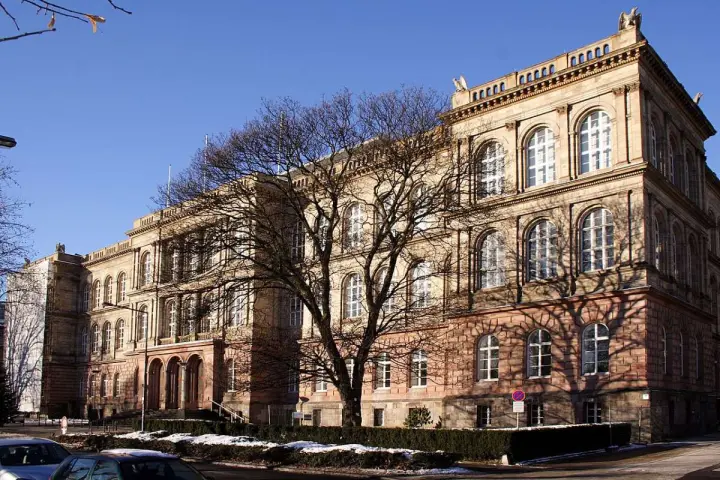
No tuition fee Tuition · sourced 2 years Duration View detailsCampus photos on this page: א (Aleph) (CC BY-SA 2.5) — via Wikimedia Commons.
Applied Geosciences – Applied Mineralogy and Crystallography (AMC) (MSc) — FAQs
5 questions
Tuition is No tuition fee. Taken from the university's published fees page, not re-checked since — confirm it before you budget. We confirm the current fee and the scholarships you qualify for — free.
The main intake is Winter semester. Most universities admit on a rolling basis — we confirm the exact deadline for your profile, free.
The professional requirements differ for the various specialisations. The following two requirement profiles are assumed for the AMC specialisation: 1.) Profile in Geosciences Bachelor's graduates with the following geoscientific competence profile (e.g. Bachelor's degrees in the fields of geosciences, earth sciences, geology, mineralogy, crystallography, etc.) can be admitted to the EMR specialisation: Bachelor of Science or Engineering with at least 180 ECTS and at least 20 ECTS from natural sciences (biology, chemistry, mathematics and/or physics) at least 80 ECTS from geosciences (e.g. geology, mineralogy, geochemistry, crystallography, geoengineering) at least 5 ECTS from geoscientific field education 2.) Profile in Materials Science/Engineering or Chemistry/Physics (with basics in crystallography) In addition, Bachelor's graduates with the following materials science or chemical-physical skills profile (e.g. Bachelor's degrees from the fields of materials science, chemistry, materials engineering, physics, etc.) can be admitted to the specialisation “Applied Mineralogy & Crystallography” (AMC): Bachelor of Science or Engineering with at least 180 ECTS and a total of at least 4 ECTS from crystallography (an “Introduction to Crystallography” is mandatory) a total of at least 30 ECTS from chemistry and/or physics a total of at least 40 ECTS from analytical and/or material characterisation courses (e.g. mineralogy, petrology, analytical chemistry, crystallography, materials science, solid state physics, solid state chemistry, etc.). English: E.G. IELTS Academic: 6 Cambridge English Qualifications: B2 First TOEFL iBT (since 2026): 4 Reading: 4 Listening: 4 Speaking: 4 Writing: 4 UNIcert® English: UNIcert® II.
The programme runs about 24 months full-time.
Yes — shortlisting, SOP, LOR, Resume, application, scholarships and visa guidance are all free. We're paid by partner universities, not by you.
Apply to Applied Geosciences – Applied Mineralogy and Crystallography (AMC) (MSc) — free help
A counsellor calls you back during office hours — 9am to 8pm IST, Mon to Sat. We are open now.