
Applied Geosciences – Computational Geology and Geophysics (CGG) (MSc)
RWTH Aachen University · Aachen, Germany, Europe
Duration
24 mo
Tuition
No tuition fee
sourcedIntake
Winter semester
English
—
Winter semester intake. Most universities admit on a rolling basis — we confirm the exact application deadline for your profile, free.
Course details verified 09 Sep 2026 — intakes, entry requirements and course facts · official source
Fee sourced Taken from the university's published fees page, not re-checked since — confirm it before you budget. See the university fees page.
About this programme
Our MSc programme Applied Geosciences is offered in five specialisations: Applied Mineralogy and Crystallography (AMC) Computational Geology & Geophysics (CGG) Energy and Mineral Resources (EMR) Field-Based Geosciences (FBG) Geoengineering (GIN) Computational Geology & Geophysics (CGG) The specialisation in Computational Geology and Geophysics provides training in the broader field of computational geosciences. This specialisation offers an interdisciplinary approach to understanding the Earth through advanced computational techniques and geophysical methods. The programme equips students with the skills necessary to analyse complex geological data and processes, model subsurface structures, and interpret geophysical data. With a strong emphasis on both theoretical foundations and practical applications, students will engage in hands-on projects that address real-world challenges in sustainable resource exploration, renewable energy, and geodata science. By integrating cutting-edge technology with traditional geosciences, this Master's specialisation prepares graduates for successful careers in academia, industry, and research institutions and for collaborating across disciplines. The specialisation features compulsory modules that cover fundamental concepts, alongside a variety of elective modules that enable the development of a personalised professional profile. The curriculum encompasses courses on basic geoscientific knowledge, geothermics, applied geophysics, programming, computer-aided analysis and visualisation of data with a focus on spatial data, statistics, numerical modelling, and artificial intelligence. The programme concludes in a Master's thesis that the students select based on their interests. It's possible to download the current course curriculum at the end of the following page: https://www.fgeo.rwth-aachen.de/cms/geowissenschaften-und-geographie/Studium/Studiengaenge/Master-courses-of-study/Angewandte-Geowissenschaften/~cajo/Kurzprofil-des-Studiengangs/lidx/1/.
Intakes & deadlines
Winter semester
Dates confirmed for your profile · Open
Summer semester
Dates confirmed for your profile · Open
Entry requirements
-
English
E.G. IELTS Academic: 6 Cambridge English Qualifications: B2 First TOEFL iBT (since 2026): 4 Reading: 4 Listening: 4 Speaking: 4 Writing: 4 UNIcert® English: UNIcert® II
-
Prerequisites
The professional requirements differ for the various specialisations. The following two requirement profiles are assumed for the CGG specialisation: 1.) Profile in Geosciences Bachelor's graduates with the following geoscientific competence profile (e.g. Bachelor's degrees in the fields of geosciences, earth sciences, geology, mineralogy, crystallography, etc.) can be admitted to the specialisation CGG: Bachelor of Science or Engineering with at least 180 ECTS and at least 20 ECTS from natural sciences (biology, chemistry, mathematics and/or physics) at least 80 ECTS from geosciences (e.g. geology, mineralogy, geochemistry, crystallography, geoengineering) at least 5 ECTS from geoscientific field education 2.) Profile in Physics or Data Sciences Bachelor's graduates with the following physical or data science profile (e.g. Bachelor's degrees in physics and data science, etc.) can also be admitted to the Computational Geology and Geophysics (CGG) specialisation: Bachelor of Science or Engineering with at least 180 ECTS and a total of at least 20 ECTS from mathematics in the fields of algebra, analysis, stochastics, mathematical logic a total of at least 30 ECTS from physics and/or data science in the fields of theoretical physics, solid state physics, quantum mechanics, programming, data structures & algorithms, databases & information systems, computer engineering, computability & complexity, formal systems, automata & processes
-
Documents
SOP, LOR & Resume — generate them free in 2 minutes.
Fees & scholarships
No tuition fee tuition (sourced). We confirm the exact costs and the scholarships you qualify for at RWTH Aachen University — free, for your profile.
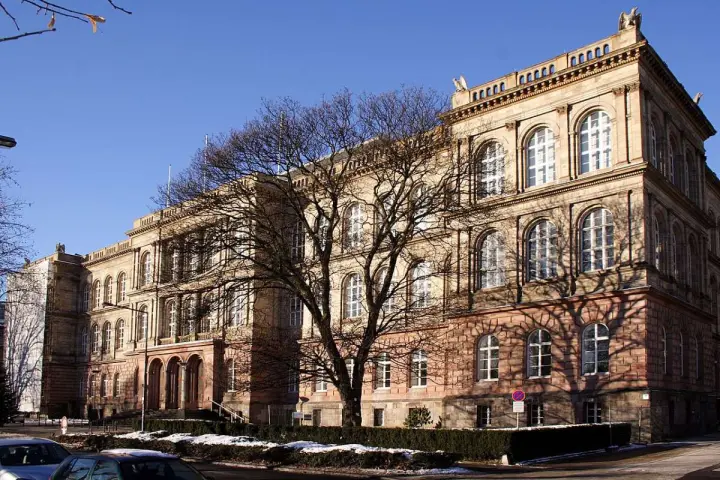
Other programmes at RWTH Aachen University
 RWTH Aachen University
Advanced Computational Methods in Civil Engineering
No tuition fee Tuition · sourced 2 years Duration View details
RWTH Aachen University
Applied Geosciences – Applied Mineralogy and Crystallography (AMC) (MSc)
No tuition fee Tuition · sourced 2 years Duration View details
RWTH Aachen University
Applied Geosciences – Energy & Mineral Resources (EMR) (MSc)
No tuition fee Tuition · sourced 2 years Duration View details
RWTH Aachen University
Applied Geosciences – Field-Based Geosciences (FBG) (MSc)
No tuition fee Tuition · sourced 2 years Duration View detailsCampus photos on this page: א (Aleph) (CC BY-SA 2.5) — via Wikimedia Commons.
Applied Geosciences – Computational Geology and Geophysics (CGG) (MSc) — FAQs
5 questions
Tuition is No tuition fee. Taken from the university's published fees page, not re-checked since — confirm it before you budget. We confirm the current fee and the scholarships you qualify for — free.
The main intake is Winter semester. Most universities admit on a rolling basis — we confirm the exact deadline for your profile, free.
The professional requirements differ for the various specialisations. The following two requirement profiles are assumed for the CGG specialisation: 1.) Profile in Geosciences Bachelor's graduates with the following geoscientific competence profile (e.g. Bachelor's degrees in the fields of geosciences, earth sciences, geology, mineralogy, crystallography, etc.) can be admitted to the specialisation CGG: Bachelor of Science or Engineering with at least 180 ECTS and at least 20 ECTS from natural sciences (biology, chemistry, mathematics and/or physics) at least 80 ECTS from geosciences (e.g. geology, mineralogy, geochemistry, crystallography, geoengineering) at least 5 ECTS from geoscientific field education 2.) Profile in Physics or Data Sciences Bachelor's graduates with the following physical or data science profile (e.g. Bachelor's degrees in physics and data science, etc.) can also be admitted to the Computational Geology and Geophysics (CGG) specialisation: Bachelor of Science or Engineering with at least 180 ECTS and a total of at least 20 ECTS from mathematics in the fields of algebra, analysis, stochastics, mathematical logic a total of at least 30 ECTS from physics and/or data science in the fields of theoretical physics, solid state physics, quantum mechanics, programming, data structures & algorithms, databases & information systems, computer engineering, computability & complexity, formal systems, automata & processes English: E.G. IELTS Academic: 6 Cambridge English Qualifications: B2 First TOEFL iBT (since 2026): 4 Reading: 4 Listening: 4 Speaking: 4 Writing: 4 UNIcert® English: UNIcert® II.
The programme runs about 24 months full-time.
Yes — shortlisting, SOP, LOR, Resume, application, scholarships and visa guidance are all free. We're paid by partner universities, not by you.
Apply to Applied Geosciences – Computational Geology and Geophysics (CGG) (MSc) — free help
A counsellor calls you back during office hours — 9am to 8pm IST, Mon to Sat. We are closed right now, so your request is first in line when we reopen.