Sustainable Management — Water and Energy
RWTH Aachen University · Aachen, Germany, Europe
Duration
24 mo
Tuition
No tuition fee
sourcedIntake
Winter semester
English
—
Winter semester intake. Most universities admit on a rolling basis — we confirm the exact application deadline for your profile, free.
Course details verified 09 Sep 2026 — intakes, entry requirements and course facts · official source
Fee sourced Taken from the university's published fees page, not re-checked since — confirm it before you budget. See the university fees page.
About this programme
Maintaining a permanent supply of water and energy is one of the great global challenges of our time. As a result, the water-energy nexus, which reaches across various sectors, is becoming increasingly important. Knowing the relationship between water and energy supply and distribution (both pillars in sustainability), it is necessary to connect different scientific perspectives. By considering complex interdependencies — detached from individual resources — the water-energy nexus gains importance as a key element of sustainable development. By offering the Master's course of study in Sustainable Management, RWTH Aachen University is meeting the demand for interdisciplinary collaboration. The programme integrates disciplines from energy, civil, and environmental engineering; geography; business and economics; and the social sciences. Students gain specialised analysis, method, solution, and evaluation skills in the fields of water and energy management. Furthermore, the course of study teaches interdisciplinary skills, such as the ability to critically reflect on innovations in a global context and the ability to work and research independently. This technical breadth will allow graduates to face complex and global challenges in their professional lives that are scientifically, technologically, and socially relevant. The programme aims at qualifying a new generation of socially responsible engineers who will contribute to shaping global, sustainable development. Students' interdisciplinary perspectives are carefully crafted from the first to the last semester. The programme begins with interdisciplinary units and then transitions to water and water management (at RWTH Aachen University). Next, it moves on to the field of energy and energy management (mandatory mobility window abroad at Politecnico di Milano), and it ends with a final semester dedicated to the water-energy nexus (at RWTH Aachen University). Students complete an independent research paper during this final semester as well. Study plan and module handbook available at: https://www.fb3.rwth-aachen.de/cms/bauingenieurwesen/Studium/Studiengaenge/Masterstudiengaenge/Sustainable-Management-Water-und-Energ/~orrg/Studienverlauf/?lidx=1 Mobility window (mandatory) During the mobility window, students complete courses with a focus on energy technology and energy management at Politecnico di Milano.
Intakes & deadlines
Winter semester
Dates confirmed for your profile · Open
Entry requirements
-
English
E.G. UNIcert® English: UNIcert® II TOEFL iBT (before 2026): 90 PTE Academic: 60 IELTS Academic: 6 Cambridge English Qualifications: B2 First
-
Prerequisites
The prerequisites include a previously earned Bachelor's degree prior to entering this programme. Applicants are required to have a strong background in the natural sciences, hydraulics, and general engineering as well as degree-specific knowledge. The applicants should have completed at least 19 ECTS credit points in the scientific fundamentals in at least three of the following topics: maths, statistics, chemistry, physics, ecology, informatics. Additionally, at least 20 ECTS credit points in the engineering fundamentals, in at least three of following topics are required: mechanics, hydromechanics, water construction, thermal engineering. Lastly, at least 20 ECTS credit points in the subject-related fundamentals in at least three of following topics are required: process engineering, power engineering, water management, energy raw materials, business administration, climatology, hydrology, environmental management, energy industry, urban water management, surveying. If up to 20 ECTS credit points of the requirements are not fulfilled, students have to attend additional courses from the Bachelor's degree in Civil Engineering/Environmental Engineering programme. These additional courses are only offered in German. International applicants from non-EU/EEA countries additionally need to provide the evidence of a Graduate Record Examination (GRE) General Test. Further information is available in the respective admissions regulations. The exam board determines whether an applicant fulfils the entrance requirements.
-
Documents
SOP, LOR & Resume — generate them free in 2 minutes.
This is an indicative early-career range for the whole Engineering (general) field in Europe, from official graduate-outcome data — not a figure for this programme or university, and not a guarantee of what you will earn. What you actually earn depends on the role, employer, city and your visa.
Source: Profiling Institut - Gehaltsranking nach Studienfach 2026 (StepStone Gehaltsreport 2026), 2026. Market job-board data — less official than a government survey; treat as indicative.
Rupee figure converted at the 18 Aug 2026 mid-market rate; your bank's rate will be worse and currencies move, so use it for planning, not as the amount you will receive.
Fees & scholarships
No tuition fee tuition (sourced). We confirm the exact costs and the scholarships you qualify for at RWTH Aachen University — free, for your profile.
Other programmes at RWTH Aachen University
 RWTH Aachen University
Advanced Computational Methods in Civil Engineering
No tuition fee Tuition · sourced 2 years Duration View details
RWTH Aachen University
Applied Geosciences – Applied Mineralogy and Crystallography (AMC) (MSc)
No tuition fee Tuition · sourced 2 years Duration View details
RWTH Aachen University
Applied Geosciences – Computational Geology and Geophysics (CGG) (MSc)
No tuition fee Tuition · sourced 2 years Duration View details
RWTH Aachen University
Applied Geosciences – Energy & Mineral Resources (EMR) (MSc)
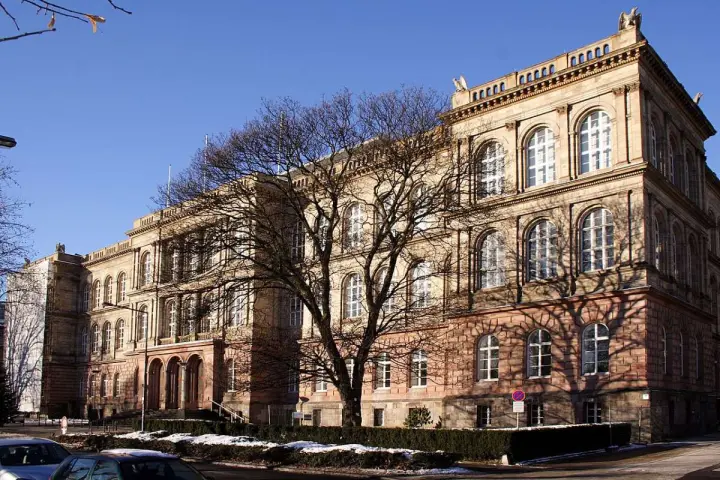
No tuition fee Tuition · sourced 2 years Duration View detailsCampus photos on this page: א (Aleph) (CC BY-SA 2.5) — via Wikimedia Commons.
Sustainable Management — Water and Energy — FAQs
5 questions
Tuition is No tuition fee. Taken from the university's published fees page, not re-checked since — confirm it before you budget. We confirm the current fee and the scholarships you qualify for — free.
The main intake is Winter semester. Most universities admit on a rolling basis — we confirm the exact deadline for your profile, free.
The prerequisites include a previously earned Bachelor's degree prior to entering this programme. Applicants are required to have a strong background in the natural sciences, hydraulics, and general engineering as well as degree-specific knowledge. The applicants should have completed at least 19 ECTS credit points in the scientific fundamentals in at least three of the following topics: maths, statistics, chemistry, physics, ecology, informatics. Additionally, at least 20 ECTS credit points in the engineering fundamentals, in at least three of following topics are required: mechanics, hydromechanics, water construction, thermal engineering. Lastly, at least 20 ECTS credit points in the subject-related fundamentals in at least three of following topics are required: process engineering, power engineering, water management, energy raw materials, business administration, climatology, hydrology, environmental management, energy industry, urban water management, surveying. If up to 20 ECTS credit points of the requirements are not fulfilled, students have to attend additional courses from the Bachelor's degree in Civil Engineering/Environmental Engineering programme. These additional courses are only offered in German. International applicants from non-EU/EEA countries additionally need to provide the evidence of a Graduate Record Examination (GRE) General Test. Further information is available in the respective admissions regulations. The exam board determines whether an applicant fulfils the entrance requirements. English: E.G. UNIcert® English: UNIcert® II TOEFL iBT (before 2026): 90 PTE Academic: 60 IELTS Academic: 6 Cambridge English Qualifications: B2 First.
The programme runs about 24 months full-time.
Yes — shortlisting, SOP, LOR, Resume, application, scholarships and visa guidance are all free. We're paid by partner universities, not by you.
Apply to Sustainable Management — Water and Energy — free help
A counsellor calls you back during office hours — 9am to 8pm IST, Mon to Sat. We are closed right now, so your request is first in line when we reopen.