MSc Circular Engineering and Economy
RWTH Aachen University · Aachen, Germany, Europe
Duration
24 mo
Tuition
No tuition fee
sourcedIntake
Winter semester
English
—
Winter semester intake. Most universities admit on a rolling basis — we confirm the exact application deadline for your profile, free.
Course details verified 09 Sep 2026 — intakes, entry requirements and course facts · official source
Fee sourced Taken from the university's published fees page, not re-checked since — confirm it before you budget. See the university fees page.
About this programme
The way we produce and consume today determines how liveable our world will be tomorrow. Resources are becoming scarcer, the impact our lives have on the environment is increasing, and many existing economic models are reaching their limits. The circular economy offers a promising solution: it combines technical innovations with economic and organisational strategies to keep raw materials and resources in circulation for as long as possible. To achieve this, products and how we use them need to be reimagined from the very beginning — and this is precisely where the English-language Master’s programme in Circular Engineering and Economy comes in. The transition to a functioning circular economy is highly complex and it requires a lot of work from everyone who is involved in making it a reality. To master these challenges, we need training that meaningfully combines engineering, economics, and management while focusing on a sustainable circular economy across the entire value chain — from raw material extraction right up to recycling. To make the circular economy a reality, recycling must be factored in as early as the product design stage so that waste streams and our consumption of resources can be reduced. Students in the Circular Engineering and Economy Master’s programme learn to understand processes in their entirety and to make economic decisions that are based on technical expertise. This is because a circular economy is only feasible if economic goals are based on a sound understanding of technical feasibility as well as material- and process-related limitations. Over the course of two years, students acquire a solid, versatile education that prepares them for the challenges of a sustainable future in the best possible way. The programme has a modular structure, and it spans four semesters, during which students gain a deep understanding of engineering processes along the entire value chain, as well as their economic, ecological, and social contexts. The integrative approach combines technical expertise with management skills and systemic thinking. The Master’s programme in Circular Engineering and Economy allows students to choose between three specialisation paths: Circular Cities Circular Technologies for Future Mobility Circular Consumer Products
Intakes & deadlines
Winter semester
Dates confirmed for your profile · Open
Entry requirements
-
English
E.G. UNIcert® English: UNIcert® II PTE Academic: 60 Cambridge English Qualifications: B2 First IELTS Academic: 6 TOEFL iBT (before 2026): 90 Reading: 20 Listening: 20 Speaking: 30 Writing: 20
-
Prerequisites
To meet the academic prerequisites, applicants must demonstrate the competencies required for successful completion of the Master’s programme in Circular Engineering and Economy in the following subject areas. A total of 50 CP in engineering and subject-specific fundamentals: • At least 36 credits from the “Fundamentals of Engineering” area: Mechanics Mechanical Engineering Electrical Engineering Thermal Engineering Process Engineering Transport Phenomena Mathematics • At least 14 credits from the “Specialised Fundamentals” area: Energy Economics Introduction to Business Administration Business Engineering Quality and Project Management Communication and Organisational Development Raw Materials and Energy Law Quantitative and Numerical Methods Measurement, Control, and Regulation Simulation Technology Introduction to Programming The proven achievements must be comparable to those of the Bachelor's degree programmes in “Sustainable Raw Materials and Energy Supply” and “Mechanical Engineering” at RWTH Aachen University. If applicants are required to catch up with more than 30 CP, admission to the Master's programme is not possible. In addition, proof of sufficient command of the German language must be provided (details below).
-
Documents
SOP, LOR & Resume — generate them free in 2 minutes.
This is an indicative early-career range for the whole Business & Management field in Europe, from official graduate-outcome data — not a figure for this programme or university, and not a guarantee of what you will earn. What you actually earn depends on the role, employer, city and your visa.
Source: Profiling Institut - Gehaltsranking nach Studienfach 2026 (StepStone Gehaltsreport 2026), 2026. Market job-board data — less official than a government survey; treat as indicative.
Rupee figure converted at the 18 Aug 2026 mid-market rate; your bank's rate will be worse and currencies move, so use it for planning, not as the amount you will receive.
Fees & scholarships
No tuition fee tuition (sourced). We confirm the exact costs and the scholarships you qualify for at RWTH Aachen University — free, for your profile.
Other programmes at RWTH Aachen University
 RWTH Aachen University
Advanced Computational Methods in Civil Engineering
No tuition fee Tuition · sourced 2 years Duration View details
RWTH Aachen University
Applied Geosciences – Applied Mineralogy and Crystallography (AMC) (MSc)
No tuition fee Tuition · sourced 2 years Duration View details
RWTH Aachen University
Applied Geosciences – Computational Geology and Geophysics (CGG) (MSc)
No tuition fee Tuition · sourced 2 years Duration View details
RWTH Aachen University
Applied Geosciences – Energy & Mineral Resources (EMR) (MSc)
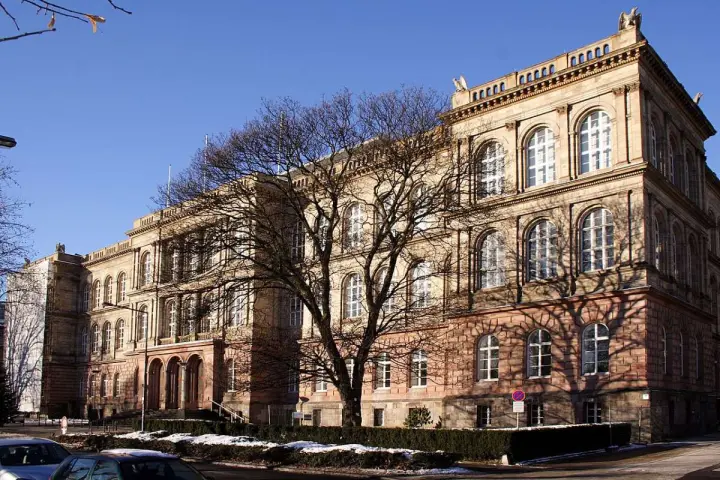
No tuition fee Tuition · sourced 2 years Duration View detailsCampus photos on this page: א (Aleph) (CC BY-SA 2.5) — via Wikimedia Commons.
MSc Circular Engineering and Economy — FAQs
5 questions
Tuition is No tuition fee. Taken from the university's published fees page, not re-checked since — confirm it before you budget. We confirm the current fee and the scholarships you qualify for — free.
The main intake is Winter semester. Most universities admit on a rolling basis — we confirm the exact deadline for your profile, free.
To meet the academic prerequisites, applicants must demonstrate the competencies required for successful completion of the Master’s programme in Circular Engineering and Economy in the following subject areas. A total of 50 CP in engineering and subject-specific fundamentals: • At least 36 credits from the “Fundamentals of Engineering” area: Mechanics Mechanical Engineering Electrical Engineering Thermal Engineering Process Engineering Transport Phenomena Mathematics • At least 14 credits from the “Specialised Fundamentals” area: Energy Economics Introduction to Business Administration Business Engineering Quality and Project Management Communication and Organisational Development Raw Materials and Energy Law Quantitative and Numerical Methods Measurement, Control, and Regulation Simulation Technology Introduction to Programming The proven achievements must be comparable to those of the Bachelor's degree programmes in “Sustainable Raw Materials and Energy Supply” and “Mechanical Engineering” at RWTH Aachen University. If applicants are required to catch up with more than 30 CP, admission to the Master's programme is not possible. In addition, proof of sufficient command of the German language must be provided (details below). English: E.G. UNIcert® English: UNIcert® II PTE Academic: 60 Cambridge English Qualifications: B2 First IELTS Academic: 6 TOEFL iBT (before 2026): 90 Reading: 20 Listening: 20 Speaking: 30 Writing: 20.
The programme runs about 24 months full-time.
Yes — shortlisting, SOP, LOR, Resume, application, scholarships and visa guidance are all free. We're paid by partner universities, not by you.
Apply to MSc Circular Engineering and Economy — free help
A counsellor calls you back during office hours — 9am to 8pm IST, Mon to Sat. We are open now.