
Genetics and Biology of Ageing and Regeneration
University of Cologne · Cologne, Europe
Duration
24 mo
Tuition
No tuition fee
sourcedIntake
Winter semester
English
—
Winter semester intake. Most universities admit on a rolling basis — we confirm the exact application deadline for your profile, free.
Course details verified 09 Sep 2026 — intakes, entry requirements and course facts · official source
Fee sourced Taken from the university's published fees page, not re-checked since — confirm it before you budget. See the university fees page.
About this programme
With demographic changes leading to a growing elderly population, there is a pressing need to address age-associated diseases. However, many causes and mechanisms of such diseases remain unclear today. As a result, the wide field of research into the ageing process has swiftly emerged to investigate mechanisms, prevention, and treatment of ageing and age-associated diseases. Therefore, it is crucial to educate students in this innovative and fast-growing area. Our Master's programme in Genetics and Biology of Ageing and Regeneration combines theoretical and practical learning through lecture series, method-oriented seminars, and practical research projects. You can learn not only about molecular mechanisms and processes governing the functions of cells and tissues in organisms but also about how their dysfunctions contribute to ageing and age-related diseases. Topics will also include strategies for prevention, clinical intervention, and potential treatment of age-related diseases. You will be taught and supervised by internationally renowned and experienced scientists from the fields of genetics and research into the ageing process. The close collaboration with the CECAD Cluster of Excellence for Ageing Research and the Max-Planck-Institute for Biology of Ageing will offer you an extensive environment with a broad range of interdisciplinary research topics within the field of ageing research. Whether aspiring to pursue further doctoral studies or embark on a career in the life science industry, our Master’s programme will equip you with the knowledge and skills needed to excel in your endeavours. The Master's programme is an interdisciplinary study programme that focuses on basic and biomedical research-oriented training using state-of-the-art technologies. Basic modules The programme starts with a mandatory lecture and seminar to provide a detailed overview about genetics and the biological processes underlying ageing and regeneration, paving the way for a deep understanding of biological systems at the molecular level: Principles of Molecular Genetics, Development, and Ageing (Lecture) Modern Techniques and Approaches in Genetics, Ageing, and Development (Seminar) In addition, students can choose two more lectures out of the following: Computational Biology; Ecology, Evolution, and Environment; Molecular Plant and Microbial Sciences; Neuroscience; Biochemistry and Molecular Medicine. Subject modules Continuing, students can choose two advanced courses that not only enhance their theoretical foundation but also incorporate a significant practical component, enabling them to apply their acquired knowledge in practice. Examples of the range of courses include: Post-translational Regulation of Proteins Mitochondria and Neurodegeneration Cell Death in Inflammation, Immunity, and Disease Molecular Mechanisms of Human Diseases Proteostasis in Health and Disease Project modules All students conduct two individual research projects in a lab of their choice. The duration is a minimum of seven weeks each, including six weeks of experimental work, followed by one week for preparing an oral presentation and a written report. Project modules can be undertaken at the University of Cologne, an external institution, or abroad. Master thesis & defence The Master's programme concludes with a written thesis lasting at least six months. These six months include the actual experimental research work as well as the writing of the thesis. After handing in the thesis, students have to defend their theses with an oral presentation in front of examiners. The Master's thesis can also be undertaken at the University of Cologne, an external institution, or abroad.
Intakes & deadlines
Winter semester
Dates confirmed for your profile · Open
Entry requirements
-
English
E.G. IELTS Academic: 6.5 Cambridge English Qualifications: B2 First
-
Prerequisites
Formal requirements: Final Bachelor's grade of at least 2.7 (according to the German grading system) Proof of English language proficiency (see language requirements) Subject-related requirements: Submit proof of academic background in Biology, Biochemistry, Biomedicine, or other related fields in the life or natural sciences: 1. Fundamentals in Biology (75 ECTS credit points): Min. 40 ECTS credit points in at least three of the following areas: Biochemistry, Cell Biology, Developmental / Regenerative Biology, Genetics, Immunology, Molecular Biology and/or (Animal) Physiology An additional min. 35 ECTS credit points in Biochemistry, Bioinformatics / Biomathematics / Computational Biology, Biophysics, Botany / Plant Science, Cell Biology, Developmental / Regenerative Biology, Genetics, Immunology, Virology, Evolutionary Biology, Microbiology, Molecular Biology, Neurobiology / Neuroscience, (Animal) Physiology, and / or Zoology 2. Fundamentals in Practical Biology: Min. 30 ECTS credit points in practical /hands-on courses in Biochemistry, Cell Biology, Developmental/Regenerative Biology, Genetics, Immunology, Microbiology, Molecular Biology, Virology, (Animal) Physiology, and/or Neurobiology 3. Fundamentals in other Natural Sciences: Min. 10 ECTS credit points in the Fundamentals of Inorganic Chemistry, Organic Chemistry, Physical, and/or Theoretical Chemistry Min. 5 ECTS credit points in the Fundamentals of Mathematics, Statistics, and/or Physics *Students can also apply if they have not yet finished their Bachelor's degree, as long as they have already attained at least 80% of their total credit points by the time of application and will complete their Bachelor's programme before the start of the Master's programme.
-
Documents
SOP, LOR & Resume — generate them free in 2 minutes.
Fees & scholarships
No tuition fee tuition (sourced). We confirm the exact costs and the scholarships you qualify for at University of Cologne — free, for your profile.
Other programmes at University of Cologne
Bonn-Cologne Graduate School of Physics and Astronomy: MSc in Physics (Cologne)
No tuition fee Tuition · sourced 2 years Duration View details CO University of CologneBusiness Administration (Master of Science) – Major: Accounting & Taxation, Corporate Development, Finance, Marketing, Supply Chain Management
No tuition fee Tuition · sourced 2 years Duration View details CO University of CologneBusiness Analytics & Econometrics – Master of Science
No tuition fee Tuition · sourced 2 years Duration View details CO University of CologneDouble Master's Programme in Business Administration – Master of Science
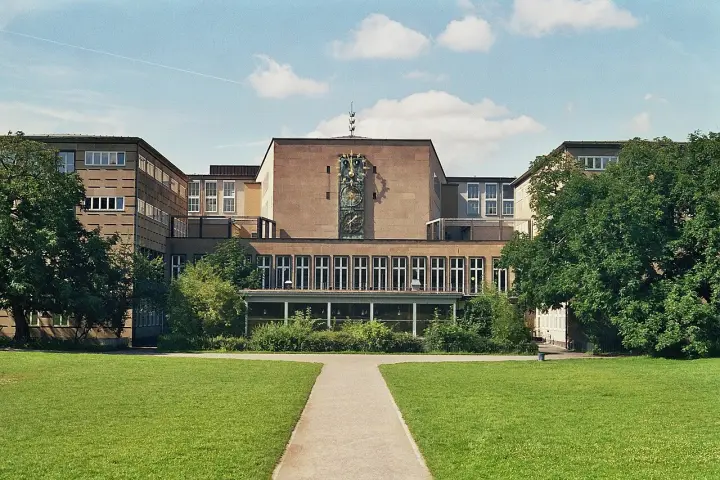
No tuition fee Tuition · sourced 2 years Duration View detailsCampus photos on this page: UzK (Public domain) — via Wikimedia Commons.
Genetics and Biology of Ageing and Regeneration — FAQs
5 questions
Tuition is No tuition fee. Taken from the university's published fees page, not re-checked since — confirm it before you budget. We confirm the current fee and the scholarships you qualify for — free.
The main intake is Winter semester. Most universities admit on a rolling basis — we confirm the exact deadline for your profile, free.
Formal requirements: Final Bachelor's grade of at least 2.7 (according to the German grading system) Proof of English language proficiency (see language requirements) Subject-related requirements: Submit proof of academic background in Biology, Biochemistry, Biomedicine, or other related fields in the life or natural sciences: 1. Fundamentals in Biology (75 ECTS credit points): Min. 40 ECTS credit points in at least three of the following areas: Biochemistry, Cell Biology, Developmental / Regenerative Biology, Genetics, Immunology, Molecular Biology and/or (Animal) Physiology An additional min. 35 ECTS credit points in Biochemistry, Bioinformatics / Biomathematics / Computational Biology, Biophysics, Botany / Plant Science, Cell Biology, Developmental / Regenerative Biology, Genetics, Immunology, Virology, Evolutionary Biology, Microbiology, Molecular Biology, Neurobiology / Neuroscience, (Animal) Physiology, and / or Zoology 2. Fundamentals in Practical Biology: Min. 30 ECTS credit points in practical /hands-on courses in Biochemistry, Cell Biology, Developmental/Regenerative Biology, Genetics, Immunology, Microbiology, Molecular Biology, Virology, (Animal) Physiology, and/or Neurobiology 3. Fundamentals in other Natural Sciences: Min. 10 ECTS credit points in the Fundamentals of Inorganic Chemistry, Organic Chemistry, Physical, and/or Theoretical Chemistry Min. 5 ECTS credit points in the Fundamentals of Mathematics, Statistics, and/or Physics *Students can also apply if they have not yet finished their Bachelor's degree, as long as they have already attained at least 80% of their total credit points by the time of application and will complete their Bachelor's programme before the start of the Master's programme. English: E.G. IELTS Academic: 6.5 Cambridge English Qualifications: B2 First.
The programme runs about 24 months full-time.
Yes — shortlisting, SOP, LOR, Resume, application, scholarships and visa guidance are all free. We're paid by partner universities, not by you.
Apply to Genetics and Biology of Ageing and Regeneration — free help
A counsellor calls you back during office hours — 9am to 8pm IST, Mon to Sat. We are open now.