
Polymer Science MSc
University of Bayreuth · Bayreuth, Europe
Duration
24 mo
Tuition
No tuition fee
sourcedIntake
Winter semester
English
—
Winter semester intake. Most universities admit on a rolling basis — we confirm the exact application deadline for your profile, free.
Course details verified 09 Sep 2026 — intakes, entry requirements and course facts · official source
Fee sourced Taken from the university's published fees page, not re-checked since — confirm it before you budget. See the university fees page.
About this programme
Profile The Master's programme in Polymer Science is geared towards students who have an interest in natural and material science issues, want to work on a future-oriented class of materials and want to hold a responsible position in companies, research institutes or universities. A prerequisite for enrolment in the programme is an initial degree (Bachelor of Science) in polymer and colloid chemistry, chemistry, biochemistry, physics, materials science or a related discipline. Structure and content The Bayreuth Master's programme in Polymer Science covers all important areas of polymer science: polymer and colloid chemistry, polymer synthesis, catalyst design, colloid chemistry, polymer analytics, polymer physics, polymer processing, biomacromolecules, biomaterials and polymer technology. Students are introduced to current research topics at an early stage. In personal contact with their lecturers and in small teams, they acquire basic and application-related skills in all areas of polymer science. Programme Outline The two-year Master’s programme in Polymer Science focuses on the path from monomers to polymers, the design of functional polymers, and testing of various fields of application. The programme begins with fundamental aspects and covers recent developments in the field along with applications of polymer materials and biomacromolecules. The programme is research-oriented and is taught by reputable scholars who are active in the field and who are experienced in teaching the various aspects of polymer science. The Master's in Polymer Science is highly chemistry-oriented, and chemical skills are essential. Although some engineering modules are offered in the programme, plastic engineering is not the main focus. Career prospects Graduates of the Master's degree in Polymer Science are in high demand in the chemical industry, the plastics producing and processing industry and related industries. They are exceptionally well qualified for a variety of professional fields of work in large and medium-sized companies, at universities and non-university research institutions. After completing a doctorate, graduates have access to interesting management positions in Germany and abroad. All courses in the Master’s programme in Polymer Science are grouped into modules, which are generally made up of several related courses in the form of lectures and labs. The Module Handbook gives a detailed account of the workload for each individual course. A total of 120 credit points must be earned to complete the Master’s programme in Polymer Science. First Semester of Study: In the first semester of study, students are introduced to the foundations of polymer science. Each student selects four modules from a choice of eight recommended modules (Polymer Synthesis, Physical Chemistry of Polymers, Colloids and Surfaces, Polymer Materials and Technology, Polymer Physics I, Organometallic Chemistry, Polymerisation Catalysts, Catalysis and Sustainable Synthesis and Biomaterials). Each module, with the exception of Polymer Physics, includes an introductory lecture and a laboratory course to cover the experimental and practical aspects of the subject and to teach hands-on skills. Second Semester of Study: In the second semester of study, students focus on – and specialise in – their own individual areas of interest. Students select three advanced modules, of which each consists of a lecture and a lab. In order to introduce students to research at an early stage, the labs are carried out in one of the research groups in which the Master’s programme in Polymer Science is involved. Recommended modules are Polymer Architectures, High Performance and Speciality Polymers, Advanced Methods in the Physical Chemistry of Polymers, Current Topics in Colloid, Polymer and Interface Science, Polymer Engineering, Polymer Physics II, Catalyst Design and Sustainable Polymer Chemistry and Polymer Materials. The students also develop a research plan for carrying out
Intakes & deadlines
Winter semester
Dates confirmed for your profile · Open
Summer semester
Dates confirmed for your profile · Open
Entry requirements
-
English
E.G. IELTS Academic: 5.5
-
Prerequisites
Admission requirements for the Master's programme in Polymer Science are a first degree (Bachelor of Science) in chemistry, polymer and colloid chemistry, biochemistry, physics, materials science, or a related discipline in addition to successful completion of an aptitude assessment process. Aptitude Assessment Process: The prerequisite for admission to the degree programme is passing the aptitude assessment process (see Examination Regulations, Annex 2), which includes the assessment of qualifications and, if applicable, an aptitude interview. Applying without a degree certificate: Applications may already be submitted before completion of the Bachelor's degree; however, a total of at least 135 credits is required by the time of application. Special conditions: Admission subject to certain conditions is possible; conditions may comprise a maximum of 30 credits (see Examination Regulations paragraph two).
-
Documents
SOP, LOR & Resume — generate them free in 2 minutes.
This is an indicative early-career range for the whole Engineering (general) field in Europe, from official graduate-outcome data — not a figure for this programme or university, and not a guarantee of what you will earn. What you actually earn depends on the role, employer, city and your visa.
Source: Profiling Institut - Gehaltsranking nach Studienfach 2026 (StepStone Gehaltsreport 2026), 2026. Market job-board data — less official than a government survey; treat as indicative.
Rupee figure converted at the 18 Aug 2026 mid-market rate; your bank's rate will be worse and currencies move, so use it for planning, not as the amount you will receive.
Fees & scholarships
No tuition fee tuition (sourced). We confirm the exact costs and the scholarships you qualify for at University of Bayreuth — free, for your profile.
Other programmes at University of Bayreuth
African Studies: Language, Arts, Philosophy
No tuition fee Tuition · sourced 2 years Duration View details BA University of BayreuthBattery Materials and Technology (Master of Science)
No tuition fee Tuition · sourced 2 years Duration View details BA University of BayreuthBiofabrication
No tuition fee Tuition · sourced 2 years Duration View details BA University of BayreuthComputer Science, Master of Science (MSc)
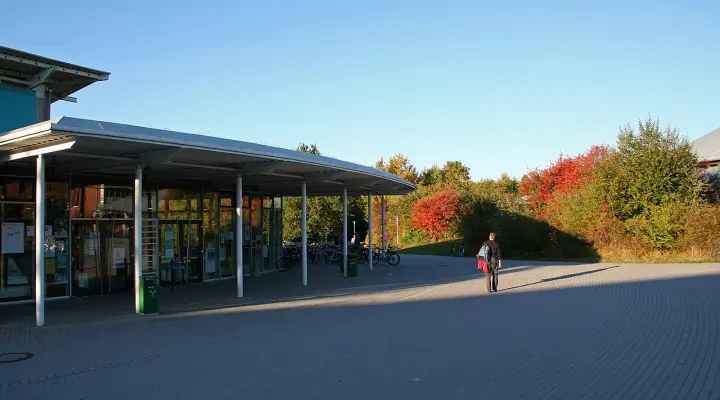
No tuition fee Tuition · sourced 2 years Duration View detailsCampus photos on this page: H. Wurst (CC BY-SA 2.0 de) — via Wikimedia Commons.
Polymer Science MSc — FAQs
5 questions
Tuition is No tuition fee. Taken from the university's published fees page, not re-checked since — confirm it before you budget. We confirm the current fee and the scholarships you qualify for — free.
The main intake is Winter semester. Most universities admit on a rolling basis — we confirm the exact deadline for your profile, free.
Admission requirements for the Master's programme in Polymer Science are a first degree (Bachelor of Science) in chemistry, polymer and colloid chemistry, biochemistry, physics, materials science, or a related discipline in addition to successful completion of an aptitude assessment process. Aptitude Assessment Process: The prerequisite for admission to the degree programme is passing the aptitude assessment process (see Examination Regulations, Annex 2), which includes the assessment of qualifications and, if applicable, an aptitude interview. Applying without a degree certificate: Applications may already be submitted before completion of the Bachelor's degree; however, a total of at least 135 credits is required by the time of application. Special conditions: Admission subject to certain conditions is possible; conditions may comprise a maximum of 30 credits (see Examination Regulations paragraph two). English: E.G. IELTS Academic: 5.5.
The programme runs about 24 months full-time.
Yes — shortlisting, SOP, LOR, Resume, application, scholarships and visa guidance are all free. We're paid by partner universities, not by you.
Apply to Polymer Science MSc — free help
A counsellor calls you back during office hours — 9am to 8pm IST, Mon to Sat. We are open now.