
Environment, Climate Change and Health
University of Bayreuth · Bayreuth, Europe
Duration
24 mo
Tuition
No tuition fee
sourcedIntake
Winter semester
English
—
Winter semester intake. Most universities admit on a rolling basis — we confirm the exact application deadline for your profile, free.
Course details verified 09 Sep 2026 — intakes, entry requirements and course facts · official source
Fee sourced Taken from the university's published fees page, not re-checked since — confirm it before you budget. See the university fees page.
About this programme
The Master's programme in Environment, Climate Change, and Health aims to address the global climate- and environment-associated challenges of the 21st century and find solutions within the transdisciplinary framework of planetary health. It focuses on health threats related to environmental and climate change, on strategies to handle and prevent ill-health and preserve well-being, on mitigative and adaptative transformative interventions, on interdependent responsibilities of policy, industry, and the general public, as well as on possibilities and strategies for a climate- and environment-friendly and healthy lifestyle for all. The study course is organised in modules. In total, you will need to gain 120 ECTS point from the following areas: Basics in Environment, Climate Change and Health (30 ECTS, first semester) Topics are as follows: Factors, Cause and Consequences of Climate Change, Biodiversity, Ecosystem Functions, Climate Change-Associated Diseases and Global Influences on Health Systems. Specialisation: Environment, Climate Change and Health in an international context (25 ECTS, second semester) Topics are as follows: International Trade and Policies, Economic Evaluation of Health Care and Climate Change and Sociological and Geographical Perspectives. Moreover a lecture series and seminars on scientific writing, science communication and project management are included. Elective subjects with focus on Statistic and Analysis Tools, Social Research, International Environmental and Sustainable Law, Sport Ecology, Resource Technology, Nutrition and/ or Health (Policy), Global Economy or a 10-day summer school (25 ECTS, third semester) Internship (eight weeks), preferably in a country abroad (10 ECTS, third semester) Master's Thesis (30 ECTS, fourth semester) The Master's programme comprises four semesters. The study course is organised in modules. In total, you will need to gain 120 ECTS points from the following areas: First semester: Basics in Environment, Climate Change and Health Second semester: Environment, Climate Change and Health: International Third semester: Elective modules (choice of five modules = 25 ECTS) and internship Fourth semester: Master’s thesis PDF Download
Intakes & deadlines
Winter semester
Dates confirmed for your profile · Open
Entry requirements
-
English
E.G. TOEFL iBT (before 2026): 95 Reading: 24 Listening: 22 Speaking: 25 Writing: 24 IELTS Academic: 7 Cambridge English Qualifications: C1 Advanced
-
Prerequisites
The admission requirements are: preliminary review documentation via uni-assist (only necessary for international, non-EU citizen) curriculum vitae ENGLISH language certificate level C1 GERMAN language certificate level A1 (can be obtained during the first year of the programme) a written presentation of course-specific competences (letter of motivation, max. two pages) stating the skills and expertise that qualify you for the study programme certificate of general university entrance qualification (copy) secondary school leaving certificate including subjects and grades (original language + certified translation in German or English) Applicants are required to have an academic qualification via a Bachelor's degree in economics, social, natural or health science, health economics, nursing, philosophy & economics, medicine, public health or teaching with a final German grade of 2.5 or better. The Bachelor's degree should reflect at least lectures comprising 30 ECTS-points within health and/ or natural science, preferably (human-)biology, (bio-)chemistry and geosciences OR transcript of records for the Bachelor's including subjects and grades, thereby the transcript must comprise at least 150 ECTS points with a final grade of 2.5 or better based on the German grading system (original language + certified translation in German or English) and in addition an informal list of modules for which no evidence of performance exists yet. if available, evidence of special qualifications (study specific professional training or internships, periods abroad, awards such as scholarships, etc.) and interdisciplinary study skills if applicable, request for disadvantage compensation First, your application will be checked for completeness. In a second phase, a selection committee will rate the written presentation of course-specific competences. Moreover, the selection committee will evaluate whether the subject-specific coursework and examinations from your Bachelor's provide you with the necessary competences. Lastly, you have to pass an interview to prove that you are qualified for the study programme (see: https://www.ecch.uni-bayreuth.de/en/application/index.html).
-
Documents
SOP, LOR & Resume — generate them free in 2 minutes.
Fees & scholarships
No tuition fee tuition (sourced). We confirm the exact costs and the scholarships you qualify for at University of Bayreuth — free, for your profile.
Other programmes at University of Bayreuth
African Studies: Language, Arts, Philosophy
No tuition fee Tuition · sourced 2 years Duration View details BA University of BayreuthBattery Materials and Technology (Master of Science)
No tuition fee Tuition · sourced 2 years Duration View details BA University of BayreuthBiofabrication
No tuition fee Tuition · sourced 2 years Duration View details BA University of BayreuthComputer Science, Master of Science (MSc)
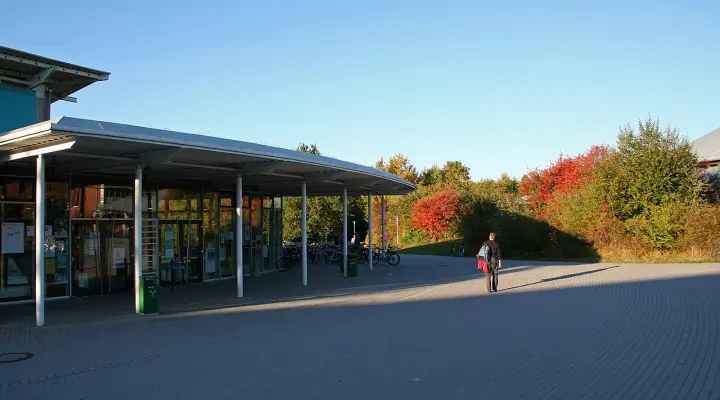
No tuition fee Tuition · sourced 2 years Duration View detailsCampus photos on this page: H. Wurst (CC BY-SA 2.0 de) — via Wikimedia Commons.
Environment, Climate Change and Health — FAQs
5 questions
Tuition is No tuition fee. Taken from the university's published fees page, not re-checked since — confirm it before you budget. We confirm the current fee and the scholarships you qualify for — free.
The main intake is Winter semester. Most universities admit on a rolling basis — we confirm the exact deadline for your profile, free.
The admission requirements are: preliminary review documentation via uni-assist (only necessary for international, non-EU citizen) curriculum vitae ENGLISH language certificate level C1 GERMAN language certificate level A1 (can be obtained during the first year of the programme) a written presentation of course-specific competences (letter of motivation, max. two pages) stating the skills and expertise that qualify you for the study programme certificate of general university entrance qualification (copy) secondary school leaving certificate including subjects and grades (original language + certified translation in German or English) Applicants are required to have an academic qualification via a Bachelor's degree in economics, social, natural or health science, health economics, nursing, philosophy & economics, medicine, public health or teaching with a final German grade of 2.5 or better. The Bachelor's degree should reflect at least lectures comprising 30 ECTS-points within health and/ or natural science, preferably (human-)biology, (bio-)chemistry and geosciences OR transcript of records for the Bachelor's including subjects and grades, thereby the transcript must comprise at least 150 ECTS points with a final grade of 2.5 or better based on the German grading system (original language + certified translation in German or English) and in addition an informal list of modules for which no evidence of performance exists yet. if available, evidence of special qualifications (study specific professional training or internships, periods abroad, awards such as scholarships, etc.) and interdisciplinary study skills if applicable, request for disadvantage compensation First, your application will be checked for completeness. In a second phase, a selection committee will rate the written presentation of course-specific competences. Moreover, the selection committee will evaluate whether the subject-specific coursework and examinations from your Bachelor's provide you with the necessary competences. Lastly, you have to pass an interview to prove that you are qualified for the study programme (see: https://www.ecch.uni-bayreuth.de/en/application/index.html). English: E.G. TOEFL iBT (before 2026): 95 Reading: 24 Listening: 22 Speaking: 25 Writing: 24 IELTS Academic: 7 Cambridge English Qualifications: C1 Advanced.
The programme runs about 24 months full-time.
Yes — shortlisting, SOP, LOR, Resume, application, scholarships and visa guidance are all free. We're paid by partner universities, not by you.
Apply to Environment, Climate Change and Health — free help
A counsellor calls you back during office hours — 9am to 8pm IST, Mon to Sat. We are closed right now, so your request is first in line when we reopen.