Media Informatics
Universität Regensburg · Regensburg, Europe
Duration
24 mo
Tuition
No tuition fee
sourcedIntake
Winter semester
English
—
Winter semester intake. Most universities admit on a rolling basis — we confirm the exact application deadline for your profile, free.
Course details verified 10 Sep 2026 — intakes, entry requirements and course facts · official source
Fee sourced Taken from the university's published fees page, not re-checked since — confirm it before you budget. See the university fees page.
About this programme
The Master’s in Media Informatics programme offers an advanced and interdisciplinary approach to understanding, designing, and developing interactive digital technologies. Students explore how humans engage with digital systems and learn to create applications that are both technically robust and user‑centred. The curriculum combines theoretical foundations with hands‑on project work, enabling students to gain expertise in areas such as user experience design, software engineering, interactive media technologies, and data‑driven methods. A key feature of the programme is its high degree of flexibility. Students can tailor their studies to their academic interests and professional ambitions by selecting from a broad range of elective modules. These include topics such as Usability Engineering, Game Engineering, Digital Humanities, Explainable and Generative AI, as well as advanced courses in Computer Science, Data Science, and related fields. The programme also supports international mobility, allowing students to integrate a semester abroad into their studies. Graduates leave the programme with a strong methodological background and the ability to conceptualise, prototype, and evaluate innovative digital solutions. They gain experience in interdisciplinary teamwork, research‑oriented thinking, and the practical implementation of interactive systems. This combination of skills prepares them for careers in research institutions, the tech industry, the creative sector, and any field where digital innovation plays a central role. The programme is structured into two main components: Core Area (72 ECTS) The core curriculum consists of four compulsory modules, including the Master’s thesis. Students learn to plan and manage IT projects, develop and evaluate interactive systems, and conduct independent research in Human‑Centred Computing. Core modules include: Software Engineering and Project Management Engineering Interactive Systems Research Project in Human‑Centred Computing Master’s Thesis Elective Area (minimum 48 ECTS) Students choose at least 48 ECTS from twelve elective modules. This allows them to build a personalised academic profile, ranging from applied media technologies to AI‑driven methods or interdisciplinary digital‑humanities approaches. Overall, the programme equips students with the expertise needed to contribute to the development of future digital technologies and to assume roles as specialists in academia, industry, and the broader innovation landscape. Our courses You will attend lectures with accompanying labs, seminars, and project seminars or internships. In lectures with accompanying labs, you will be taught knowledge and methods that you can apply yourself in the labs, through which you will acquire subject-specific skills through your own application. In the labs, exercises are usually offered as coursework, which may be compulsory or optional. The examination usually consists of a written or oral examination in which the acquired knowledge and the ability to apply methods are tested. Seminars enable you to independently explore a scientific field of media informatics, to grasp the state of research on a current topic and to design, prepare and critically evaluate scientific presentations and texts. In these cases, a presentation on a selected topic is therefore planned as coursework, while the examination consists of a written paper. Project seminars are offered in which students (in teams) gain experience in applied research and independently carry out a research project in preparation for the final thesis. This research project includes a presentation of the planned project, and a project paper or its documentation is usually required as the examination. Our programme Pursuing the Master’s degree in Media Informatics at our university means joining an advanced programme that focuses on the design, development, and evaluation of interactive digital technologies. Instead of concentrating solely on trad
Intakes & deadlines
Winter semester
Dates confirmed for your profile · Open
Summer semester
Dates confirmed for your profile · Open
Entry requirements
-
English
E.G. UNIcert® English: UNIcert® II IELTS Academic: 6.5 TOEFL iBT (before 2026): 79 PTE Academic: 59 Cambridge English Qualifications: B2 First
-
Prerequisites
If you want to study the MSc Media Informatics at the University of Regensburg, you should have: A Bachelor's degree with a final grade of 2.5 or better (or at least 138 ECTS in your current Bachelor's degree with a provisional final grade of 2.5 or better) If you have not already studied media informatics or computer science in your Bachelor's degree, but are burning with interest in media informatics, you can be admitted if you fulfil the other requirements. Completed credits from the field of media informatics amounting to 54 ECTS (With a total of 30 ECTS from media informatics including 6 ECTS in programming, you can be conditionally admitted.) Proof of English at level B2 CEFR or a Bachelor's thesis written in English If the language of instruction during your studies was English, you will still need to provide proof of language proficiency (language test certificate or thesis). Only applicants with English as their first language are exempt from providing proof of English language skills. In this case, it is sufficient to upload a copy of your passport. If you are pursuing or have completed your first university degree (Bachelor’s) outside of Germany, you must submit a preliminary documentation (VPD) from uni-assist (processing time: up to six weeks) as part of your application on the UR Campus Portal. If you are pursuing or have completed your first university degree (Bachelor’s) in a country that is not a Signatory State to the so-called Lisbon Recognition Convention, you must also prove your academic knowledge by passing the Graduate Record Examination (GRE) General Test. Further details regarding the requirements as well as further information on the admission procedure, deadlines and necessary documents are available on our website.
-
Documents
SOP, LOR & Resume — generate them free in 2 minutes.
This is an indicative early-career range for the whole Computer Science / IT field in Europe, from official graduate-outcome data — not a figure for this programme or university, and not a guarantee of what you will earn. What you actually earn depends on the role, employer, city and your visa.
Source: get in IT (Gehaltsstatistik Informatik 2026), 2026. Market job-board data — less official than a government survey; treat as indicative.
Rupee figure converted at the 18 Aug 2026 mid-market rate; your bank's rate will be worse and currencies move, so use it for planning, not as the amount you will receive.
Fees & scholarships
No tuition fee tuition (sourced). We confirm the exact costs and the scholarships you qualify for at Universität Regensburg — free, for your profile.
Other programmes at Universität Regensburg
Biology
No tuition fee Tuition · sourced 2 years Duration View details RE Universität RegensburgBritish Studies (MA)
No tuition fee Tuition · sourced 2 years Duration View details RE Universität RegensburgCancer and Immunity, Master of Science
No tuition fee Tuition · sourced 2 years Duration View details RE Universität RegensburgChemistry
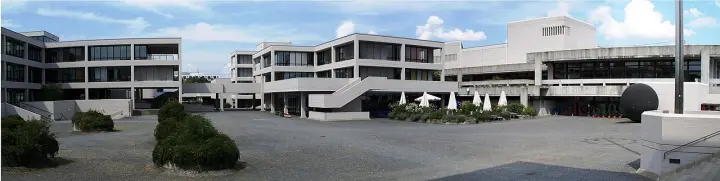
No tuition fee Tuition · sourced 2 years Duration View detailsCampus photos on this page: High Contrast (CC BY 3.0 de) — via Wikimedia Commons.
Media Informatics — FAQs
5 questions
Tuition is No tuition fee. Taken from the university's published fees page, not re-checked since — confirm it before you budget. We confirm the current fee and the scholarships you qualify for — free.
The main intake is Winter semester. Most universities admit on a rolling basis — we confirm the exact deadline for your profile, free.
If you want to study the MSc Media Informatics at the University of Regensburg, you should have: A Bachelor's degree with a final grade of 2.5 or better (or at least 138 ECTS in your current Bachelor's degree with a provisional final grade of 2.5 or better) If you have not already studied media informatics or computer science in your Bachelor's degree, but are burning with interest in media informatics, you can be admitted if you fulfil the other requirements. Completed credits from the field of media informatics amounting to 54 ECTS (With a total of 30 ECTS from media informatics including 6 ECTS in programming, you can be conditionally admitted.) Proof of English at level B2 CEFR or a Bachelor's thesis written in English If the language of instruction during your studies was English, you will still need to provide proof of language proficiency (language test certificate or thesis). Only applicants with English as their first language are exempt from providing proof of English language skills. In this case, it is sufficient to upload a copy of your passport. If you are pursuing or have completed your first university degree (Bachelor’s) outside of Germany, you must submit a preliminary documentation (VPD) from uni-assist (processing time: up to six weeks) as part of your application on the UR Campus Portal. If you are pursuing or have completed your first university degree (Bachelor’s) in a country that is not a Signatory State to the so-called Lisbon Recognition Convention, you must also prove your academic knowledge by passing the Graduate Record Examination (GRE) General Test. Further details regarding the requirements as well as further information on the admission procedure, deadlines and necessary documents are available on our website. English: E.G. UNIcert® English: UNIcert® II IELTS Academic: 6.5 TOEFL iBT (before 2026): 79 PTE Academic: 59 Cambridge English Qualifications: B2 First.
The programme runs about 24 months full-time.
Yes — shortlisting, SOP, LOR, Resume, application, scholarships and visa guidance are all free. We're paid by partner universities, not by you.
Apply to Media Informatics — free help
A counsellor calls you back during office hours — 9am to 8pm IST, Mon to Sat. We are open now.