Physics
Universität Leipzig · Leipzig, Europe
Duration
24 mo
Tuition
No tuition fee
sourcedIntake
Winter semester
English
—
Winter semester intake. Most universities admit on a rolling basis — we confirm the exact application deadline for your profile, free.
Course details verified 10 Sep 2026 — intakes, entry requirements and course facts · official source
Fee sourced Taken from the university's published fees page, not re-checked since — confirm it before you budget. See the university fees page.
About this programme
Knowledge of the physical world has been imparted to the students of Leipzig University since it was founded in 1409. In 1557, the first professorship of physics in Leipzig was created, and in 1871, one of the first chairs for geography in Germany was set up at Leipzig University. In the 20th century, the field of physics flourished in Leipzig with researchers such as Otto Wiener, Ludwig Boltzmann, Werner Heisenberg, and Gustav Hertz. Today, the subject of physics is offered in German and English. More than 1,700 students from about 40 countries are working towards the coveted degrees at the Department of Physics and Earth Sciences. The MSc programme in physics deepens and widens the basic knowledge in modern areas of experimental and theoretical physics, always building on the knowledge obtained in a BSc course in physics. Furthermore, the students have the possibility to specialise in topical areas of physics, which also include subjects other than physics. Students can design their MSc course according to their own interests, such that at the time of graduation, they will be specialists in biophysics, quantum technologies, soft and active matter, theoretical condensed matter, black holes and cosmology, mathematical physics, or applied physics and materials. To this end, the Peter Debye Institute for Soft Matter Physics, the Felix Bloch Institute for Solid State Physics, and the Institute of Theoretical Physics as well as the external Leibniz Institute of Surface Modification offer a wide variety of modules and research topics. Please refer to the programme website for further information on the Master's tracks: https://www.physes.uni-leipzig.de/en/studying/courses-of-study/master-physics-2-years The MSc programme is research oriented and is concluded by an independent research project, the Master’s thesis. By teaching a broad variety of knowledge and methodical competences, it ideally prepares the graduates for an excellent start in the job market, which will present great challenges with its rapidly changing demands in the future. The MSc degree in physics completes the students' university education and represents the level of a German "Diplom" degree. The academic degree qualifies students to apply for admission to doctoral work (PhD thesis research). Traditional work-related areas of physicists include microelectronics, construction of scientific and medical devices, fine mechanics, engineering, optics, chemical industry, informatics, and communication technology. Due to their familiarity with analytical research concepts and problem-solving strategies, physicists often take on jobs in other fields that are not directly related to physics. MSc Physics (two years): The Master's course of study consists of two one-year periods. In the first phase, the education in experimental and theoretical physics is continued, followed by a research phase. Phase one is structured into four areas in which students choose between courses and seminars belonging to each area. Areas one, two and three focus on aspects within physics. The fourth area gives students the option to choose subjects not directly related to physics. Area one is devoted to experimental physics and gives the student a choice between a course in Advanced Condensed Matter Physics and a course in Soft Matter Physics. Area two is devoted to the advancement of the theoretical physics knowledge with a choice between advanced courses in Quantum Mechanics and Statistical Physics. Areas three and four serve the further specialisation. In these areas, the module list reflects the research interests of the Physics Institutes as well as the external Institute for Surface Modification. The division into areas three and four is due to didactic reasons. Area three contains a choice of various advanced seminars in experimental and theoretical physics. Besides transporting specific physics knowledge, the student learns soft skills, such as literature research, presentation techniq
Intakes & deadlines
Winter semester
Dates confirmed for your profile · Open
Summer semester
Dates confirmed for your profile · Open
Entry requirements
-
English
E.G. TOEFL iBT (before 2026): 72 Reading: 18 Listening: 17 Speaking: 20 Writing: 17 PTE Academic: 59 IELTS Academic: 5.5 TOEIC: 785 Reading: 385 Listening: 400 Speaking: 160 Writing: 150
-
Prerequisites
GENERAL QUALIFICATION for the study programme is proven by a first professionally recognised degree qualification or a qualification from a state or state-recognised university of cooperative education (German "Berufsakademie”). Further certificates have to be acknowledged by the responsible and officially recognised administration. Our service for applicants holding an international degree provides a check for university admission to find out if you are qualified to study in Germany using your educational certificates. Information on important additional country-specific requirements is also given. SUBJECT SPECIFIC REQUIREMENTS Bachelor's degree in physics with 180 ECTS points sound knowledge of experimental physics and theoretical physics
-
Documents
SOP, LOR & Resume — generate them free in 2 minutes.
Fees & scholarships
No tuition fee tuition (sourced). We confirm the exact costs and the scholarships you qualify for at Universität Leipzig — free, for your profile.
Other programmes at Universität Leipzig
American Studies
No tuition fee Tuition · sourced 2 years Duration View details LE Universität LeipzigBuddhist Studies and Contemplative Traditions MA
No tuition fee Tuition · sourced 2 years Duration View details LE Universität LeipzigChinese Studies
No tuition fee Tuition · sourced 2 years Duration View details LE Universität LeipzigEarth System Data Science and Remote Sensing
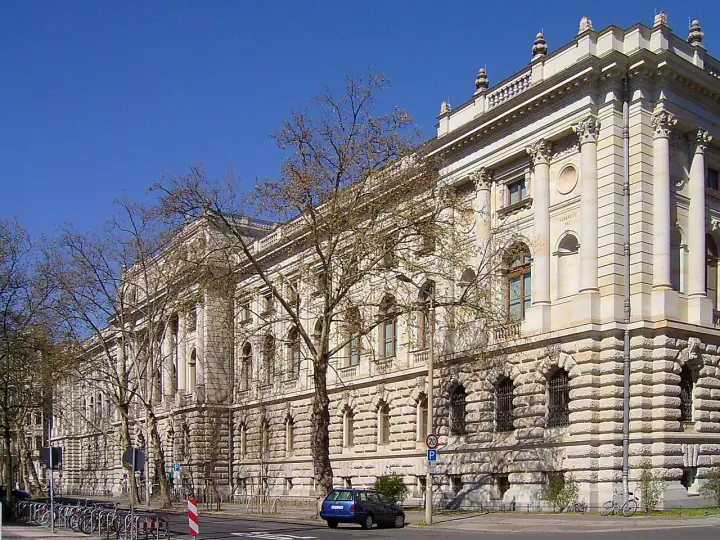
No tuition fee Tuition · sourced 2 years Duration View detailsCampus photos on this page: L.E.rewi-sor (CC BY-SA 3.0) — via Wikimedia Commons.
Physics — FAQs
5 questions
Tuition is No tuition fee. Taken from the university's published fees page, not re-checked since — confirm it before you budget. We confirm the current fee and the scholarships you qualify for — free.
The main intake is Winter semester. Most universities admit on a rolling basis — we confirm the exact deadline for your profile, free.
GENERAL QUALIFICATION for the study programme is proven by a first professionally recognised degree qualification or a qualification from a state or state-recognised university of cooperative education (German "Berufsakademie”). Further certificates have to be acknowledged by the responsible and officially recognised administration. Our service for applicants holding an international degree provides a check for university admission to find out if you are qualified to study in Germany using your educational certificates. Information on important additional country-specific requirements is also given. SUBJECT SPECIFIC REQUIREMENTS Bachelor's degree in physics with 180 ECTS points sound knowledge of experimental physics and theoretical physics English: E.G. TOEFL iBT (before 2026): 72 Reading: 18 Listening: 17 Speaking: 20 Writing: 17 PTE Academic: 59 IELTS Academic: 5.5 TOEIC: 785 Reading: 385 Listening: 400 Speaking: 160 Writing: 150.
The programme runs about 24 months full-time.
Yes — shortlisting, SOP, LOR, Resume, application, scholarships and visa guidance are all free. We're paid by partner universities, not by you.
Apply to Physics — free help
A counsellor calls you back during office hours — 9am to 8pm IST, Mon to Sat. We are open now.