
Master of Science in Quantitative Economics for Sustainability
Universität Leipzig · Leipzig, Europe
Duration
24 mo
Tuition
No tuition fee
sourcedIntake
Winter semester
English
—
Winter semester intake. Most universities admit on a rolling basis — we confirm the exact application deadline for your profile, free.
Course details verified 10 Sep 2026 — intakes, entry requirements and course facts · official source
Fee sourced Taken from the university's published fees page, not re-checked since — confirm it before you budget. See the university fees page.
About this programme
The Master’s programme in Quantitative Economics for Sustainability (QuESt) is a full economics programme that focuses on the sustainable economy. Based on quantitative methods of economics and in interdisciplinary collaboration with natural sciences, QuESt asks how the economy can and should be transformed towards ecological and social sustainability. The central focus is on a sustainable economy. QuESt asks how the private and public economy can be transformed to preserve the natural resource base and to be oriented toward intra- and intergenerational justice. Increasingly, the sustainability is understood as quantitatively measurable. For example, the 17 Sustainable Development Goals (SDGs) and their 169 sub-targets are tracked by means of quantitative indicators. Accordingly, QuESt focuses on quantitative methods, specifically: a) statistical and econometric methods for processing and analysing data from observations and experiments, b) methods of economic and integrated economic-natural science modelling to study the consequences of different courses of action for the future development of the economy and its natural basis (climate, biodiversity, resources). Graduates are well prepared for careers in the private sector, public administration, research institutions, NGOs and international organisations. Possible fields of employment include ministries, environmental agencies, planning offices, financial institutions, sustainability departments and data- or risk-analysis roles. At the same time, the programme provides a strong basis for doctoral study and for an academic career, particularly in sustainability economics and related interdisciplinary research fields (e.g. the research training group Economics of Connected Natural Commons: Atmosphere and Biodiversity (ECO-N). The MSc Quantitative Economics for Sustainability (QuESt) at Leipzig University comprises 120 ECTS credits and is normally completed over four semesters. The curriculum includes 50 ECTS credits of compulsory modules, 20 ECTS credits of compulsory elective modules, 30 ECTS credits in the free elective area, and a Master’s thesis worth 20 ECTS credits. First semester: students begin by building a strong analytical and methodological foundation in economics and sustainability economics. They take the following modules: Advanced Microeconomics (10 ECTS) Advanced Econometrics and Statistics (10 ECTS) Quantitative Sustainability Economics (10 ECTS) Second semester: students continue their core training and deepen their chosen profile through further compulsory and compulsory elective modules: Advanced Macroeconomics (10 ECTS) One compulsory elective module (10 ECTS) One compulsory elective module (10 ECTS) Third semester: students complete the free elective area, which can also be achieved by spending a semester abroad. The free elective area may consist of modules from the faculty of business and economics, other faculties at Leipzig University, or interdisciplinary modules, particularly in cooperation with the faculty of physics and Earth system sciences and iDiv. Free elective modules / semester abroad (30 ECTS) Fourth semester: students complete the final research phase of the programme: Research Methods in Sustainability Economics (10 ECTS) Master’s thesis (20 ECTS) For the compulsory elective area, students must choose at least 20 ECTS credits from the following modules: Climate Economics (10 ECTS) Biodiversity Economics (10 ECTS) Environmental Economics (10 ECTS) Institutional Economics of Sustainability Transitions (10 ECTS) Other modules listed in the programme documents for the free elective area include: Ecological-Economic Modelling for the Sustainable Use and Conservation of Biodiversity (10 ECTS) Interdisciplinary modules on climate change and/or biodiversity change Modules from the MSc Economics Modules from Management Science Modules from Business Information Systems Modules from Business Education and Management Training Modules from other fac
Intakes & deadlines
Winter semester
Dates confirmed for your profile · Open
Entry requirements
-
Prerequisites
Eligibility requirements You will need a completed Bachelor's degree programme with business and economics content. Selection criteria Previous academic performance (GPA or average mark) Academic background and fit to the study programme
-
Documents
SOP, LOR & Resume — generate them free in 2 minutes.
Fees & scholarships
No tuition fee tuition (sourced). We confirm the exact costs and the scholarships you qualify for at Universität Leipzig — free, for your profile.
Other programmes at Universität Leipzig
American Studies
No tuition fee Tuition · sourced 2 years Duration View details LE Universität LeipzigBuddhist Studies and Contemplative Traditions MA
No tuition fee Tuition · sourced 2 years Duration View details LE Universität LeipzigChinese Studies
No tuition fee Tuition · sourced 2 years Duration View details LE Universität LeipzigEarth System Data Science and Remote Sensing
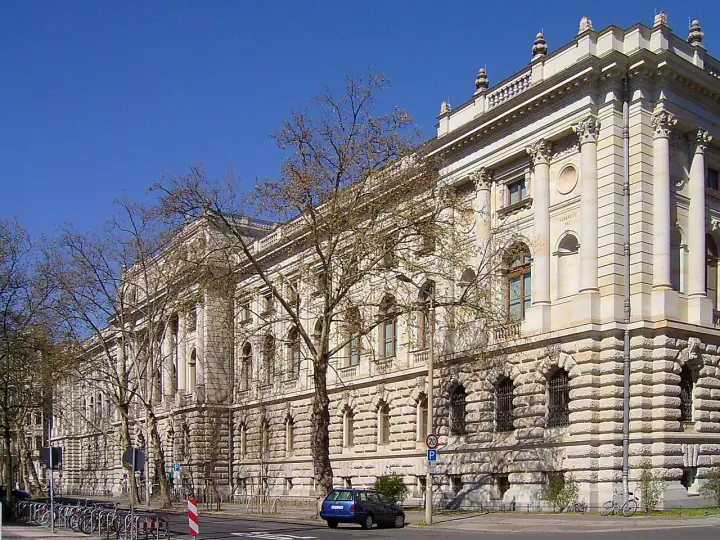
No tuition fee Tuition · sourced 2 years Duration View detailsCampus photos on this page: L.E.rewi-sor (CC BY-SA 3.0) — via Wikimedia Commons.
Master of Science in Quantitative Economics for Sustainability — FAQs
5 questions
Tuition is No tuition fee. Taken from the university's published fees page, not re-checked since — confirm it before you budget. We confirm the current fee and the scholarships you qualify for — free.
The main intake is Winter semester. Most universities admit on a rolling basis — we confirm the exact deadline for your profile, free.
Eligibility requirements You will need a completed Bachelor's degree programme with business and economics content. Selection criteria Previous academic performance (GPA or average mark) Academic background and fit to the study programme
The programme runs about 24 months full-time.
Yes — shortlisting, SOP, LOR, Resume, application, scholarships and visa guidance are all free. We're paid by partner universities, not by you.
Apply to Master of Science in Quantitative Economics for Sustainability — free help
A counsellor calls you back during office hours — 9am to 8pm IST, Mon to Sat. We are closed right now, so your request is first in line when we reopen.