Master's in Medical Informatics
TU Dortmund University · Dortmund, Europe
Duration
24 mo
Tuition
No tuition fee
sourcedIntake
Winter semester
English
—
Winter semester intake. Most universities admit on a rolling basis — we confirm the exact application deadline for your profile, free.
Course details verified 10 Sep 2026 — intakes, entry requirements and course facts · official source
Fee sourced Taken from the university's published fees page, not re-checked since — confirm it before you budget. See the university fees page.
About this programme
Transform the future of medical informatics – join the English-taught Master's in Medical Informatics at Dortmund University of Applied Sciences and Arts (Fachhochschule Dortmund) together with University Medicine Essen (University of Duisburg-Essen). Study in a very friendly, international environment, with projects turning cutting-edge knowledge into practical experience in the dynamically growing healthcare and high-tech industries of the German Ruhr Valley region. The Master's in Medical Informatics delivers the competencies to shape the digital revolution in medicine. With the Master’s programme, we focus on the integration of digital solutions in healthcare – especially software & information technologies. We are exploring the relevant artificial intelligence models, cybersecurity and socio-economic impact as well. Our graduates are trained to work in very dynamic, diverse, and agile international teams aiming for solutions that benefit patients and society. The three pillars of the Master's in Medical Informatics competence model are as follows: Medical informatics modules covering the relevant processes, methods and tools for developing complex software solutions in healthcare Research-oriented work in projects of the participating universities A strong focus on project-oriented, user-centred development processes Our students have key advantages by studying Medical Informatics at Fachhochschule Dortmund: Wide research and job opportunities are available for our students and many career opportunities are open to our graduates in German and international companies, e.g. in the companies and hospitals of Ruhr Valley region. Culturally diverse international teams and class experience Interactive learning methods Strong interrelation with DFG funded RTG WisPerMed International events and conferences as well as a semester abroad exchange programmes Research opportunities in our medical informatics groups and at University Medicine Essen Hands-on experience with practical approaches International networking For more information on the Master's in Medical Informatics programme, please visit https://www.fh-dortmund.de/studiengaenge/medical-informatics-master.php?loc=en or contact us directly. The international Master's in Medical Informatics programme is taught in four semesters, including the Master's thesis. The programme has a workload of 3,600 hours and 120 credit points (ECTS). The first two semesters consist of five modules each. In the second and third semesters, students may study their chosen specialisation. The programme finishes with a Master's thesis. Master's thesis topics comprise clinical research projects or development/research questions in the healthcare domain. All classes and labs as well as course documentation and exams are in English. (Students can use German for written assignments and write their theses in German, too). Compulsory modules (each module 6 ECTS): First semester (when starting in winter semester) 3D Computer Vision and Augmented Reality in Medicine Advanced Methods in Biomedical Signal and Image Processing Epidemiology and Applications in Healthcare Elective 1 Scientific & Transversal Skills 1 Second semester (when starting in winter semester) Knowledge-Based Systems in Medicine Advanced Telemedicine Applications and Technologies Applied Artificial Intelligence in Medicine Scientific & Transversal Skills 2 Elective 2 Third semester – specialisation and research project Elective 3 Elective 4 MI team project Research project (thesis) Fourth semester Master's thesis (30 ECTS) Elective modules (each module 6 ECTS): Advanced Web Engineering Machine Learning Design and Modelling of Complex Software Architectures Human-Centred Digitalisation Requirements Engineering Selected Aspects of Information Security IT Nets Distributed and Parallel Systems Usability Engineering Formal Methods Advanced Regression Methods The didactic model of the programme involves lectures (partly online), practical eleme
Intakes & deadlines
Winter semester
Dates confirmed for your profile · Open
Summer semester
Dates confirmed for your profile · Open
Entry requirements
-
English
E.G. IELTS Academic: 6.5 TOEFL iBT (before 2026): 90 Reading: 18 Listening: 27 Speaking: 27 Writing: 18 Cambridge English Qualifications: C1 Advanced
-
Prerequisites
Academic admission requirements include the completion of a “Diplom” or Bachelor's course of study of Medical Informatics, Computer Science (with healthcare minor), Information Technology (with healthcare minor), Medical Engineering (with a focus on software) or equivalent at a university of applied sciences ("Fachhochschule") or a university, or the completion of a corresponding accredited Bachelor's qualification programme at a university of cooperative education ("Berufsakademie") with an overall grade of at least “good” (2.5). In addition, a sufficient level of competence in Software Development and Engineering as well as basics of Medicine or Healthcare Information Systems needs to be demonstrated. It must be evident that previous studies included a thesis.
-
Documents
SOP, LOR & Resume — generate them free in 2 minutes.
Fees & scholarships
No tuition fee tuition (sourced). We confirm the exact costs and the scholarships you qualify for at TU Dortmund University — free, for your profile.
Other programmes at TU Dortmund University
Automation and Robotics
No tuition fee Tuition · sourced 2 years Duration View details TD TU Dortmund UniversityBiochemical Engineering – Specialisation: Biopharmaceutical Engineering
No tuition fee Tuition · sourced 2 years Duration View details TD TU Dortmund UniversityChemical Engineering – Specialisation: Process Systems Engineering
No tuition fee Tuition · sourced 2 years Duration View details TD TU Dortmund UniversityEconometrics
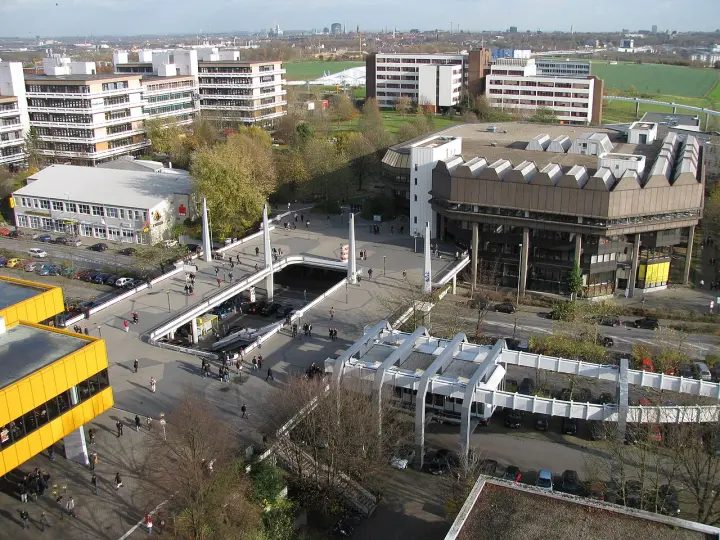
No tuition fee Tuition · sourced 2 years Duration View detailsCampus photos on this page: Chin tin tin (CC BY 3.0) — via Wikimedia Commons.
Master's in Medical Informatics — FAQs
5 questions
Tuition is No tuition fee. Taken from the university's published fees page, not re-checked since — confirm it before you budget. We confirm the current fee and the scholarships you qualify for — free.
The main intake is Winter semester. Most universities admit on a rolling basis — we confirm the exact deadline for your profile, free.
Academic admission requirements include the completion of a “Diplom” or Bachelor's course of study of Medical Informatics, Computer Science (with healthcare minor), Information Technology (with healthcare minor), Medical Engineering (with a focus on software) or equivalent at a university of applied sciences ("Fachhochschule") or a university, or the completion of a corresponding accredited Bachelor's qualification programme at a university of cooperative education ("Berufsakademie") with an overall grade of at least “good” (2.5). In addition, a sufficient level of competence in Software Development and Engineering as well as basics of Medicine or Healthcare Information Systems needs to be demonstrated. It must be evident that previous studies included a thesis. English: E.G. IELTS Academic: 6.5 TOEFL iBT (before 2026): 90 Reading: 18 Listening: 27 Speaking: 27 Writing: 18 Cambridge English Qualifications: C1 Advanced.
The programme runs about 24 months full-time.
Yes — shortlisting, SOP, LOR, Resume, application, scholarships and visa guidance are all free. We're paid by partner universities, not by you.
Apply to Master's in Medical Informatics — free help
A counsellor calls you back during office hours — 9am to 8pm IST, Mon to Sat. We are closed right now, so your request is first in line when we reopen.