Automation and Robotics
TU Dortmund University · Dortmund, Europe
Duration
24 mo
Tuition
No tuition fee
sourcedIntake
Winter semester
English
—
Winter semester intake. Most universities admit on a rolling basis — we confirm the exact application deadline for your profile, free.
Course details verified 09 Sep 2026 — intakes, entry requirements and course facts · official source
Fee sourced Taken from the university's published fees page, not re-checked since — confirm it before you budget. See the university fees page.
About this programme
The programme offers three main areas of specialisation: Robotics: the design, modelling, control, and operation of robotic systems, including, for example, industrial, mobile, medical, collaborative, and autonomous applications Process Automation: the modelling, monitoring, optimisation, and control of complex technical, chemical, and biochemical processes Machine Learning: data-driven methods for analysing data and developing intelligent systems, including for example regression, neural networks, deep learning, transformers, reinforcement learning, computer vision, and natural language processing Students acquire a solid foundation in mathematics, control theory, robotics, data science, and scientific programming. As they progress through the programme, they can increasingly tailor their studies to their individual interests through elective courses, project work, and the Master’s thesis. Students are free to select electives from the current course catalogue. Their chosen electives determine their major field of study: Robotics, Process Automation, or Machine Learning. There is no need to select a specialisation at the beginning of the programme; students develop their individual profile as they progress through their studies. The broad range of electives enables students to explore topics such as advanced control, autonomous and mobile systems, computer vision, intelligent and data-driven methods, communication technologies, and energy-related applications. The elective catalogue is regularly updated to reflect scientific and technological developments. Teaching is organised through lectures, tutorials, and laboratory courses. The programme is complemented by project work, which may be completed individually or in small groups, and by an individual Master’s thesis. Both allow you to explore a current scientific or technological topic in depth. As you progress through the programme, the individual and practical components of your studies become increasingly important. The compulsory modules in the first semesters provide students from diverse academic backgrounds with a common and solid foundation. From the beginning of the programme, you can complement these modules with elective courses that reflect your individual interests and career goals. Your choice of electives determines your area of specialisation. There is no need to choose an area of specialisation at the start of the programme. Instead, you develop your individual profile as you progress through your studies. Through your electives, you can also establish contact with the relevant institutes and research groups, which may later offer topics for your project work and Master’s thesis. The programme covers a broad range of topics, including electrical and electronic engineering, advanced applications in robotics, process automation, and machine learning as well as programming, theoretical computer science, and mechanical engineering. This breadth allows you to shape your studies according to your academic interests. PDF Download
Intakes & deadlines
Winter semester
Dates confirmed for your profile · Open
Summer semester
Dates confirmed for your profile · Open
Entry requirements
-
English
E.G. PTE Academic: 76 TOEFL iBT (since 2026): 5 Reading: 5 Listening: 5 Speaking: 5 Writing: 5 TOEFL iBT (before 2026): 95 Reading: 24 Listening: 22 Speaking: 25 Writing: 24 IELTS Academic: 7 Cambridge English Qualifications: C1 Advanced
-
Prerequisites
It is compulsory to show mathematical proficiency and substantial knowledge in computer systems to gain admission in the course. With reference to our examination order (§3), these items are checked only by the amount of classes in the relevant directions in your BSc curriculum. Additional experience (whether from non-academic courses or from work experience) will be disregarded for formal reasons.
-
Documents
SOP, LOR & Resume — generate them free in 2 minutes.
This is an indicative early-career range for the whole Engineering (general) field in Europe, from official graduate-outcome data — not a figure for this programme or university, and not a guarantee of what you will earn. What you actually earn depends on the role, employer, city and your visa.
Source: Profiling Institut - Gehaltsranking nach Studienfach 2026 (StepStone Gehaltsreport 2026), 2026. Market job-board data — less official than a government survey; treat as indicative.
Rupee figure converted at the 18 Aug 2026 mid-market rate; your bank's rate will be worse and currencies move, so use it for planning, not as the amount you will receive.
Fees & scholarships
No tuition fee tuition (sourced). We confirm the exact costs and the scholarships you qualify for at TU Dortmund University — free, for your profile.
Other programmes at TU Dortmund University
Biochemical Engineering – Specialisation: Biopharmaceutical Engineering
No tuition fee Tuition · sourced 2 years Duration View details TD TU Dortmund UniversityChemical Engineering – Specialisation: Process Systems Engineering
No tuition fee Tuition · sourced 2 years Duration View details TD TU Dortmund UniversityEconometrics
No tuition fee Tuition · sourced 2 years Duration View details TD TU Dortmund UniversityEconomic Policy and Journalism
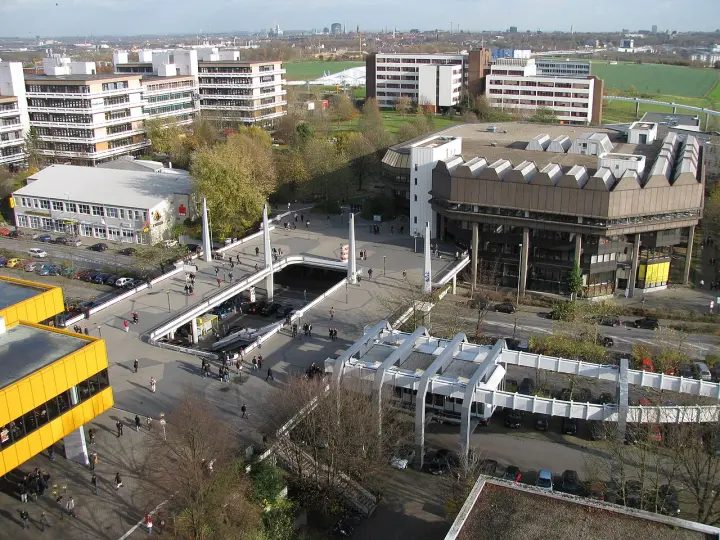
No tuition fee Tuition · sourced 2 years Duration View detailsCampus photos on this page: Chin tin tin (CC BY 3.0) — via Wikimedia Commons.
Automation and Robotics — FAQs
5 questions
Tuition is No tuition fee. Taken from the university's published fees page, not re-checked since — confirm it before you budget. We confirm the current fee and the scholarships you qualify for — free.
The main intake is Winter semester. Most universities admit on a rolling basis — we confirm the exact deadline for your profile, free.
It is compulsory to show mathematical proficiency and substantial knowledge in computer systems to gain admission in the course. With reference to our examination order (§3), these items are checked only by the amount of classes in the relevant directions in your BSc curriculum. Additional experience (whether from non-academic courses or from work experience) will be disregarded for formal reasons. English: E.G. PTE Academic: 76 TOEFL iBT (since 2026): 5 Reading: 5 Listening: 5 Speaking: 5 Writing: 5 TOEFL iBT (before 2026): 95 Reading: 24 Listening: 22 Speaking: 25 Writing: 24 IELTS Academic: 7 Cambridge English Qualifications: C1 Advanced.
The programme runs about 24 months full-time.
Yes — shortlisting, SOP, LOR, Resume, application, scholarships and visa guidance are all free. We're paid by partner universities, not by you.
Apply to Automation and Robotics — free help
A counsellor calls you back during office hours — 9am to 8pm IST, Mon to Sat. We are open now.