Master of Science in Manufacturing Technology (MMT)
TU Dortmund University · Dortmund, Europe
Duration
24 mo
Tuition
No tuition fee
sourcedIntake
Winter semester
English
—
Winter semester intake. Most universities admit on a rolling basis — we confirm the exact application deadline for your profile, free.
Course details verified 09 Sep 2026 — intakes, entry requirements and course facts · official source
Fee sourced Taken from the university's published fees page, not re-checked since — confirm it before you budget. See the university fees page.
About this programme
In the first two semesters, students gain a deep, theoretical knowledge in the field of manufacturing technology. Furthermore, students choose elective modules according to their individual interests. The second year of study is dedicated to acquiring practical skills by completing the laboratory and scientific (industrial) project work modules. In this way, the understanding as well as the competence of applying the theoretical knowledge in practice is consolidated. In the same way, students shall learn to be able to compare the manufacturing processes currently applied in industry with state-of-the-art developments in specific fields. Furthermore, students become familiar with organising and implementing projects with several members. Due to the internationality of the Master's programme, students acquire intercultural competence. The Interdisciplinary Qualification module allows students to become familiar with the methodology of other disciplines like the humanities, the social or economic sciences. Competencies acquired in rhetoric and language courses can be applied in everyday working life and contribute to the students’ personal development. With the final Master's thesis, students prove their ability to work on a complex problem independently. Graduates are able to analyse and optimise existing manufacturing processes, evaluate existing production systems, and design new techniques. Further information can be found on the MMT website: http://www.mmt.mb.tu-dortmund.de/. During the first two semesters, students gain profound theoretical knowledge in the following compulsory modules: Machining Technology I + II Materials Science Bulk Metal Forming Sheet Metal Forming The "Interdisciplinary Qualification" module is geared towards imparting soft skills as well as language skills in order to prepare students for their future professions. In addition, students choose elective modules according to their individual interests. An overview of the elective courses offered currently can be found here: https://mb.tu-dortmund.de/studium/studiengaenge/msc-manufacturing-technology/course-of-studies/. The third semester is characterised by project and laboratory work, which enables students to acquire the competency to apply theoretical knowledge in practical applications. The Master's thesis is scheduled for the fourth semester. A detailed explanation of all modules can be found in the module description.
Intakes & deadlines
Winter semester
Dates confirmed for your profile · Open
Entry requirements
-
English
E.G. IELTS Academic: 5.5 TOEFL iBT (since 2026): 4 Reading: 4 Listening: 4 Speaking: 4 Writing: 4 TOEFL iBT (before 2026): 72 Reading: 18 Listening: 17 Speaking: 20 Writing: 17 Cambridge English Qualifications: B2 First
-
Prerequisites
An appropriate Bachelor of Science degree in the field of mechanical engineering or a comparable degree with a total of 180 credit points (ECTS). A Bachelor's degree course is considered appropriate when it includes modules of the following subjects: mathematics, covering at least 15 credit points (ECTS) mechanics, covering at least 9 credit points (ECTS) materials engineering, production engineering, theory of design, and/or metallurgy and feedback control, totalling at least 15 credit points (ECTS) to be divided individually A minimum of 50 credit points must have been earned across the subject areas listed in points 1–3. (1 credit point is equivalent to 30 working hours.) Proof of English language proficiency, at least at level B2 of the Common European Framework of Reference (CEFR). Curriculum vitae Letter of motivation Two letters of recommendation (you may replace one with one industrial letter) If available: Graduate Record Examination (GRE) Further information on the required documents
-
Documents
SOP, LOR & Resume — generate them free in 2 minutes.
This is an indicative early-career range for the whole Engineering (general) field in Europe, from official graduate-outcome data — not a figure for this programme or university, and not a guarantee of what you will earn. What you actually earn depends on the role, employer, city and your visa.
Source: Profiling Institut - Gehaltsranking nach Studienfach 2026 (StepStone Gehaltsreport 2026), 2026. Market job-board data — less official than a government survey; treat as indicative.
Rupee figure converted at the 18 Aug 2026 mid-market rate; your bank's rate will be worse and currencies move, so use it for planning, not as the amount you will receive.
Fees & scholarships
No tuition fee tuition (sourced). We confirm the exact costs and the scholarships you qualify for at TU Dortmund University — free, for your profile.
Other programmes at TU Dortmund University
Automation and Robotics
No tuition fee Tuition · sourced 2 years Duration View details TD TU Dortmund UniversityBiochemical Engineering – Specialisation: Biopharmaceutical Engineering
No tuition fee Tuition · sourced 2 years Duration View details TD TU Dortmund UniversityChemical Engineering – Specialisation: Process Systems Engineering
No tuition fee Tuition · sourced 2 years Duration View details TD TU Dortmund UniversityEconometrics
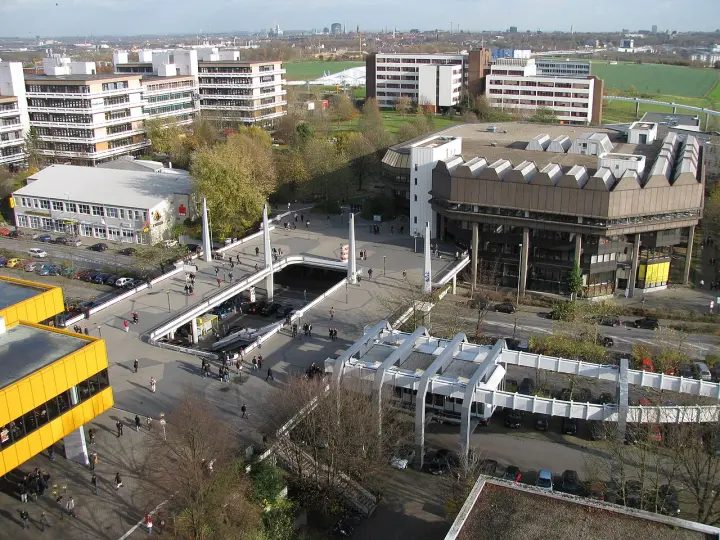
No tuition fee Tuition · sourced 2 years Duration View detailsCampus photos on this page: Chin tin tin (CC BY 3.0) — via Wikimedia Commons.
Master of Science in Manufacturing Technology (MMT) — FAQs
5 questions
Tuition is No tuition fee. Taken from the university's published fees page, not re-checked since — confirm it before you budget. We confirm the current fee and the scholarships you qualify for — free.
The main intake is Winter semester. Most universities admit on a rolling basis — we confirm the exact deadline for your profile, free.
An appropriate Bachelor of Science degree in the field of mechanical engineering or a comparable degree with a total of 180 credit points (ECTS). A Bachelor's degree course is considered appropriate when it includes modules of the following subjects: mathematics, covering at least 15 credit points (ECTS) mechanics, covering at least 9 credit points (ECTS) materials engineering, production engineering, theory of design, and/or metallurgy and feedback control, totalling at least 15 credit points (ECTS) to be divided individually A minimum of 50 credit points must have been earned across the subject areas listed in points 1–3. (1 credit point is equivalent to 30 working hours.) Proof of English language proficiency, at least at level B2 of the Common European Framework of Reference (CEFR). Curriculum vitae Letter of motivation Two letters of recommendation (you may replace one with one industrial letter) If available: Graduate Record Examination (GRE) Further information on the required documents English: E.G. IELTS Academic: 5.5 TOEFL iBT (since 2026): 4 Reading: 4 Listening: 4 Speaking: 4 Writing: 4 TOEFL iBT (before 2026): 72 Reading: 18 Listening: 17 Speaking: 20 Writing: 17 Cambridge English Qualifications: B2 First.
The programme runs about 24 months full-time.
Yes — shortlisting, SOP, LOR, Resume, application, scholarships and visa guidance are all free. We're paid by partner universities, not by you.
Apply to Master of Science in Manufacturing Technology (MMT) — free help
A counsellor calls you back during office hours — 9am to 8pm IST, Mon to Sat. We are closed right now, so your request is first in line when we reopen.