Battery and Hydrogen Technology
Technische Universität Braunschweig · Braunschweig, Europe
Duration
24 mo
Tuition
No tuition fee
sourcedIntake
Winter semester
English
—
Winter semester intake. Most universities admit on a rolling basis — we confirm the exact application deadline for your profile, free.
Course details verified 09 Sep 2026 — intakes, entry requirements and course facts · official source
Fee sourced Taken from the university's published fees page, not re-checked since — confirm it before you budget. See the university fees page.
About this programme
Modern society relies on sustainable power supply. It became a necessity in order to maintain our standard of living, our economy, as well as our safety and well-being. The transition from fossil to renewable energy opens up opportunities to new technologies, that can ensure this need. This is the core of the new Master's programme Battery and Hydrogen Technology. The Battery and Hydrogen Technology Master's programme is an international, future-oriented and interdisciplinary study programme. You will learn how to construct, optimise and utilise these innovative key technologies for the energy transition. As you progress through the programme, you will develop an in-depth technical understanding that will empower you to contribute actively to solving global energy issues. Whether in electro mobility, stationary energy storage systems, or industrial processes, the global economy is in a high demand for professionals, that can grasp and apply these new technologies. You will be qualified for demanding tasks in economy, industry and research, such as: development and optimisation of new battery and hydrogen technologies technical consultation of companies in the sustainable energy supply sector applied research at institutes, universities and colleges, or commercial laboratories planning and implementation of modern energy storage systems conception and further development of electrically efficient mobility solutions, e.g. electric vehicles and hydrogen propulsion systems Whether in research, start-ups, or global tech corporations – with this Master’s programme you are an active part of the sustainable energy future. Battery and Hydrogen Technology combines flexibility alongside profound specialised knowledge within this Master’s programme. The three newly developed Compulsory Modules (15 CP) "Future Battery Production Systems", "Modern Modelling and Artificial Intelligence of Battery Systems" as well as "Hydrogen as Future Energy Carrier" will be mandatory for you and serve as a solid foundation in the key technologies of the energy evolution. The two Compulsory Laboratory Modules (12 CP) have a practical focus. You will apply the knowledge gained in lectures, deepening your understanding and strengthening your ability to critically evaluate and develop technical solutions. To ensure maximum flexibility, both modules are offered in both German and English. In the Interdisciplinary Fundamentals and Elective Subjects (35 CP) you will create your own profile and select modules from the fields of Energy Storage Systems, Production, Data Analysis and Material Science. This way you can shape the course of study according to your specific interests and make it your own. You can complete the modules in English or German. In the Interdisciplinary Profile Development (13 CP), you will enhance your language proficiency and develop expertise in areas beyond your field of study. The module includes a German and/or English course. By the end of the programme, you should have achieved the following language levels: English: C1 German: B1 Which language course you need to take depends on your individual language skills and is determined by a selection committee. If you have already achieved the target levels upon admission, you are free to decide which courses you take in the interdisciplinary profile development, as a language course is no longer mandatory. To conclude the programme, you will write a student research paper (15 CP) and a Master’s thesis (30 CP) either in English or German. Often you will have the option to work independently and write these papers in cooperation with one of the leading research institutions or companies in the industry. With acquiring first-hand knowledge of how scientific research and problem-solving works, you will be perfectly prepared for a successful career in the field of innovative energy technologies.
Intakes & deadlines
Winter semester
Dates confirmed for your profile · Open
Summer semester
Dates confirmed for your profile · Open
Entry requirements
-
English
E.G. TOEFL iBT Home Edition (since 2026): 4 TOEFL iBT Home Edition (before 2026): 88 TOEFL iBT (since 2026): 4 TOEFL iBT (before 2026): 88 IELTS Academic: 6.5
-
Prerequisites
For an acceptance to the Master's degree programme in Battery and Hydrogen Technology, applicants must hold a Bachelor's degree or equivalent qualification in: Battery and Hydrogen Technology Process Engineering Mechanical Engineering Chemistry or a comparable subject In addition, students must have completed modules in mathematics, thermodynamics, computer science, materials science and process engineering as part of their relevant Bachelor's degree to be admitted to the Master's programme. Please note: A Bachelor's degree in Computer Science alone is not sufficient for admission to the Master's programme in Battery and Hydrogen Technology.
-
Documents
SOP, LOR & Resume — generate them free in 2 minutes.
This is an indicative early-career range for the whole Engineering (general) field in Europe, from official graduate-outcome data — not a figure for this programme or university, and not a guarantee of what you will earn. What you actually earn depends on the role, employer, city and your visa.
Source: Profiling Institut - Gehaltsranking nach Studienfach 2026 (StepStone Gehaltsreport 2026), 2026. Market job-board data — less official than a government survey; treat as indicative.
Rupee figure converted at the 18 Aug 2026 mid-market rate; your bank's rate will be worse and currencies move, so use it for planning, not as the amount you will receive.
Fees & scholarships
No tuition fee tuition (sourced). We confirm the exact costs and the scholarships you qualify for at Technische Universität Braunschweig — free, for your profile.
Other programmes at Technische Universität Braunschweig
Artificial Intelligence for Molecular Sciences
No tuition fee Tuition · sourced 2 years Duration View details TB Technische Universität BraunschweigCommunications Engineering and Data Science (CoDaS)
€8,000/yr Tuition · sourced 2 years Duration View details TB Technische Universität BraunschweigComputational Sciences in Engineering (CSE)
No tuition fee Tuition · sourced 2 years Duration View details TB Technische Universität BraunschweigData Science
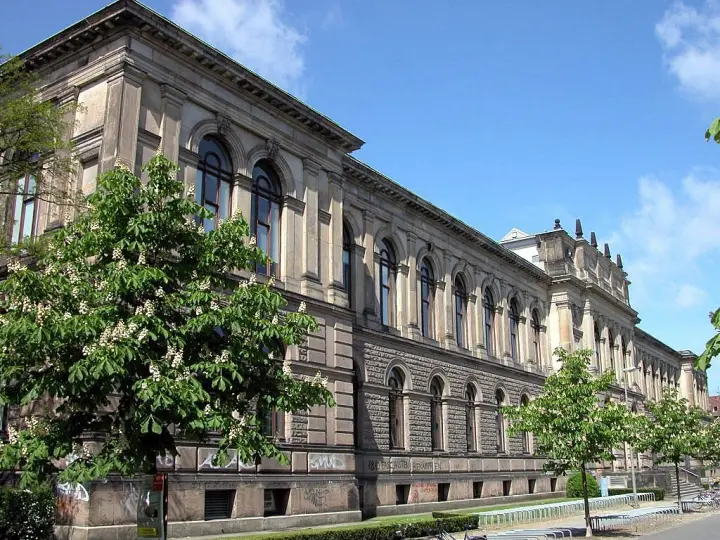
No tuition fee Tuition · sourced 2 years Duration View detailsCampus photos on this page: Brunswyk (CC BY-SA 3.0) — via Wikimedia Commons.
Battery and Hydrogen Technology — FAQs
5 questions
Tuition is No tuition fee. Taken from the university's published fees page, not re-checked since — confirm it before you budget. We confirm the current fee and the scholarships you qualify for — free.
The main intake is Winter semester. Most universities admit on a rolling basis — we confirm the exact deadline for your profile, free.
For an acceptance to the Master's degree programme in Battery and Hydrogen Technology, applicants must hold a Bachelor's degree or equivalent qualification in: Battery and Hydrogen Technology Process Engineering Mechanical Engineering Chemistry or a comparable subject In addition, students must have completed modules in mathematics, thermodynamics, computer science, materials science and process engineering as part of their relevant Bachelor's degree to be admitted to the Master's programme. Please note: A Bachelor's degree in Computer Science alone is not sufficient for admission to the Master's programme in Battery and Hydrogen Technology. English: E.G. TOEFL iBT Home Edition (since 2026): 4 TOEFL iBT Home Edition (before 2026): 88 TOEFL iBT (since 2026): 4 TOEFL iBT (before 2026): 88 IELTS Academic: 6.5.
The programme runs about 24 months full-time.
Yes — shortlisting, SOP, LOR, Resume, application, scholarships and visa guidance are all free. We're paid by partner universities, not by you.
Apply to Battery and Hydrogen Technology — free help
A counsellor calls you back during office hours — 9am to 8pm IST, Mon to Sat. We are open now.