
Economics / Volkswirtschaftslehre
Otto-von-Guericke-Universität Magdeburg · Magdeburg, Europe
Duration
24 mo
Tuition
No tuition fee
sourcedIntake
Winter semester
English
—
Winter semester intake. Most universities admit on a rolling basis — we confirm the exact application deadline for your profile, free.
Course details verified 10 Sep 2026 — intakes, entry requirements and course facts · official source
Fee sourced Taken from the university's published fees page, not re-checked since — confirm it before you budget. See the university fees page.
About this programme
This research-oriented Master's programme conveys the necessary skills for students to analyse complex economic problems, issues, and policy solutions on their own, with the help of advanced empirical methods, analytical research skills, and theoretical models. The policy-oriented programme focuses on theoretical and empirical analyses of economic policy measures in different areas, such as trade, the environment, the labour market, and social policy. Tools studied and applied for this purpose include both traditional theoretical analyses, advanced empirical methods for evidence-based policy analysis, and behavioural economic analyses, such as laboratory experiments. The student body is multinational, and takes a strong theoretical and quantitative approach. The Economic Policy Analysis degree programme qualifies graduates for management and specialist tasks in all areas of national and international public organisations and private companies as well as in university and non-university scientific institutions. Graduates are particularly qualified for jobs and positions in all areas in which economically relevant policy measures are decided upon, conceived, or analysed (such as ministries, economic research institutes, associations, economic analysis departments in companies, and economic university institutions). Furthermore, our graduates will be excellently prepared for admission to a doctoral programme in economics. This Master's programme offers a professional economic qualification at a graduate level. The foundation of this programme consists of modules in quantitative methods, microeconomics, and macroeconomics as well as evidence-based policy analysis. Especially the seminars in specialisation (second and third semesters) enable students to understand the complex institutional and social framework conditions of economic and economic-political research and to incorporate these in scientific analysis and problem-solving. Programme Structure: Compulsory modules = Econometrics, Microeconomics Analysis, Macroeconomics Analysis Compulsory elective modules for specialisation, including two seminars or a seminar and a scientific project, will prepare students for the Master's thesis research and writing. Supplementary modules may be chosen for being even more flexible in the field of specialisation of each student. The final semester is reserved for the module Master's thesis and seminar. Here, candidates must demonstrate their ability to independently research a selected topic using scientific methods in order to be successful. During the study programme, students have to expect a weekly workload of approx. 20 hours of classroom studies and at least 20 hours of independent studies. Master's studies include lectures to learn new concepts, tutorials to foster discussions and practice techniques, and seminars to apply theories and methods to an assigned project. The seminars include an academic paper plus a presentation, and they prepare students for the Master's thesis. Students must be able to work independently on an academic level. This study programme is theoretical and mathematically oriented in an analytical manner. The knowledge of statistical methods and applications is highly important. Module descriptions PDF Download
Intakes & deadlines
Winter semester
Dates confirmed for your profile · Open
Summer semester
Dates confirmed for your profile · Open
Entry requirements
-
English
E.G. TOEFL iBT (since 2026): 5 Reading: 5 Listening: 5 Speaking: 5 Writing: 5 IELTS Academic: 7
-
Prerequisites
The study programme is designed for students with an educational background in economics. Prospective students should have an interest in economic issues relating to economic policy and have advanced knowledge of quantitative methods in mathematics, statistics, or econometrics. Applicants must provide proof of a relevant academic degree in economics (Bachelor's, "Diplom", etc.) from a university recognised in Germany with a GPA from 1.0 up to 2.9 (according to the German grading system). A degree is considered relevant if a minimum number of credits were obtained in economics, business administration, and quantitative methods modules. Detailed information regarding admission requirements (i.e. relevant degree, letter of motivation, and proof of English skills) is available on the study programme's website: EPA Details and Requirements.
-
Documents
SOP, LOR & Resume — generate them free in 2 minutes.
Fees & scholarships
No tuition fee tuition (sourced). We confirm the exact costs and the scholarships you qualify for at Otto-von-Guericke-Universität Magdeburg — free, for your profile.
Other programmes at Otto-von-Guericke-Universität Magdeburg
AI and Engineering for Medical Applications (MSc)
€4,165/yr Tuition · sourced 2 years Duration View details OVG Otto-von-Guericke-Universität MagdeburgBiomechanical Engineering (BiME)
No tuition fee Tuition · sourced 2 years Duration View details OVG Otto-von-Guericke-Universität MagdeburgChemical and Energy Engineering
No tuition fee Tuition · sourced 2 years Duration View details OVG Otto-von-Guericke-Universität MagdeburgComputational Methods in Engineering (CoME)
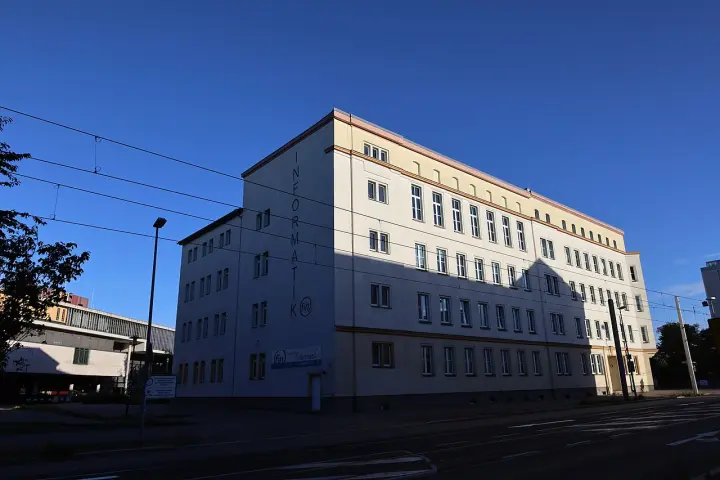
No tuition fee Tuition · sourced 2 years Duration View detailsCampus photos on this page: Roy Zuo (CC BY-SA 4.0) — via Wikimedia Commons.
Economics / Volkswirtschaftslehre — FAQs
5 questions
Tuition is No tuition fee. Taken from the university's published fees page, not re-checked since — confirm it before you budget. We confirm the current fee and the scholarships you qualify for — free.
The main intake is Winter semester. Most universities admit on a rolling basis — we confirm the exact deadline for your profile, free.
The study programme is designed for students with an educational background in economics. Prospective students should have an interest in economic issues relating to economic policy and have advanced knowledge of quantitative methods in mathematics, statistics, or econometrics. Applicants must provide proof of a relevant academic degree in economics (Bachelor's, "Diplom", etc.) from a university recognised in Germany with a GPA from 1.0 up to 2.9 (according to the German grading system). A degree is considered relevant if a minimum number of credits were obtained in economics, business administration, and quantitative methods modules. Detailed information regarding admission requirements (i.e. relevant degree, letter of motivation, and proof of English skills) is available on the study programme's website: EPA Details and Requirements. English: E.G. TOEFL iBT (since 2026): 5 Reading: 5 Listening: 5 Speaking: 5 Writing: 5 IELTS Academic: 7.
The programme runs about 24 months full-time.
Yes — shortlisting, SOP, LOR, Resume, application, scholarships and visa guidance are all free. We're paid by partner universities, not by you.
Apply to Economics / Volkswirtschaftslehre — free help
A counsellor calls you back during office hours — 9am to 8pm IST, Mon to Sat. We are open now.