
Chemical and Energy Engineering
Otto-von-Guericke-Universität Magdeburg · Magdeburg, Europe
Duration
24 mo
Tuition
No tuition fee
sourcedIntake
Winter semester
English
—
Winter semester intake. Most universities admit on a rolling basis — we confirm the exact application deadline for your profile, free.
Course details verified 10 Sep 2026 — intakes, entry requirements and course facts · official source
Fee sourced Taken from the university's published fees page, not re-checked since — confirm it before you budget. See the university fees page.
About this programme
In most industrialised countries, process technology has an important place in the economy. For example, it occupies approx. a 50% share in German industrial production. Energy engineers work not only in traditional industries but also increasingly in growth areas such as biotechnology, medical technology, and microelectronics. They use physical, chemical, and biological processes in order to convert the composition of a diverse range of materials. Because the study programme is entirely in English, young people from different cultural backgrounds enrol and contribute to an interesting and varied student life. All 22 professors of the faculty are involved in the programme of study. They can access resources that include modern technical equipment, in particular high-quality optical (laser) measuring instruments and very efficient computer technology. Due to many partnerships with industry partners, the Master's programme is application-oriented. We start the programme with some fundamental lectures on topics such as fluid dynamics, thermodynamics, heat and mass transfer, chemistry, mechanical, thermal and chemical process engineering. This will help students from different countries and various academic backgrounds to reach the same scientific level. Afterwards, we continue with lectures on the application of chemical engineering. At this point, the students can arrange their own modules with lectures and tutorials within the offered courses depending on individual interest. The students get the chance to participate in ten practical laboratory projects (such as estimation of kinetic rate constants, laser droplet velocimetry, determination of heat transfer coefficients). There are excursions to industrial companies offered to get an insight into where the slogan "Made in Germany" comes from. The fourth and final semester is reserved for the Master's thesis as the culmination of the programme. PDF Download
Intakes & deadlines
Winter semester
Dates confirmed for your profile · Open
Summer semester
Dates confirmed for your profile · Open
Entry requirements
-
English
E.G. Cambridge English Qualifications: B2 First IELTS Academic: 6
-
Prerequisites
1. A Bachelor's degree in chemical or process engineering or another closely related field; your Bachelor's programme is considered closely related if it contained: thermodynamics (grade "good" or better) fluid mechanics (grade "good" or better) heat and mass transfer (grade "good" or better) mathematics chemistry technical drawing 2. Applicants are required to have a minimum Bachelor's grade of "good" according to the German scale. This is GPA = 2.30 or better (lower value) or ECTS = B (calculate your GPA). The admission depends on the number of competing applicants. 3. Adequate knowledge of English (see below) Only native speakers from the United Kingdom, Ireland, Canada, Australia, New Zealand and the USA are exempted from the language requirements. Applicants from other countries must provide official test results, even if English is an official language in their country.
-
Documents
SOP, LOR & Resume — generate them free in 2 minutes.
This is an indicative early-career range for the whole Engineering (general) field in Europe, from official graduate-outcome data — not a figure for this programme or university, and not a guarantee of what you will earn. What you actually earn depends on the role, employer, city and your visa.
Source: Profiling Institut - Gehaltsranking nach Studienfach 2026 (StepStone Gehaltsreport 2026), 2026. Market job-board data — less official than a government survey; treat as indicative.
Rupee figure converted at the 18 Aug 2026 mid-market rate; your bank's rate will be worse and currencies move, so use it for planning, not as the amount you will receive.
Fees & scholarships
No tuition fee tuition (sourced). We confirm the exact costs and the scholarships you qualify for at Otto-von-Guericke-Universität Magdeburg — free, for your profile.
Other programmes at Otto-von-Guericke-Universität Magdeburg
AI and Engineering for Medical Applications (MSc)
€4,165/yr Tuition · sourced 2 years Duration View details OVG Otto-von-Guericke-Universität MagdeburgBiomechanical Engineering (BiME)
No tuition fee Tuition · sourced 2 years Duration View details OVG Otto-von-Guericke-Universität MagdeburgComputational Methods in Engineering (CoME)
No tuition fee Tuition · sourced 2 years Duration View details OVG Otto-von-Guericke-Universität MagdeburgDigital Engineering (DigiEng)
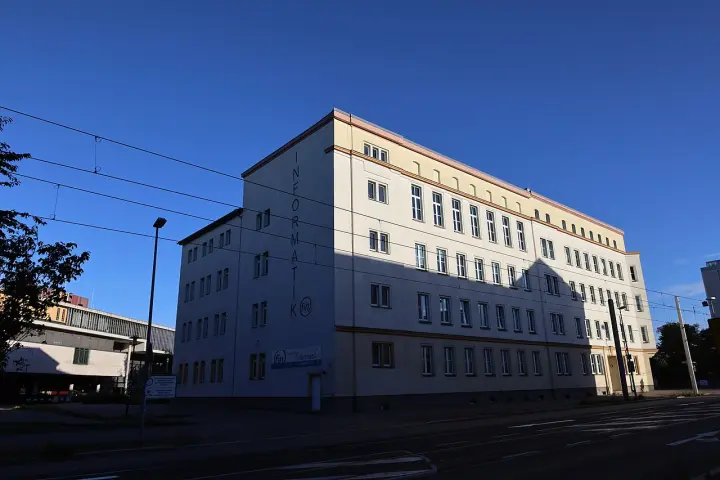
No tuition fee Tuition · sourced 2 years Duration View detailsCampus photos on this page: Roy Zuo (CC BY-SA 4.0) — via Wikimedia Commons.
Chemical and Energy Engineering — FAQs
5 questions
Tuition is No tuition fee. Taken from the university's published fees page, not re-checked since — confirm it before you budget. We confirm the current fee and the scholarships you qualify for — free.
The main intake is Winter semester. Most universities admit on a rolling basis — we confirm the exact deadline for your profile, free.
1. A Bachelor's degree in chemical or process engineering or another closely related field; your Bachelor's programme is considered closely related if it contained: thermodynamics (grade "good" or better) fluid mechanics (grade "good" or better) heat and mass transfer (grade "good" or better) mathematics chemistry technical drawing 2. Applicants are required to have a minimum Bachelor's grade of "good" according to the German scale. This is GPA = 2.30 or better (lower value) or ECTS = B (calculate your GPA). The admission depends on the number of competing applicants. 3. Adequate knowledge of English (see below) Only native speakers from the United Kingdom, Ireland, Canada, Australia, New Zealand and the USA are exempted from the language requirements. Applicants from other countries must provide official test results, even if English is an official language in their country. English: E.G. Cambridge English Qualifications: B2 First IELTS Academic: 6.
The programme runs about 24 months full-time.
Yes — shortlisting, SOP, LOR, Resume, application, scholarships and visa guidance are all free. We're paid by partner universities, not by you.
Apply to Chemical and Energy Engineering — free help
A counsellor calls you back during office hours — 9am to 8pm IST, Mon to Sat. We are open now.