Quantum Engineering (Master of Science)
Leibniz University Hannover · Hanover, Europe
Duration
24 mo
Tuition
No tuition fee
sourcedIntake
Winter semester
English
—
Winter semester intake. Most universities admit on a rolling basis — we confirm the exact application deadline for your profile, free.
Course details verified 09 Sep 2026 — intakes, entry requirements and course facts · official source
Fee sourced Taken from the university's published fees page, not re-checked since — confirm it before you budget. See the university fees page.
About this programme
Quantum mechanics determines our understanding of physical processes on a microscopic scale. More than a century after groundbreaking work began on quantum mechanics, technical developments based on this phenomenon – such as transistors, lasers and global satellite navigation systems – have become part of our everyday lives. On the verge of the second quantum revolution, the aim is now to pave the way for the application of fundamental quantum physics in industrial fields. In this context, the combination of knowledge and skills from the fields of physics, mathematics, computer science and engineering plays a crucial role. The degree programme closes a gap that previous degree programmes were unable to fill. The programme primarily teaches students knowledge in all four pillars of quantum technologies: communication, simulation, sensors and computation. Once they have completed the programme, students will be able to use their technological expertise in individual specific fields of application to transfer quantum technology solutions from the basic research laboratory to practice. Students may be required to attend courses in Braunschweig in addition to their regular courses at Leibniz University Hannover and a hybrid offering. The programme is structured across four semesters and combines lectures, seminars, and laboratory components. In the first (summer) semester, students are recommended to attend the seminar Quantum technologies with laser cooled ions and atoms. This seminar brings together all new students, facilitates exchange, and provides an introduction to the programme structure. The first summer semester is particularly suitable for fulfilling any outstanding requirements or prerequisites. The second (winter) semester includes the two compulsory modules, which form the academic core of the programme. During the first and second semesters, students also begin to take elective modules from the fields of quantum and engineering. In each area, at least 10 ECTS (typically two modules) and up to 35 ECTS (approximately seven modules) must be completed, resulting in a total of 45 ECTS credits from elective coursework. Students are encouraged to complete the flexible lab module Computational Methods, Simulations & Experimental Control at any time. This module consists of four parts, each lasting approximately two weeks. The individual parts can be completed across different semesters. Depending on the component, work is either carried out in the laboratory or involves programming tasks that can be done remotely. At some point during the third semester, it is recommended to complete the mandatory internship. This can either take place in industry or as a project within one of the participating laboratories (e.g. LUH, TUBS, or PTB), typically requiring around eight weeks of work. The final semester is dedicated to completing the Master’s thesis, which is usually prepared in advance through a preceding project phase starting approximately three months earlier.
Intakes & deadlines
Winter semester
Dates confirmed for your profile · Open
Summer semester
Dates confirmed for your profile · Open
Entry requirements
-
English
E.G. telc English: telc English C1 PTE Academic: 76 IELTS Academic: 7 TOEFL iBT Home Edition (since 2026): 5 Reading: 5 Listening: 5 Speaking: 5 Writing: 5 TOEFL iBT (since 2026): 5 Reading: 5 Listening: 5 Speaking: 5 Writing: 5 UNIcert® English: UNIcert® III
-
Prerequisites
The following are suitable previous courses of study for the Master's degree programme in Quantum Engineering: a Bachelor's degree in physics, optical technologies, an engineering science or another previous degree programme with a suitable subject with at least: 20 ECTS in mathematics 10 ECTS in quantum mechanics 5 ECTS in wave optics or 5 ECTS in electrodynamics
-
Documents
SOP, LOR & Resume — generate them free in 2 minutes.
This is an indicative early-career range for the whole Engineering (general) field in Europe, from official graduate-outcome data — not a figure for this programme or university, and not a guarantee of what you will earn. What you actually earn depends on the role, employer, city and your visa.
Source: Profiling Institut - Gehaltsranking nach Studienfach 2026 (StepStone Gehaltsreport 2026), 2026. Market job-board data — less official than a government survey; treat as indicative.
Rupee figure converted at the 18 Aug 2026 mid-market rate; your bank's rate will be worse and currencies move, so use it for planning, not as the amount you will receive.
Fees & scholarships
No tuition fee tuition (sourced). We confirm the exact costs and the scholarships you qualify for at Leibniz University Hannover — free, for your profile.
Other programmes at Leibniz University Hannover
AI-Driven Mechatronics and Robotics (Mechatronics and Robotics Study Track)
No tuition fee Tuition · sourced 2 years Duration View details LH Leibniz University HannoverComputational Methods in Engineering (CME)
No tuition fee Tuition · sourced 2 years Duration View details LH Leibniz University HannoverComputer Science – Master of Science
No tuition fee Tuition · sourced 2 years Duration View details LH Leibniz University HannoverDouble Degree Master's Programme in Renewable Energy and Electrical Power Engineering
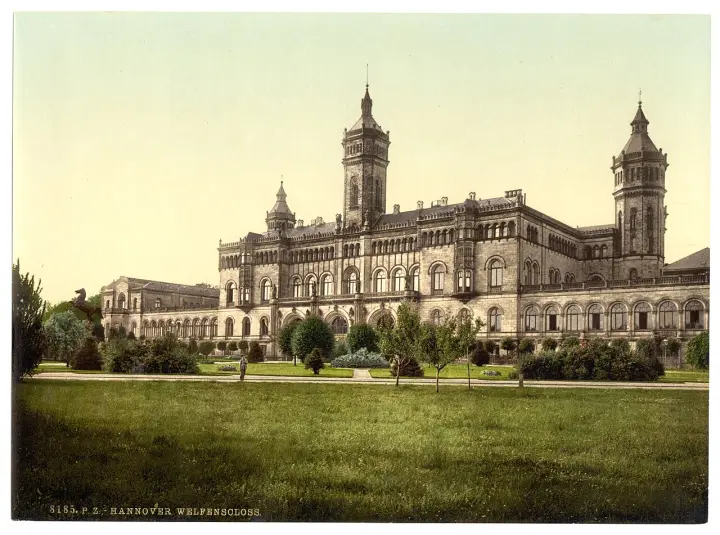
No tuition fee Tuition · sourced 2 years Duration View detailsCampus photos on this page: Unknown authorUnknown author (Public domain) — via Wikimedia Commons.
Quantum Engineering (Master of Science) — FAQs
5 questions
Tuition is No tuition fee. Taken from the university's published fees page, not re-checked since — confirm it before you budget. We confirm the current fee and the scholarships you qualify for — free.
The main intake is Winter semester. Most universities admit on a rolling basis — we confirm the exact deadline for your profile, free.
The following are suitable previous courses of study for the Master's degree programme in Quantum Engineering: a Bachelor's degree in physics, optical technologies, an engineering science or another previous degree programme with a suitable subject with at least: 20 ECTS in mathematics 10 ECTS in quantum mechanics 5 ECTS in wave optics or 5 ECTS in electrodynamics English: E.G. telc English: telc English C1 PTE Academic: 76 IELTS Academic: 7 TOEFL iBT Home Edition (since 2026): 5 Reading: 5 Listening: 5 Speaking: 5 Writing: 5 TOEFL iBT (since 2026): 5 Reading: 5 Listening: 5 Speaking: 5 Writing: 5 UNIcert® English: UNIcert® III.
The programme runs about 24 months full-time.
Yes — shortlisting, SOP, LOR, Resume, application, scholarships and visa guidance are all free. We're paid by partner universities, not by you.
Apply to Quantum Engineering (Master of Science) — free help
A counsellor calls you back during office hours — 9am to 8pm IST, Mon to Sat. We are closed right now, so your request is first in line when we reopen.