
International Economic Policy (IEP)
Julius-Maximilians-Universität Würzburg · Würzburg, Europe
Duration
24 mo
Tuition
No tuition fee
sourcedIntake
Winter semester
English
—
Winter semester intake. Most universities admit on a rolling basis — we confirm the exact application deadline for your profile, free.
Course details verified 09 Sep 2026 — intakes, entry requirements and course facts · official source
Fee sourced Taken from the university's published fees page, not re-checked since — confirm it before you budget. See the university fees page.
About this programme
The Master of Science in International Economic Policy is an internationally-oriented programme that aims at preparing students to apply rigorous theoretical and empirical economic analysis to a wide range of issues relevant for business and public policy. Students who successfully complete this programme will receive a legally accredited Master’s degree in International Economic Policy, which serves as a stepping stone for a professional career in the private or public sector or an academic career. After completing advanced-level courses in the core areas of economics (microeconomics, macroeconomics, and econometrics), students can self-select elective courses in major economic policy areas (e.g. public finance, labour economics, monetary economics, international economics, competition policy), in theoretical fields (e.g. behavioural economics, game theory, contract theory), in research methods (e.g. microeconometrics, computational economics, experimental economics), or in economic journalism. The programme finishes with a policy- or research-oriented seminar, which prepares students for the Master's thesis. In the spirit of its international orientation, the language of instruction is English. Students are encouraged to spend an exchange semester at one of the partner universities abroad and courses taken there are accredited. Furthermore, the programme offers the opportunity to pursue a double degree, which integrates two semesters at the faculty of economics and business administration at the University of Ghent, Belgium (www.ugent.be/eb/en) or at the University of Verona, Italy (https://www.corsi.univr.it/?ent=cs&id=952). Students who successfully complete this double degree programme will receive a Master’s degree in International Economic Policy from the University of Würzburg and a Master’s degree in Economics from the University of Ghent or Verona. Prospective students are expected to display a strong interest in acquiring the academic skills necessary to address economic policy questions and to pursue scientific work. In this regard, a solid knowledge in mathematics and statistics is an essential prerequisite. The Master's degree programme in International Economic Policy is a two-year programme. Students earn 120 ECTS credits during the course of the programme. The programme can be started in October (winter semester) or in April (summer semester). The application deadline is 15 July and 15 January, respectively. Most of the courses in the programme account for 5 ECTS credits and are typically taught four hours per week, with approximately half of the time devoted to the discussion of exercises and problem sets. As depicted below, students have to select four courses from the core area (i.e. 20 ECTS credits), eight courses from the core elective area (i.e. 40 ECTS credits), and four courses from the elective area (i.e. 20 ECTS credits). In contrast to the narrowly defined core area and core elective area, the elective area includes a broad range of courses in economics and business as well as courses taken at partner universities and specific project seminars. The programme requirements can be entirely met with courses taught in English. The programme is completed with a policy-oriented or research-oriented seminar (10 ECTS credits) and the Master’s thesis (30 ECTS credits). The programme offers its students a high degree of flexibility regarding the individual arrangement of the study plan. In general, students are advised to spread their workload evenly over the course of the programme. As depicted in the figure below, this can be achieved by the following: choosing courses from the core area in the first and second semesters, choosing courses from the core elective area in the first, second, and third semesters, choosing courses from the elective area in the second and third semesters, taking the seminar in the third semester, and writing the Master's thesis in the fourth semester. Following this study plan, st
Intakes & deadlines
Winter semester
Dates confirmed for your profile · Open
Summer semester
Dates confirmed for your profile · Open
Entry requirements
-
English
E.G. TOEFL iBT Home Edition (before 2026): 85 IELTS Academic: 6.5 Cambridge English Qualifications: B2 First PTE Academic: 75
-
Prerequisites
Admission to the Master's degree programme in International Economic Policy requires a degree with an overall grade of 2.5 or better in a Bachelor's degree programme (acquisition of 180 ECTS credits) at the University of Würzburg or another German or foreign university or an equivalent German or foreign degree (e.g. state examination). Admission to the Master's programme in International Economic Policy also requires a Bachelor's degree in economics that covers core competencies in economics, management and methods. The following competencies should have been acquired in the Bachelor's degree programme: Competences from modules amounting to at least 20 ECTS credits in the fields of mathematics, statistics, econometrics, and application-oriented business informatics Competences from modules amounting to at least 60 ECTS credits from the field of business management and economics, with at least 30 ECTS credits in the field of economics
-
Documents
SOP, LOR & Resume — generate them free in 2 minutes.
This is an indicative early-career range for the whole Finance field in Europe, from official graduate-outcome data — not a figure for this programme or university, and not a guarantee of what you will earn. What you actually earn depends on the role, employer, city and your visa.
Source: Profiling Institut - Gehaltsranking nach Studienfach 2026 (StepStone Gehaltsreport 2026), 2026. Market job-board data — less official than a government survey; treat as indicative.
Rupee figure converted at the 18 Aug 2026 mid-market rate; your bank's rate will be worse and currencies move, so use it for planning, not as the amount you will receive.
Fees & scholarships
No tuition fee tuition (sourced). We confirm the exact costs and the scholarships you qualify for at Julius-Maximilians-Universität Würzburg — free, for your profile.
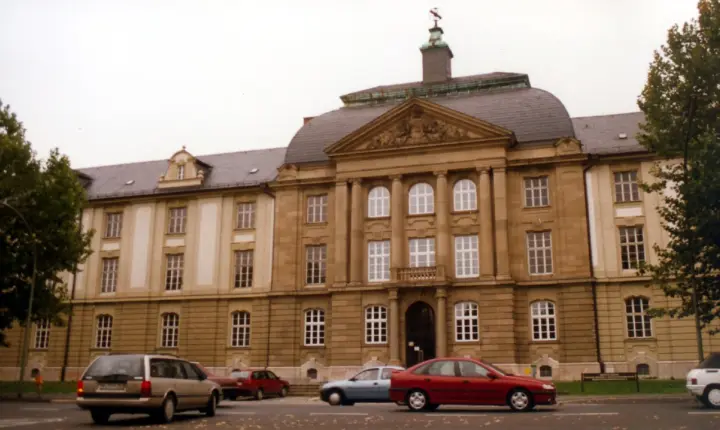
Other programmes at Julius-Maximilians-Universität Würzburg
Adult Education and Management in Lifelong Education
No tuition fee Tuition · sourced 2 years Duration View details JMW Julius-Maximilians-Universität WürzburgBehavioural Neurobiology / Neuroethology, Master of Science in Biology
No tuition fee Tuition · sourced 2 years Duration View details JMW Julius-Maximilians-Universität WürzburgCell and Infection Biology, Master of Science
No tuition fee Tuition · sourced 2 years Duration View details JMW Julius-Maximilians-Universität WürzburgChina Business and Economics, Master of Science
No tuition fee Tuition · sourced 2 years Duration View detailsCampus photos on this page: Robert Emmerich (CC BY-SA 3.0) — via Wikimedia Commons.
International Economic Policy (IEP) — FAQs
5 questions
Tuition is No tuition fee. Taken from the university's published fees page, not re-checked since — confirm it before you budget. We confirm the current fee and the scholarships you qualify for — free.
The main intake is Winter semester. Most universities admit on a rolling basis — we confirm the exact deadline for your profile, free.
Admission to the Master's degree programme in International Economic Policy requires a degree with an overall grade of 2.5 or better in a Bachelor's degree programme (acquisition of 180 ECTS credits) at the University of Würzburg or another German or foreign university or an equivalent German or foreign degree (e.g. state examination). Admission to the Master's programme in International Economic Policy also requires a Bachelor's degree in economics that covers core competencies in economics, management and methods. The following competencies should have been acquired in the Bachelor's degree programme: Competences from modules amounting to at least 20 ECTS credits in the fields of mathematics, statistics, econometrics, and application-oriented business informatics Competences from modules amounting to at least 60 ECTS credits from the field of business management and economics, with at least 30 ECTS credits in the field of economics English: E.G. TOEFL iBT Home Edition (before 2026): 85 IELTS Academic: 6.5 Cambridge English Qualifications: B2 First PTE Academic: 75.
The programme runs about 24 months full-time.
Yes — shortlisting, SOP, LOR, Resume, application, scholarships and visa guidance are all free. We're paid by partner universities, not by you.
Apply to International Economic Policy (IEP) — free help
A counsellor calls you back during office hours — 9am to 8pm IST, Mon to Sat. We are open now.