
Ecology, Master of Science
Julius-Maximilians-Universität Würzburg · Würzburg, Europe
Duration
24 mo
Tuition
No tuition fee
sourcedIntake
Winter semester
English
—
Winter semester intake. Most universities admit on a rolling basis — we confirm the exact application deadline for your profile, free.
Course details verified 09 Sep 2026 — intakes, entry requirements and course facts · official source
Fee sourced Taken from the university's published fees page, not re-checked since — confirm it before you budget. See the university fees page.
About this programme
The multidisciplinary programme combines plant adaptations and their molecular basis, animal ecology, conservation biology and tropical biology. These topics include animal-plant interactions, plant ecophysiology, plant-microbe interactions, plant genetics, biodiversity research, climate-change ecology, and the evolutionary adaptations at the physiological and organismic level. Courses in socio-biology, neurogenetics and behaviour as well as ecological courses like forest ecology, chemical ecology, agroecology, soil ecology, remote sensing and ecological modelling can be chosen. Overall, the study programme reaches from molecular biology of single species to all disciplines of organismic biology. Further topics include constraints for plant growth and development (biogeography, biodiversity), the interactions of plants and animals with abiotic and biotic environmental factors (e.g. plant-bacteria, plant-fungus interactions) including the evolutionary adaptations at the physiological and organismic level, aspects of neurogenetics, genetic regulation mechanisms and behaviour as well as the interaction of individuals, social groups and large populations in complex and variable ecosystems. Using tropical biology with its specialties, unique and general principles in ecology are communicated. Both fundamentals and novel approaches based on molecular biology tools are discussed with respect to organismic biology. The two selected topics are composed of two theory modules as well as a practical course unit each. Further research training is provided in a selected field of interest, and the students are actively involved in ongoing research projects and learn to independently plan and perform both theoretical and experimental work and finally, to summarise and discuss the results obtained in the thesis. The study programme in Ecology deals with various aspects of plant and animal ecology including conservation and tropical biology. During the first year of the programme, the students enrol in two theoretical courses and one practical course in each of the two topics. In semesters three and four, further specialised research training is provided in a selected field of interest. The students are actively involved in ongoing research projects and learn to independently plan and perform both theoretical and experimental work. Moreover, students gain essential competencies to summarise and discuss the results of their work in a scientific context. All modules are accompanied by a graded examination, and the thesis has to be presented and defended in a final colloquium. The thesis (25 ECTS) is preceded by an ungraded preparatory practical course of 12 weeks (15 ECTS). Further modules (15 ECTS, ungraded) are selected within the sub-area of "Additional Qualifications" to cover special aspects of interest. Further modules (15 ECTS) are selected within the sub-area of "Additional Qualifications" to cover special aspects of interest. These modules have to be passed without grading. PDF Download
Intakes & deadlines
Winter semester
Dates confirmed for your profile · Open
Summer semester
Dates confirmed for your profile · Open
Entry requirements
-
English
E.G. IELTS Academic: 6.5 Cambridge English Qualifications: C1 Advanced
-
Prerequisites
Bachelor of Science in biology or equivalent study degree that fulfils the criteria of the "Fachkanon Biologie" / subject specific criteria, in particular: Bachelor of Science in Biology or similar programme Biosciences: 75 ECTS credit equivalents Chemistry (including biochemistry and physical chemistry): 15 ECTS Physics, mathematics, biostatistics: 15 ECTS OR Biosciences: 60 ECTS Chemistry (including biochemistry and physical chemistry): 20 ECTS Physics, mathematics, biostatistics: 12 ECTS OR Biosciences: 70 ECTS Chemistry (including biochemistry and physical chemistry): 10 ECTS Physics, mathematics, biostatistics: 12 ECTS Proof of experimental laboratory experience, preferably by an experimental thesis comprising a minimum of 10 ECTS Please submit either your final degree or your transcript of records to certify the minimum requirement of 150 ECTS. You have to submit your completed transcript of records no later than 15 September or 15 March, respectively.
-
Documents
SOP, LOR & Resume — generate them free in 2 minutes.
Fees & scholarships
No tuition fee tuition (sourced). We confirm the exact costs and the scholarships you qualify for at Julius-Maximilians-Universität Würzburg — free, for your profile.
Other programmes at Julius-Maximilians-Universität Würzburg
Adult Education and Management in Lifelong Education
No tuition fee Tuition · sourced 2 years Duration View details JMW Julius-Maximilians-Universität WürzburgBehavioural Neurobiology / Neuroethology, Master of Science in Biology
No tuition fee Tuition · sourced 2 years Duration View details JMW Julius-Maximilians-Universität WürzburgCell and Infection Biology, Master of Science
No tuition fee Tuition · sourced 2 years Duration View details JMW Julius-Maximilians-Universität WürzburgChina Business and Economics, Master of Science
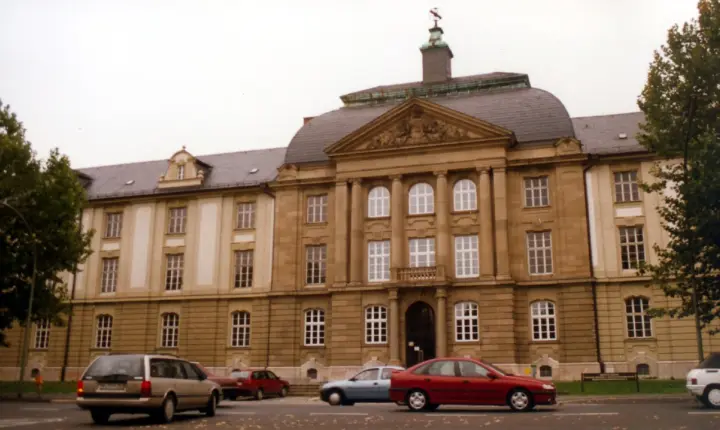
No tuition fee Tuition · sourced 2 years Duration View detailsCampus photos on this page: Robert Emmerich (CC BY-SA 3.0) — via Wikimedia Commons.
Ecology, Master of Science — FAQs
5 questions
Tuition is No tuition fee. Taken from the university's published fees page, not re-checked since — confirm it before you budget. We confirm the current fee and the scholarships you qualify for — free.
The main intake is Winter semester. Most universities admit on a rolling basis — we confirm the exact deadline for your profile, free.
Bachelor of Science in biology or equivalent study degree that fulfils the criteria of the "Fachkanon Biologie" / subject specific criteria, in particular: Bachelor of Science in Biology or similar programme Biosciences: 75 ECTS credit equivalents Chemistry (including biochemistry and physical chemistry): 15 ECTS Physics, mathematics, biostatistics: 15 ECTS OR Biosciences: 60 ECTS Chemistry (including biochemistry and physical chemistry): 20 ECTS Physics, mathematics, biostatistics: 12 ECTS OR Biosciences: 70 ECTS Chemistry (including biochemistry and physical chemistry): 10 ECTS Physics, mathematics, biostatistics: 12 ECTS Proof of experimental laboratory experience, preferably by an experimental thesis comprising a minimum of 10 ECTS Please submit either your final degree or your transcript of records to certify the minimum requirement of 150 ECTS. You have to submit your completed transcript of records no later than 15 September or 15 March, respectively. English: E.G. IELTS Academic: 6.5 Cambridge English Qualifications: C1 Advanced.
The programme runs about 24 months full-time.
Yes — shortlisting, SOP, LOR, Resume, application, scholarships and visa guidance are all free. We're paid by partner universities, not by you.
Apply to Ecology, Master of Science — free help
A counsellor calls you back during office hours — 9am to 8pm IST, Mon to Sat. We are open now.