
Information and Communication Technology
University of Turku · Turku, Europe
Duration
—
Tuition
€12,000/yr
sourcedIntake
Autumn 2026
English
—
Autumn 2026 intake. Most universities admit on a rolling basis — we confirm the exact application deadline for your profile, free.
Course details verified 10 Sep 2026 — intakes, entry requirements and course facts · official source
Fee sourced Taken from the university's published fees page, not re-checked since — confirm it before you budget. See the university fees page.
About this programme
The Cyber Security specialisation track gives its students profound and substantial education and expertise in the field of security and technology for networked systems. The focus is on researching cybersecurity technologies for networked systems and applications of the communication-intensive future. The technological topics covered include the security of smart environments, system and network security, security of communication systems and applications, and designing secure systems. Students will explore both technological and theoretical scientific advances in the field and apply them to practice. The graduates will have a strong technological, theoretical, and practical understanding of cyber security. With their new knowledge and skills, the graduates can proceed to build a successful career in securing the information and communication technology industry.The Robotics and Autonomous Systems specialisation track educates professionals in various positions in research, development, and design in robotic systems and technologies such as autonomous robots and smart industrial IoT systems. The major prepares its students for challenging tasks from basic robotic operations like perception, mapping, and navigation to the design flow of autonomous and robotic systems. To be successful as an engineer, students will work with real robots during their studies.The Cryptography specialisation track provides a thorough and profound understanding of the mathematical aspects of cryptography and cyber security. The theoretical studies on mathematics are complemented by courses on the security of networked systems and security management. Hence, the graduates will be able to carry a successful career, for example, as a security expert in the information and communication technology industry. In addition to a career in industry, the graduates also acquire the required abilities to further proceed with their academic career in post-graduate studies and achieve a Ph.D. degree.The Software Engineering specialisation track trains experts for designing and implementing demanding software systems. The specialisation track covers the entire life-cycle of software projects. In addition to solid programming skills, the students on the track acquire comprehensive knowledge about software design and architectures, agile methodologies in software development, software testing, quality assurance, usability, advanced programming techniques and paradigms, and privacy and security as a part of software implementations. The curriculum is a combination of academic software engineering theory and practices used in modern software development. Software engineering graduates find many employment opportunities regionally, nationally, and internationally in design, implementation, and management positions in software companies and IT departments of industrial organizations and other institutions.The Data Analytics specialisation track Data and data analytics are the cornerstones of digitalization and artificial intelligence. The need for the effective utilization and communication of data in research, decision-making, and society is growing rapidly, offering diverse career opportunities for those skilled in the field. The focus of our teaching is on understanding and applying the operational principles of the key data analysis methods in practice. Teaching in the field is linked to the current research themes of the Department of Computing, from health technology to computational humanities and from language technology to intelligent systems. After completing a degree in data analytics, you are aware of the main methods of data analysis, their theoretical basis, their possibilities, and their limitations. You will acquire the skills based on the latest research for wide-ranging and responsible expert and management positions in the field of data analysis and more broadly in information technology.
Intakes & deadlines
Autumn 2026
Dates confirmed for your profile · Open
Entry requirements
-
Prerequisites
University Bachelor's degree
-
Documents
SOP, LOR & Resume — generate them free in 2 minutes.
Fees & scholarships
€12,000/yr tuition (sourced). We confirm the exact costs and the scholarships you qualify for at University of Turku — free, for your profile.
Other programmes at University of Turku
Biomedical Imaging
€12,000/yr Tuition · sourced View details TU University of TurkuBiosciences
€12,000/yr Tuition · sourced View details TU University of TurkuDrug Discovery and Development
€12,000/yr Tuition · sourced View details TU University of TurkuEast Asian Studies
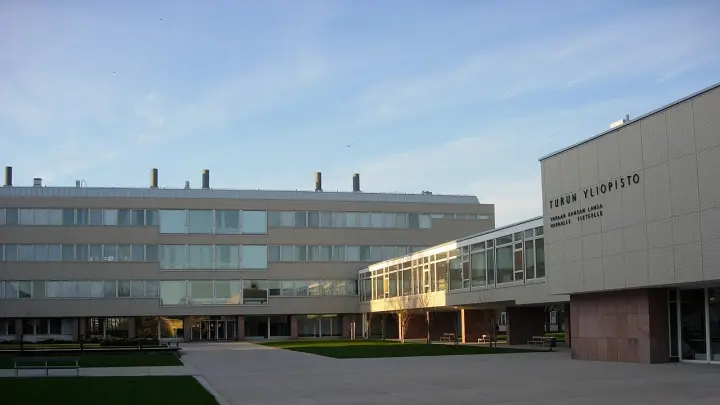
€10,000/yr Tuition · sourced View detailsCampus photos on this page: Samuli Lintula (CC BY 3.0) — via Wikimedia Commons.
Information and Communication Technology — FAQs
4 questions
Tuition is €12,000/yr. Taken from the university's published fees page, not re-checked since — confirm it before you budget. We confirm the current fee and the scholarships you qualify for — free.
The main intake is Autumn 2026. Most universities admit on a rolling basis — we confirm the exact deadline for your profile, free.
University Bachelor's degree
Yes — shortlisting, SOP, LOR, Resume, application, scholarships and visa guidance are all free. We're paid by partner universities, not by you.
Apply to Information and Communication Technology — free help
A counsellor calls you back during office hours — 9am to 8pm IST, Mon to Sat. We are open now.