Master of Arts in Communication in Digital Societies
University of Passau · Passau, Europe
Duration
24 mo
Tuition
No tuition fee
sourcedIntake
Winter semester
English
—
Winter semester intake. Most universities admit on a rolling basis — we confirm the exact application deadline for your profile, free.
Course details verified 09 Sep 2026 — intakes, entry requirements and course facts · official source
Fee sourced Taken from the university's published fees page, not re-checked since — confirm it before you budget. See the university fees page.
About this programme
The MA Communication in Digital Societies programme allows you to engage in theoretical and application-oriented study simultaneously. Primarily intended for graduates from degree programmes with a focus on communication science, it is the right degree programme for you if you are interested in how the digital media are changing communication processes in the public realm and what consequences this might have for society at large. It takes social-scientific research with a special focus on computational methods and combines this with interdisciplinary aspects of digitalisation. As you progress through the programme, you will acquire a wide range of skills that give you the best preparation for your future career, be it in academic research or working in journalism or in the digital or communications business sectors. You will have the opportunity to complete an internship during your degree programme, which will give you initial work experience and enable you to apply the knowledge you have gained. Features Focus on the relevant and topical field of digital communication Methodological focus on computerised research, data collection and analysis processes Strong research orientation through two-semester long research projects on current topics in digital communication, which you will complete in a small group with close supervision Clearly structured programme that allows you to shape your individual profile by choosing a minor subject and a large interdisciplinary course offering Compulsory elective modules that enable you to approach various aspects of the digital transformation from an interdisciplinary perspective, e.g. by specialising in cultural studies of a world region Career prospects The forward-looking orientation of the degree programme gives you precisely the skills that are in high demand in the media industry. A recent survey of 245 media companies in Bavaria revealed that there is an acute shortage of skilled staff for the evaluation of digital data in the media industry, specifically in the sub-sectors press, audio/radio, film/TV/streaming, marketing/PR/advertising and print/online publishing. Anywhere between 56% (film/TV/streaming) and 100% (audio/radio) of the companies surveyed agreed with the statement that there are not enough applicants in this area (Start Into Media, 2022). In addition to specifically data-related jobs, the degree programme generally qualifies you for positions in the following areas: public relations work at business enterprises, foundations, associations, or political organisations strategic communication using digital marketing technologies journalism (such as data or science journalism) market research content management public affairs consultancy This Master's programme is divided into two sub-areas of communication studies: Digital Communication Theories and Research Fields and Digital Communication Research and Professional Competencies, as well as the interdisciplinary compulsory elective area Social Science of Digital Transformation. Module cluster A In the first sub-area, you will acquire comprehensive knowledge of the theories and research fields of digital communication. To give you an insight into the topic, you will attend courses, e.g. on the consequences of digitalisation for society and others, learning theoretical concepts of digital communication studies so as to enable you to analyse, explain, classify, and reflect on socially relevant areas, such as protest and environmental communication. In the research-oriented advanced seminars, you will work in small groups to examine current research questions in empirical projects, for example on Fake News in a propagandistic context or the changing role of journalism. In the practice-oriented seminar on science communication, you'll develop a podcast and evaluate it with concurrent empirical research. Module cluster B The second sub-area will equip you with research and professional competencies in digital communication. I
Intakes & deadlines
Winter semester
Dates confirmed for your profile · Open
Entry requirements
-
English
E.G. UNIcert® English: UNIcert® II TOEIC: 785 Reading: 385 Listening: 400 Speaking: 160 Writing: 150 TOEFL iBT (before 2026): 72 Reading: 18 Listening: 17 Speaking: 20 Writing: 17 PTE Academic: 59 ISE (paper edition): ISE II IELTS Academic: 5.5 Cambridge English Qualifications Business (BEC) : B2 Business Vantage Cambridge English Qualifications: B2 First
-
Prerequisites
This Master's programme is primarily aimed at those who have graduated from an undergraduate degree programme with a focus on communication studies. The formal admission requirements are a university degree in a communication studies or social science subject with a final grade of 2.5 or better under the German grading scale (or the relevant equivalent foreign grade); if you do not meet the final grade requirement, you may still be eligible for this programme if you have documentary proof that you graduated among the top 50% of your cohort. During your previous undergraduate degree, you must have gained at least 30 ECTS credits in communication studies and at least 30 ECTS credits in the field of social-scientific research methods. (Important note: one ECTS credit equates roughly to 30 hours of work, including independent study and attendance of lectures, seminars, etc.) Examples of courses or modules that would count towards these are: courses/modules in quantitative and/or qualitative research methods (e.g. surveys, content analysis, qualitative interviews, qualitative text analysis, experiments, observation); courses/modules from the field of statistics/data analysis; application of social-scientific methods in (student-led) research projects (e.g. in the context of seminars); and your Bachelor's dissertation.
-
Documents
SOP, LOR & Resume — generate them free in 2 minutes.
Fees & scholarships
No tuition fee tuition (sourced). We confirm the exact costs and the scholarships you qualify for at University of Passau — free, for your profile.
Other programmes at University of Passau
Master of Arts in Development Studies
No tuition fee Tuition · sourced 2 years Duration View details PA University of PassauMaster of Arts in European Studies
No tuition fee Tuition · sourced 2 years Duration View details PA University of PassauMaster of Arts in Governance and Public Policy
No tuition fee Tuition · sourced 2 years Duration View details PA University of PassauMaster of Arts in International Cultural and Business Studies
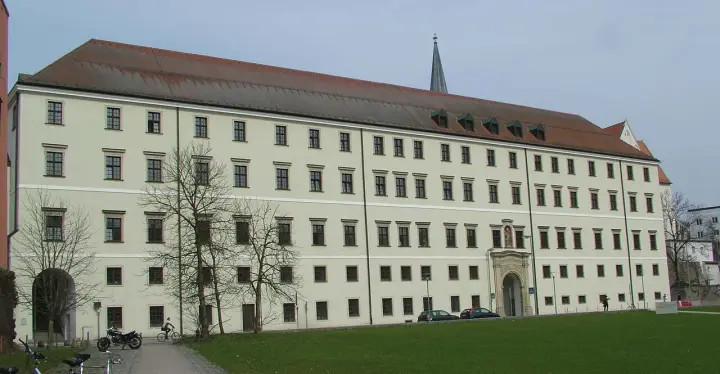
No tuition fee Tuition · sourced 2 years Duration View detailsCampus photos on this page: Kurt Seebauer at de.wikipedia (CC BY-SA 3.0) — via Wikimedia Commons.
Master of Arts in Communication in Digital Societies — FAQs
5 questions
Tuition is No tuition fee. Taken from the university's published fees page, not re-checked since — confirm it before you budget. We confirm the current fee and the scholarships you qualify for — free.
The main intake is Winter semester. Most universities admit on a rolling basis — we confirm the exact deadline for your profile, free.
This Master's programme is primarily aimed at those who have graduated from an undergraduate degree programme with a focus on communication studies. The formal admission requirements are a university degree in a communication studies or social science subject with a final grade of 2.5 or better under the German grading scale (or the relevant equivalent foreign grade); if you do not meet the final grade requirement, you may still be eligible for this programme if you have documentary proof that you graduated among the top 50% of your cohort. During your previous undergraduate degree, you must have gained at least 30 ECTS credits in communication studies and at least 30 ECTS credits in the field of social-scientific research methods. (Important note: one ECTS credit equates roughly to 30 hours of work, including independent study and attendance of lectures, seminars, etc.) Examples of courses or modules that would count towards these are: courses/modules in quantitative and/or qualitative research methods (e.g. surveys, content analysis, qualitative interviews, qualitative text analysis, experiments, observation); courses/modules from the field of statistics/data analysis; application of social-scientific methods in (student-led) research projects (e.g. in the context of seminars); and your Bachelor's dissertation. English: E.G. UNIcert® English: UNIcert® II TOEIC: 785 Reading: 385 Listening: 400 Speaking: 160 Writing: 150 TOEFL iBT (before 2026): 72 Reading: 18 Listening: 17 Speaking: 20 Writing: 17 PTE Academic: 59 ISE (paper edition): ISE II IELTS Academic: 5.5 Cambridge English Qualifications Business (BEC) : B2 Business Vantage Cambridge English Qualifications: B2 First.
The programme runs about 24 months full-time.
Yes — shortlisting, SOP, LOR, Resume, application, scholarships and visa guidance are all free. We're paid by partner universities, not by you.
Apply to Master of Arts in Communication in Digital Societies — free help
A counsellor calls you back during office hours — 9am to 8pm IST, Mon to Sat. We are open now.