
Intercultural German Studies / German as a Foreign Language (MA)
University of Göttingen · Göttingen, Europe
Duration
24 mo
Tuition
No tuition fee
sourcedIntake
Winter semester
English
—
Winter semester intake. Most universities admit on a rolling basis — we confirm the exact application deadline for your profile, free.
Course details verified 09 Sep 2026 — intakes, entry requirements and course facts · official source
Fee sourced Taken from the university's published fees page, not re-checked since — confirm it before you budget. See the university fees page.
About this programme
The Master's programme in Intercultural German Studies is designed to explore the conceptual, theoretical, and methodological foundations of interculturality, language, and culture. It focuses on the description and mediation of language and culture within intercultural contexts, reflecting on the practical application of methods and knowledge in both academic and professional settings. The programme addresses transnational culture and knowledge transfer, intercultural language and culture transmission, and mediation through German as a foreign language. Through this programme, students acquire advanced academic knowledge and the ability to conduct independent research in specific subject areas and interdisciplinary contexts. They learn to apply this knowledge in fields such as intercultural language and culture transmission and mediation. The curriculum emphasises occupationally relevant skills, equipping students with methodological and analytical expertise. This foundation prepares graduates for further academic pursuits, including doctoral studies. Graduates of the programme are qualified to work in various private and public institutions, addressing questions of interculturalism and the description and transmission of language and culture. They find employment in international organisations, institutions, and foundations focused on cultural representation, intercultural exchange, and dialogue. These roles often involve providing information and practical support to facilitate these processes. Additionally, graduates work in publishing and media organisations, where they develop teaching materials, or in educational settings such as language schools, universities offering German as a foreign language, adult education institutions, and cultural organisations like the Goethe Institute. The Master of Arts in Intercultural German Studies aims to provide a comprehensive, interculturally grounded, and interdisciplinary education. It combines theoretical knowledge with practical skills, preparing students for the global job market. Graduates are equipped to act as cultural intermediaries, bridging gaps between different cultures and contexts. The programme prepares students for roles in internationally oriented cultural, academic, and educational institutions, as well as political and business enterprises involved in international cultural communication. By fostering key competencies relevant to practical situations, the programme ensures that graduates are well-prepared to navigate and excel in their chosen careers. The Master's programme offers the opportunity to specialise in one of three study focuses: "Translating Cultures," "Educational and Knowledge Cultures," or "Intercultural Language Teaching." In the first semester, students gain an overview of the field of Intercultural German Studies, acquire foundational knowledge, and are introduced to all three study focuses. These foundations are presented in a lecture that covers overarching concepts, research questions, subject areas, and fields of application relevant to the discipline. Three mandatory modules (M.IKG.002, 003, and 004) introduce the three study focuses: "Translating Texts and Contexts: Working Areas and Discourses of Intercultural Literary Studies"; “Languages — Education — Knowledge: Key Concepts and Topics of Intercultural Linguistics"; “Languages and Teaching Practices: Approaches and Methods of Intercultural Foreign Language Didactics". The second semester is dedicated to in-depth academic study and serves as the first step in shaping the chosen study focus. The elective modules M.IKG.022, 033, and 044 build on the first-semester modules by imparting methodological competencies to access the subject matter of the study focuses. Cultural and thematic approaches and comparative perspectives are developed, discourse analytical approaches and comparative methods are applied, and research methods for teaching and learning are explored. By choosing two of the t
Intakes & deadlines
Winter semester
Dates confirmed for your profile · Open
Entry requirements
-
Prerequisites
A Bachelor's degree (or equivalent) in a relevant field of study is required. Letter of motivation: Applicants should outline their reasons for applying for the Master's programme as well as their research interests in a cover letter. An interview will cover the following topics: the applicant's academic background, previous experience and knowledge of teaching language and culture to others, and programme expectations as well as professional and personal aims concerning the course of study.
-
Documents
SOP, LOR & Resume — generate them free in 2 minutes.
Fees & scholarships
No tuition fee tuition (sourced). We confirm the exact costs and the scholarships you qualify for at University of Göttingen — free, for your profile.
Other programmes at University of Göttingen
Applied Computer Science (MSc)
No tuition fee Tuition · sourced 2 years Duration View details GÖ University of GöttingenApplied Data Science (MSc)
No tuition fee Tuition · sourced 2 years Duration View details GÖ University of GöttingenApplied Statistics (MSc)
No tuition fee Tuition · sourced 2 years Duration View details GÖ University of GöttingenBiodiversity: Ecology, Evolution, and Conservation
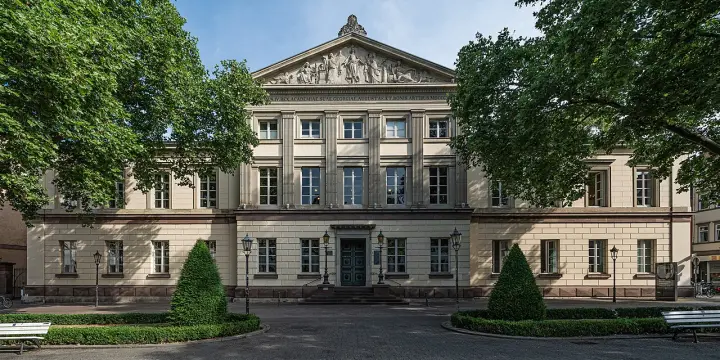
No tuition fee Tuition · sourced 2 years Duration View detailsCampus photos on this page: A.Savin (FAL) — via Wikimedia Commons.
Intercultural German Studies / German as a Foreign Language (MA) — FAQs
5 questions
Tuition is No tuition fee. Taken from the university's published fees page, not re-checked since — confirm it before you budget. We confirm the current fee and the scholarships you qualify for — free.
The main intake is Winter semester. Most universities admit on a rolling basis — we confirm the exact deadline for your profile, free.
A Bachelor's degree (or equivalent) in a relevant field of study is required. Letter of motivation: Applicants should outline their reasons for applying for the Master's programme as well as their research interests in a cover letter. An interview will cover the following topics: the applicant's academic background, previous experience and knowledge of teaching language and culture to others, and programme expectations as well as professional and personal aims concerning the course of study.
The programme runs about 24 months full-time.
Yes — shortlisting, SOP, LOR, Resume, application, scholarships and visa guidance are all free. We're paid by partner universities, not by you.
Apply to Intercultural German Studies / German as a Foreign Language (MA) — free help
A counsellor calls you back during office hours — 9am to 8pm IST, Mon to Sat. We are closed right now, so your request is first in line when we reopen.