
History of Global Markets (MA)
University of Göttingen · Göttingen, Europe
Duration
24 mo
Tuition
No tuition fee
sourcedIntake
Winter semester
English
—
Winter semester intake. Most universities admit on a rolling basis — we confirm the exact application deadline for your profile, free.
Course details verified 09 Sep 2026 — intakes, entry requirements and course facts · official source
Fee sourced Taken from the university's published fees page, not re-checked since — confirm it before you budget. See the university fees page.
About this programme
Why study the history of businesses and economies from a global perspective? Today's economy is organised around globally integrated markets. Capital, labour, knowledge: these factors of production are increasingly allocated competitively and across national borders. Firms and consumers find themselves interlinked through a growing network of global markets. Where did these developments originate, and how can they be understood? The "History of Global Markets" Master's degree programme is devoted to exploring these questions through historical methods. This history-focused degree programme imparts the analytical skills of economic and social history, and it combines these skills with building a profile either in economics, business studies, or the social sciences and history. This is not a typical business or economics degree. Our focus is on the historical development of the global economy as well as business history and the history of consumption. The degree programme is open to those who have successfully completed a Bachelor’s degree programme in economic and social history, modern history, or an adjacent subject with a substantial background in both history and economics. You can commence the programme in the summer or the winter semester. For students interested in a more present-day and interdisciplinary approach, the degree programme includes the "Global Markets, Local Creativities" (GLOCAL) option, which is part of an Erasmus Mundus Master's programme. This degree option is jointly offered by the universities of Glasgow, Barcelona, Uppsala, Rotterdam, Kyoto, Los Andes, and Göttingen, and you can apply for this degree option and EU scholarships directly: http://globallocal-erasmusmundus.eu/how-to-apply/ To draw insights from the past, our Master’s programme brings together economics and historical research, social and political sciences. In terms of methods, it goes beyond economic models and also uses qualitative and empirical methods. This multifaceted approach allows you to gain deep insights into the dynamic interactions between markets and societies. This gives you skills that prepare you for a wide range of careers – such as research, education, journalism, cultural management, consulting, politics and more. Total number of credits: 120 1. Compulsory part of the programme in the history of global markets (30 credits) One of the following two modules totalling 12 credits must be successfully completed: M.WIWI-HGM.0001: Economic Business and Social History I, 12 CP M.WIWI-HGM.1001: History of Global Markets I, 12 CP One of the following two modules totalling 12 credits must be successfully completed: M.WIWI-HGM.0002: Economic Business and Social History II, 12 CP M.WIWI-HGM.1002: History of Global Markets II, 12 CP The following module totalling 6 credits should be successfully completed: M.WIWI-HGM.0003: Doing Research in the History of Global Markets, 6 CP 2. Convergence area (18 credits) Convergence modules totalling at least 18 credits as per the following provisions have to be successfully completed. The following modules are offered: History Economics Apart from the modules listed, all English language modules with the code B.WIWI.xxxx can be selected. 3. Optional required area history of global markets (12 credits) At least two of the following modules totalling at least 12 credits must be successfully completed: M.WIWI-HGM.0004: History of Global Markets: Perspectives, 6 CP M.WIWI-HGM.0005: History of Global Markets: Periods, 6 CP M.WIWI-HGM.0006: History of Global Markets: Places, 6 CP 4. Profile area (30 credits) In the profile areas of Economy & Institutions, Business & Management, Society & Culture, and Globalisation, modules totalling 24 credits as per the following provisions have to be successfully completed, provided that the prerequisites for the respective modules have been fulfilled. If the “Economy & Institutions” profile was selected, modules with the code M.WIWI-VWL have to be selected. If th
Intakes & deadlines
Winter semester
Dates confirmed for your profile · Open
Summer semester
Dates confirmed for your profile · Open
Entry requirements
-
English
E.G. IELTS Academic: 6
-
Prerequisites
Proof of relevance of previous studies Academic admission requirements include a minimum of six semesters of study culminating in a Bachelor’s degree or an equivalent course of study with a minimum of 180 ECTS credits in one of the following study programmes: "Economic and Social History", "Contemporary History", "Economics", "Business Administration", "Sociology", "Political Science", or a closely related subject. Applicants must have completed at least 150 of the 180 ECTS credits at the time of application. Unfortunately, we cannot consider applications that do not meet this requirement. Applicants must have completed 60 ECTS credits and coursework in Economic and Social History, Contemporary History, Business Administration, Economics, Sociology or Political Science including 30 ECTS credits in History of Companies, History of Industrialisation, History of Globalisation, History of Consumerism, Economic and Social History or General History of the 19th and 20th centuries, Contemporary Concepts and Methods of History, History of Economic Thought, Organisational Theory and Management, Institutional Economics, Evolutionary Economics, International Trade Theory, Development Economics, Economic Policy, Economic Activity and Growth Theory, Price and Market Theory, Quantitative Methods, Economic Sociology, Economic Migration, Cultural Sciences, Political Economics or Globalisation Studies. A minimum of 18 ECTS credits from these modules must be from coursework that is of intermediate or advanced levels.
-
Documents
SOP, LOR & Resume — generate them free in 2 minutes.
Fees & scholarships
No tuition fee tuition (sourced). We confirm the exact costs and the scholarships you qualify for at University of Göttingen — free, for your profile.
Other programmes at University of Göttingen
Applied Computer Science (MSc)
No tuition fee Tuition · sourced 2 years Duration View details GÖ University of GöttingenApplied Data Science (MSc)
No tuition fee Tuition · sourced 2 years Duration View details GÖ University of GöttingenApplied Statistics (MSc)
No tuition fee Tuition · sourced 2 years Duration View details GÖ University of GöttingenBiodiversity: Ecology, Evolution, and Conservation
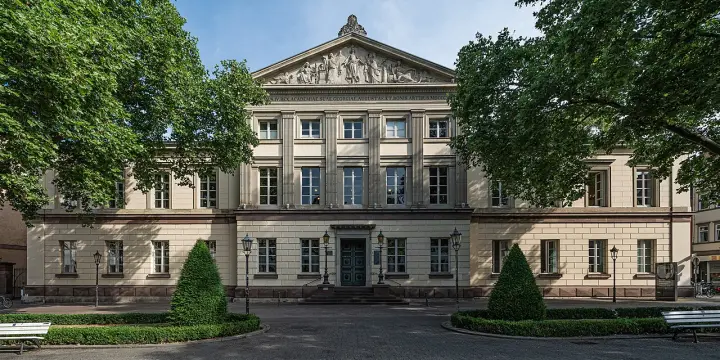
No tuition fee Tuition · sourced 2 years Duration View detailsCampus photos on this page: A.Savin (FAL) — via Wikimedia Commons.
History of Global Markets (MA) — FAQs
5 questions
Tuition is No tuition fee. Taken from the university's published fees page, not re-checked since — confirm it before you budget. We confirm the current fee and the scholarships you qualify for — free.
The main intake is Winter semester. Most universities admit on a rolling basis — we confirm the exact deadline for your profile, free.
Proof of relevance of previous studies Academic admission requirements include a minimum of six semesters of study culminating in a Bachelor’s degree or an equivalent course of study with a minimum of 180 ECTS credits in one of the following study programmes: "Economic and Social History", "Contemporary History", "Economics", "Business Administration", "Sociology", "Political Science", or a closely related subject. Applicants must have completed at least 150 of the 180 ECTS credits at the time of application. Unfortunately, we cannot consider applications that do not meet this requirement. Applicants must have completed 60 ECTS credits and coursework in Economic and Social History, Contemporary History, Business Administration, Economics, Sociology or Political Science including 30 ECTS credits in History of Companies, History of Industrialisation, History of Globalisation, History of Consumerism, Economic and Social History or General History of the 19th and 20th centuries, Contemporary Concepts and Methods of History, History of Economic Thought, Organisational Theory and Management, Institutional Economics, Evolutionary Economics, International Trade Theory, Development Economics, Economic Policy, Economic Activity and Growth Theory, Price and Market Theory, Quantitative Methods, Economic Sociology, Economic Migration, Cultural Sciences, Political Economics or Globalisation Studies. A minimum of 18 ECTS credits from these modules must be from coursework that is of intermediate or advanced levels. English: E.G. IELTS Academic: 6.
The programme runs about 24 months full-time.
Yes — shortlisting, SOP, LOR, Resume, application, scholarships and visa guidance are all free. We're paid by partner universities, not by you.
Apply to History of Global Markets (MA) — free help
A counsellor calls you back during office hours — 9am to 8pm IST, Mon to Sat. We are open now.