
Development Economics (MSc)
University of Göttingen · Göttingen, Europe
Duration
24 mo
Tuition
No tuition fee
sourcedIntake
Winter semester
English
—
Winter semester intake. Most universities admit on a rolling basis — we confirm the exact application deadline for your profile, free.
Course details verified 09 Sep 2026 — intakes, entry requirements and course facts · official source
Fee sourced Taken from the university's published fees page, not re-checked since — confirm it before you budget. See the university fees page.
About this programme
Economic development is one of the key challenges of our lifetime. We live in a world of tremendous inequality in the distribution of income and wealth. More than a billion people live in extreme poverty, in poor health and with a lack of educational opportunities. Yet recent decades have shown that economic development and poverty reduction are possible. The University of Göttingen has Germany's largest internationally visible concentration of development economics researchers. The MSc Development Economics offers the great advantage of drawing from the long-standing research and teaching experience of two faculties, both deeply committed to development issues: the Faculty of Economic Sciences and the Faculty of Agricultural Sciences (in particular, the Department of Agricultural Economics and Rural Development.) The English-language Master of Science in Development Economics was established in 2011. It builds upon successful, long-running Master's programmes that already had a strong specialisation in development issues. This research-oriented Master's programme offers a comprehensive, four-semester course of study dedicated solely to the exploration of development economics issues. Among the key features of the study programme are: courses in macro and micro development, economic issues, econometrics, and rural development specialisation in quantitative economics or agricultural economics specialisation and profile courses – a wide array of subjects relevant for development students can choose from supplementary courses offered by international guest lecturers opportunities to take optional courses in six other Master's programmes in the Faculty of Agricultural Sciences and the Faculty of Economic Sciences as electives opportunities for internships at institutions of development cooperation, international organisations, and research think tanks opportunities for hands-on research experience through our many research projects opportunities for field work and research experience in developing countries There is a possibility to do a semester abroad at one of our partner universities (e.g. South Africa, China, Indonesia, Colombia, Mexico, Brazil, Trinidad and Tobago/Jamaica/Barbados – to name just a few) and many different language courses are offered to round off the programme. The duration of the Master's programme in Development Economics is four semesters, during which 120 ECTS will be earned: 90 ECTS from coursework and 30 ECTS through the Master's thesis. There are three compulsory modules in economics (18 credits: Development Economics I + II, Socioeconomics of Rural Development) and one compulsory econometrics module (Econometrics I or Econometrics II) that are typically completed within the first two semesters. Students can then specialise in quantitative or agricultural economics, each requiring further 12 credits (choose two modules out of four modules in each field of specialisation). Furthermore, students have to take another five modules from a catalogue of pre-selected modules in development or agricultural economics and statistics and three elective modules are chosen freely (any course offered by the Faculty of Economic Sciences, any course from the programme in "Sustainable International Agriculture", and other subjects upon formal request). In addition, one compulsory seminar has to be chosen from a list of currently 15 eligible seminars in development or agricultural economics. The programme is completed with a Master's thesis. German nationals (or foreign nationals with a German high school and undergraduate education) have to spend a mandatory semester or conduct field studies abroad. International students are exempt from this requirement.
Intakes & deadlines
Winter semester
Dates confirmed for your profile · Open
Entry requirements
-
English
E.G. IELTS Academic: 7 TOEFL iBT (before 2026): 95 TOEFL iBT Home Edition (before 2026): 95 UNIcert® English: UNIcert® III
-
Prerequisites
Academic admission requirements include a course of study of at least six semesters with a Bachelor's degree with top grades in economics, agricultural economics or a closely related subject. At least 60 credits (in the standard case, in which there is a total of 180 ECTS, otherwise one-third of the coursework) in economics (such as micro, macro, development, agricultural, health economics, public finance, etc.) are required. Please be aware that subjects from the field of business administration do not qualify as "economic subjects" for admission. Verification of 150 of the 180 credits (or 83 percent of the coursework required for graduation) is required at the time of application. For detailed information, please see https://www.uni-goettingen.de/en/businessandeconomics/studying/economics/bachelor-development-studies/648484.html for information on application and admission procedures of the Master's programme in Development Economics.
-
Documents
SOP, LOR & Resume — generate them free in 2 minutes.
Fees & scholarships
No tuition fee tuition (sourced). We confirm the exact costs and the scholarships you qualify for at University of Göttingen — free, for your profile.
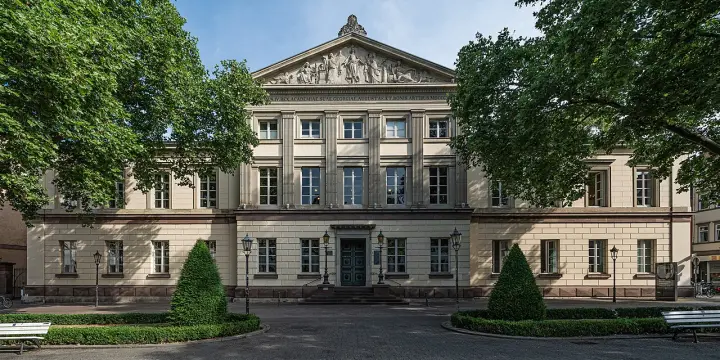
Other programmes at University of Göttingen
Applied Computer Science (MSc)
No tuition fee Tuition · sourced 2 years Duration View details GÖ University of GöttingenApplied Data Science (MSc)
No tuition fee Tuition · sourced 2 years Duration View details GÖ University of GöttingenApplied Statistics (MSc)
No tuition fee Tuition · sourced 2 years Duration View details GÖ University of GöttingenBiodiversity: Ecology, Evolution, and Conservation
No tuition fee Tuition · sourced 2 years Duration View detailsCampus photos on this page: A.Savin (FAL) — via Wikimedia Commons.
Development Economics (MSc) — FAQs
5 questions
Tuition is No tuition fee. Taken from the university's published fees page, not re-checked since — confirm it before you budget. We confirm the current fee and the scholarships you qualify for — free.
The main intake is Winter semester. Most universities admit on a rolling basis — we confirm the exact deadline for your profile, free.
Academic admission requirements include a course of study of at least six semesters with a Bachelor's degree with top grades in economics, agricultural economics or a closely related subject. At least 60 credits (in the standard case, in which there is a total of 180 ECTS, otherwise one-third of the coursework) in economics (such as micro, macro, development, agricultural, health economics, public finance, etc.) are required. Please be aware that subjects from the field of business administration do not qualify as "economic subjects" for admission. Verification of 150 of the 180 credits (or 83 percent of the coursework required for graduation) is required at the time of application. For detailed information, please see https://www.uni-goettingen.de/en/businessandeconomics/studying/economics/bachelor-development-studies/648484.html for information on application and admission procedures of the Master's programme in Development Economics. English: E.G. IELTS Academic: 7 TOEFL iBT (before 2026): 95 TOEFL iBT Home Edition (before 2026): 95 UNIcert® English: UNIcert® III.
The programme runs about 24 months full-time.
Yes — shortlisting, SOP, LOR, Resume, application, scholarships and visa guidance are all free. We're paid by partner universities, not by you.
Apply to Development Economics (MSc) — free help
A counsellor calls you back during office hours — 9am to 8pm IST, Mon to Sat. We are open now.